
Today AI and Robotics are the “talk of the town” pulling in global investments in billions of dollars, creating innovative technology products and infrastructures. AI and Robotics is moving at a pace even Usain Bolt the fastest man on the planet cannot catch.
This brings a serious unanswered question about the sustainable safety features of AI and Robotics which could bring about a future economy where humans are no longer needed. Together, AI and Robotics can create an automated world that does not require human services.
This is because AI and Robotics carries with it the core principles of Automation that makes systems and infrastructures operate with very minimal human input raising the possibility of a future takeover over by Robots and Artificial intelligence systems.
In our world today, Global fertility rates have dropped, with people having, on average, one child fewer than in 1990, resulting in a 2.3 live births per woman rate as of 2024. Many countries have already peaked and are currently experiencing population declines
The world’s population reached Eight -8 billion people, on 15 November 2022, a milestone in human development. While it took the global population 12 years to grow from 7 to 8 billion, it will take approximately 15 years until 2037 for it to reach 9 billion, a sign that the overall growth rate of the global population, is slowing Yet the world continues to further pump in huge mega amounts of money, into AI and Robotics which could render households without a plate of food to eat.
Today countries with the highest fertility levels tend to be those with the lowest income per capita or simply put: ” The poorest of the poorest countries “. Global population growth has over time become increasingly concentrated among the world’s poorest countries, most of which are in sub-Saharan Africa.
Today, AI and robotics mass development and deployment present future risks to Africa, potentially exacerbating inequality, increasing unemployment, perpetuating bias and increasing social insecurity. Key dangers include automation of low-skilled jobs, widening digital divides due to lack of infrastructure, and data colonialization, where systems trained on Western data misinterpret African contexts.
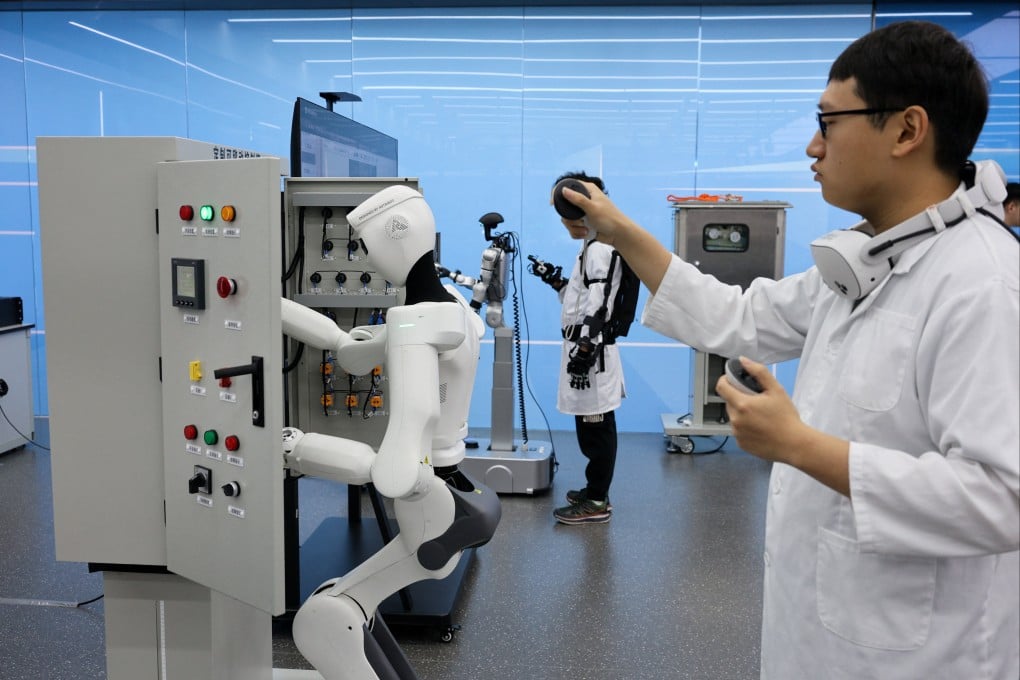
Picture Showing a Humanoid Robot Undergoing Training Development in China – Photo Credit: Cherdchai101 / Shutterstock.com
However, AI offers impressive potentials for growth, proactive policy, infrastructure investment, and development if safely, consciously, tailored to global local needs contexts as this is very necessary for sustainable AI development and mitigating the negative effects of automation.
Unsafe automation could affect many lower-skilled jobs, which make up a large part of the workforce, especially in the informal sector.
AI and Robotics And Human Extinction
Today the whole world is witnessing Declining world population.
This decline in population is characterized by rapid fertility decline, aging, and economic times that directly impacts economic structures and reduces livelihood opportunities through a complex, interdependent cycle.
The World Population Prospects report, published by the United Nations in 2022, revealed a decline in the global population growth rate (PGR) to less than 1% — the lowest recorded rate since 1950. Predictions suggest a further decrease to 0.5% by 2050.
China, a highly populous nation, is encountering even more acute challenges. By the conclusion of 2022, China’s population totaled approximately 1.412 billion, reflecting a decline of 850,000 from the prior year and a natural PGR of −0.06% (2). This negative growth, China’s first since the 1960s, indicates that the peak of China’s population was reached in 2021, with a slide into negative growth from 2022 onward.
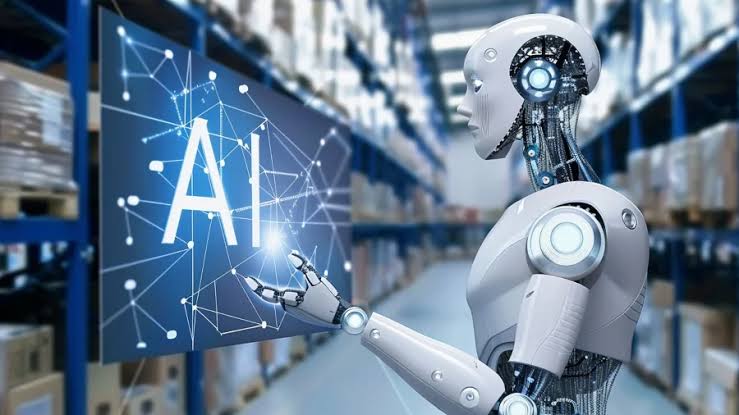
Illustrative Picture Showing AI and a Humanoid Robot – Photo Credit: Shutterstock
Today China’s negative population growth is posing challenges and opportunities for its socio-economic development. Firstly, changes in population size and structure will bring about major alterations in family dynamics and societal systems, significantly impacting social demands and resource allocation strategies.
AI and Robotics could cause further decline in the working-age of the global population central to economic development. This drop in working ages and numbers will notably curtail economic growth potential leading to a reduced population size and looming human extinction.
Replacing humans with robots could lead to an AI Digital Black Swan, while Robotics gone Rouge could trigger a Machine War or Tech war that leads to another Global World War.

Illustrative Picture Showing AI and Robotics gone Rouge – Photo Credit: Shutterstock
China just hit a manufacturing milestone that could reshape robot pricing forever. A new automated production facility in Foshan, Guangdong province, cranks out one humanoid robot every half hour targeting 10,000 units annually at unprecedented scale.
The facility runs like a precision Swiss watch, if Swiss watches involved 24 digitalized assembly stages, 77 inspection checkpoints, and 41 simulated work-condition tests per robot. This joint venture between Leju Robotics and Dongfang Precision Science & Technology reportedly boosts efficiency by over 50% compared to traditional manufacturing methods.
Just as the saying goes in Nigeria ” you don’t tell a blind man it’s raining 🌧️” this is synonymous to the Catastrophic consequences of an Robot Malfunction. Potentially, human lives could be lost in several large numbers to robots who have gone out of control and this could raise community tensions.
Today China is manufacturing large number amount of Robots in a day. This tells you of how fast investors, developers and stakeholders are willing to cash back their profits from AI and Robotics investments.
In the first two months of 2026, China produced 143,608 industrial robots, averaging roughly 2,400 per day.
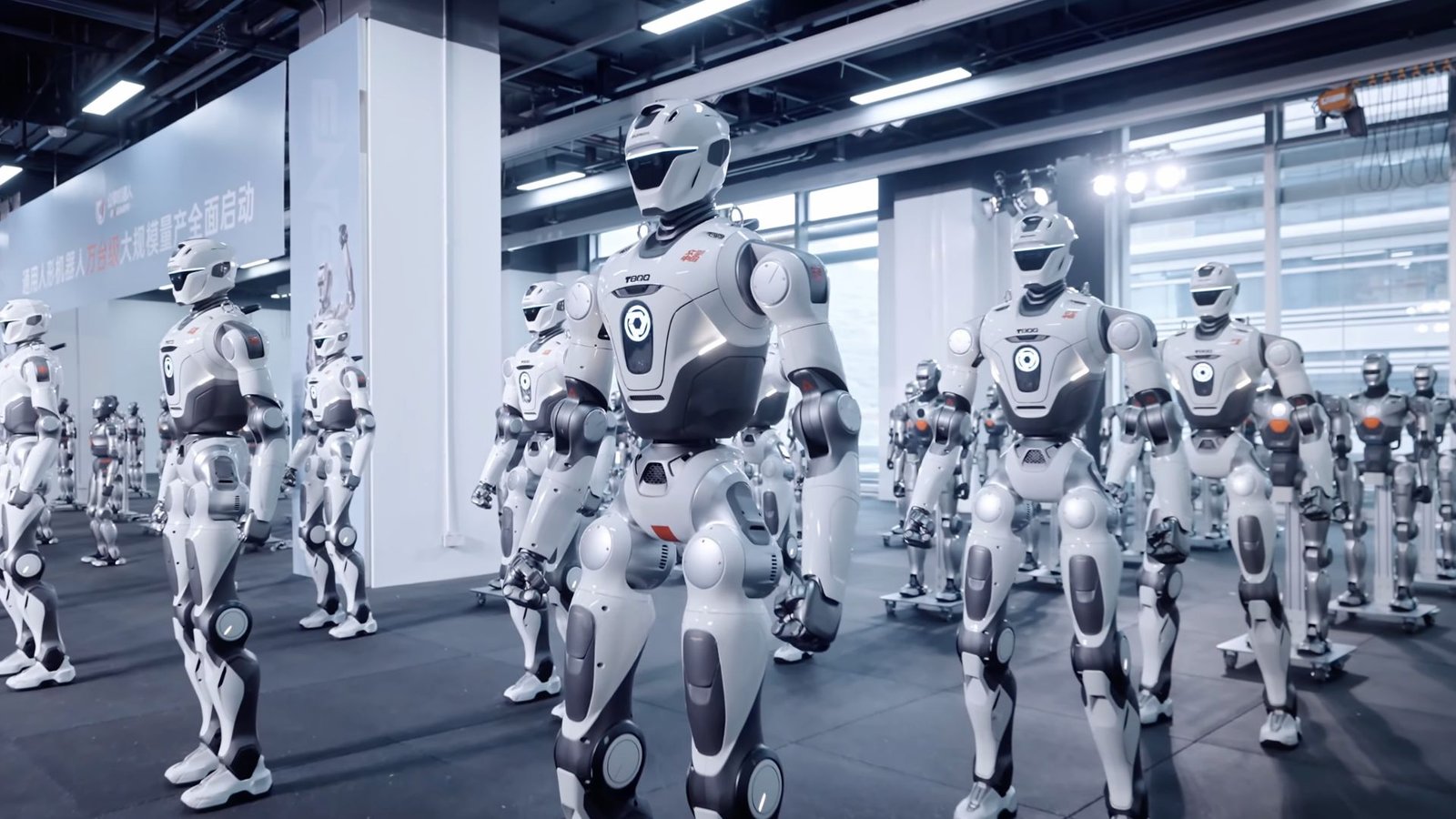
Picture Showing Mass Produced humanoid robots assembled on display as ENGINEAI opens Shenzhen robot factory capable of producing one humanoid every 15 minutes – Photo Credit: ENGINEAI/YouTube
industrial giants in China are rapidly scaling up the use of AI-powered robots to operate vital infrastructure, with the country’s main power grid operator has unveiled a blockbuster plan to deploy thousands of Bots to handle a range of roles – from inspecting remote substations to performing maintenance on ultra-high-voltage power lines.
As of early 2026, China has established overwhelming dominance in both the manufacturing and adoption of robots, with production scaling rapidly to thousands of units daily across different categories.This means that as of 2026, China is producing and installing more industrial robots than all of the world combined.
This increasing Mass production of potential human replacing Robots could further deepen the World’s global population pushing the world near into extinction as more Robots take over human roles and productivity.
Big corporations, institutions, businesses and organisations investing Billions of Dollars into AI and Robotics will smile home with fat envelopes and pay checks but the primary losers will be poor and medium house holds across the globe.
Regulatory departments and Agencies must work hard to ensure that AI and Robotics follows a safe, sustainable and fully integrated roll out model that fosters job creation and solving human basic needs.
If this successfully done, then AI and Robotics could just be the final missing piece in the global world economic growth puzzle.
@SeedufyTech will always be here with you to keep you posted on the latest advancements in AI and Robotics.
Subscribe to our Newsletters now!!
Leave a comment in the section below 👇






Leave a Reply