
Africa finally gets its first dose of 3D-printed Housing with the construction and completion of a 3D-printed Primary School building wall in Malawi completed in 18-hours much shorter time than required by traditional construction methods. The project drew attention because it brought 3D printing to a concrete need by creating a African classroom in record time where infrastructure is lacking.
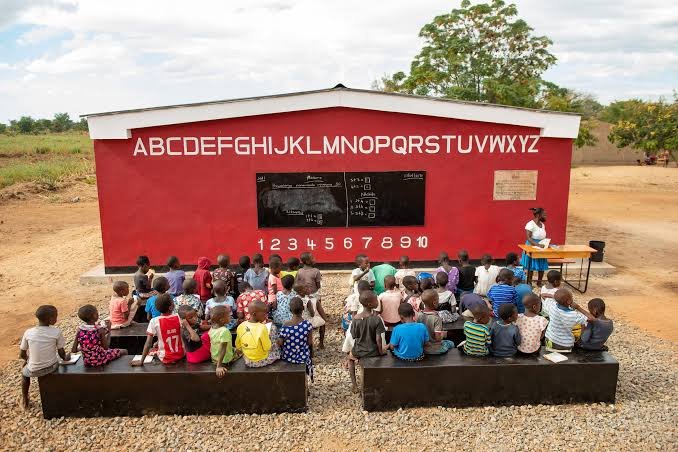
Photo showing Primary School Students Sitting outside the Newly 3D-Printed Housing Infrastructure – Photo Credit: Getty Images
Key Takeaways:
-3D printed houses finally makes entrance in Africa
-This comes as 3D-Printed Primary School Building Walls were constructed and completed in Malawi Africa
-The innovative Modern State of Art 3D-Printed school building walls were completed in 18 hours much proving to be time saving and resource efficient
-Could 3D-Printing Be the Key to Affordable, Fast Housing Infrastructure Development in Africa?
Africa today, is grappling with major housing deficiency crisis. Africa faces a critical and growing housing shortage, with a current continent-wide deficit of over 50 million housing units. Driven by rapid urbanization, high population growth, and rising building material costs, this shortfall could soar to 130 million units by 2030 unless structural reforms and massive investments are implemented thereby making affordable home seekers unable to afford Modern new homes.
Key Drivers of Housing Shortage Crisis in Africa
The deficit extends far beyond a simple lack of available physical structures:
Urbanization: African cities absorb over 40,000 new residents daily, placing immense pressure on limited urban infrastructure.
High Finance Gaps: The continent faces a housing finance gap estimated at over $1.4 Trillion while Traditional mortgages are often inaccessible to low- and middle-income earners.
Cost of Materials: Surging global inflation and heavy reliance on imported building materials have significantly inflated construction costs, pricing out entry-level buyers.
Land and Policy Issues: Limited access to titled land, cumbersome property registration, and inadequate urban planning severely hamper private sector development.
In different parts of Africa and today, the housing shortage gap is so wide that households have been forced to take shelter in refugee camps, uncompleted buildings, slums and bridges.
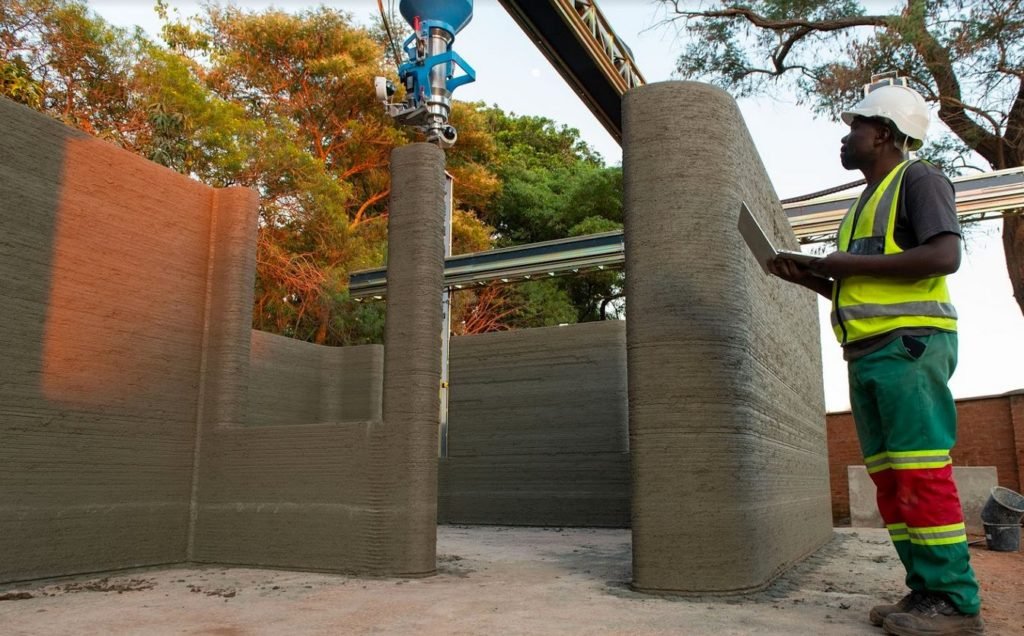
Photo showing a Holcim Worker controlling the 3D-Printing Machine using Digital controls – Photo Credit: Getty Images
The introduction of 3D-Printing in Morden Housing Development, is raising eyebrows today. These advanced Modern construction technologies are capable of 3D-Printing a modern house complete in record time while saving resources and reducing material wastages.
What is 3D-Printing in Housing Infrastructure Development?
3D-Printing makes use of specialized Morden technologies that emits concrete via a Digitally controlled nozzle for Automated Housing construction. 3D- Printers are large machines used for widespread automated housing infrastructure construction.
The technology uses a machine that deposits layers of material until the walls are formed. Instead of building everything block by block, the process follows a programmed design and creates the structure in an automated manner.
3D-printing machines can build a house complete in under 24-hours. The technology is currently deployed in advanced countries for emergency housing construction in countries such as Canada and Turkey.
3D-Printing Finally Debuts in Africa for Affordable Fast Housing Infrastructure Construction in Malawi
Malawi is finally home to Africa’s first 3D-printed school in the Salima district’s Yambe zone of Malawi. Developed by 14Trees, this innovative project printed the classroom walls in just 18 hours. It offers a rapid, eco-friendly solution to the country’s massive educational infrastructure shortage
The 3D-printed school in Malawi had its walls built in just 18 hours, a much shorter time than required by traditional construction methods. The project drew attention because it brought 3D printing to a concrete need: creating a classroom where infrastructure is lacking.
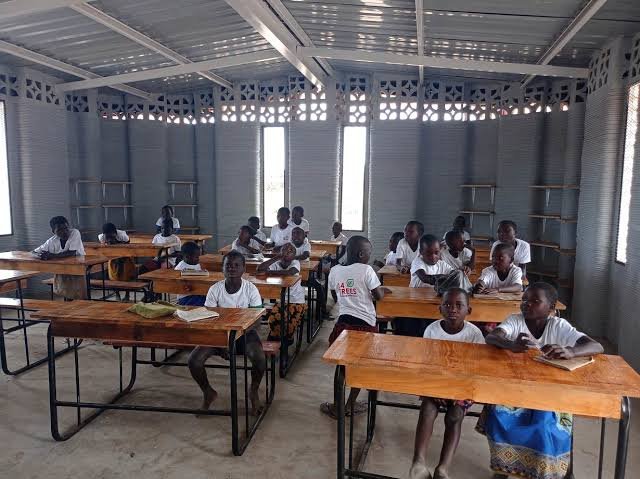
Photo showing Primary School Students in Salima district of Malawi Inside the Newly 3D-Printed Primary School – Photo Credit: Getty Images
The information was released by Holcim, a construction materials company. The school was built in the Salima district of Malawi by 14Trees, a business partnership linked to Holcim and the CDC Group while School Children began studying in the new space in June, turning the project into real use, not just a technological demonstration.
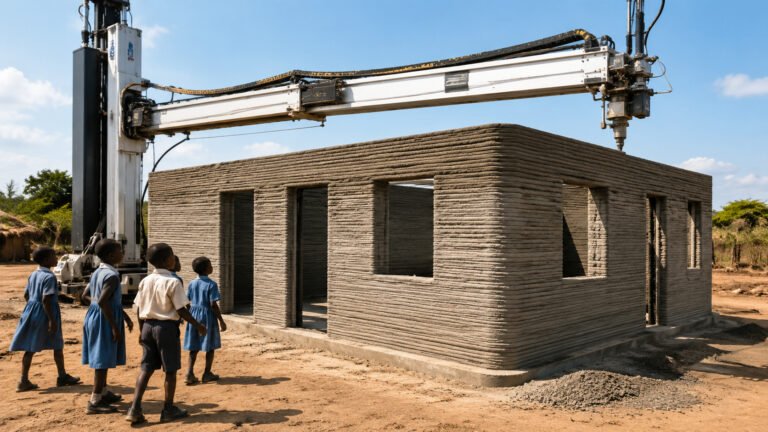
Photo showing Primary School Students in Salima district of Malawi left in awe as Giant 3D-Printing Machines extrude concrete via layers – Photo Credit: Getty Images
The impact goes beyond speed. The project shows how 3D printing in construction can help communities with less access to quick projects, less availability of specialized labor, and greater difficulty in expanding schools.
Holcim, a construction materials company, presented the school as an application of 3D printing aimed at housing and accessible infrastructure in Africa. 14Trees developed the technology used in the project.
Could 3D-Printing Be the Key to Affordable, Fast Housing Infrastructure Development in Africa?
3D-Printing in housing development comes with immense benefits. In recent Times, 3D Printing has been deployed in major countries for housing development and it is yielding huge results. Today, countries like Canada, Turkey, Australia have deployed 3D printing for mass housing development thereby producing complete housing units in less than 24hrs.
3D-Printing produces efficient, fast and durable building walls while expending very minimal material wastage. Advanced 3D-Printing Machines in the World today can 3D-Printing the walls of a giant 5-Bedroom Bungalow building in less than 24hrs, a task which will take up to 15 Masons and Laborers to complete in the same time frame.
3D-Printing Machines can be deployed for affordable Mass housing developments in different parts of Africa. 3D-Printing Machines could hold the key to affordable housing development in Africa by reducing production costs as these machines can 3D print the walls of a durable modern concrete house complete in under 24hrs while the Roof and external building parts such as Windows, Doors, Plumbing etc are later installed.
SUBSCRIBE TO OUR NEWSLETTER
[sureforms id=’2360′]
This method of advanced housing infrastructure development could save huge costs incured with Traditional housing development while reducing harmful Ozone depleting toxic Carbon Emissions and materials wastage.
With this method of Modern affordable housing employed, Africa’s Middle-Low income earners can be able to afford new homes and housing infrastructure in record time while expending lesser costs.




Leave a Reply