
Humanoid robots are rapidly moving out of Laboratories and into industrial reality as advances in artificial intelligence (AI) converge with growing global labour shortages, creating a pivotal moment for automation.
Humanoid robots are rapidly transitioning from experimental lab concepts to active deployments on factory floors. Designed to navigate human-centric spaces and utilize tools without needing specialized infrastructure, they are increasingly integrated into automotive and manufacturing lines to handle monotonous, physically demanding, or ergonomically hazardous tasks
What are Humanoid Robots
Humanoid robots are machines designed with a human-like body structure, typically featuring a head, torso, two arms, and two legs. Humanoid robots are engineered to seamlessly operate within environments, factories, and homes built specifically for people. Propelled by a historic convergence of advanced electric actuators, high-density battery systems, and embodied physical AI, the industry has rapidly transitioned from viral promotional videos to active, multi-shift industrial deployments.
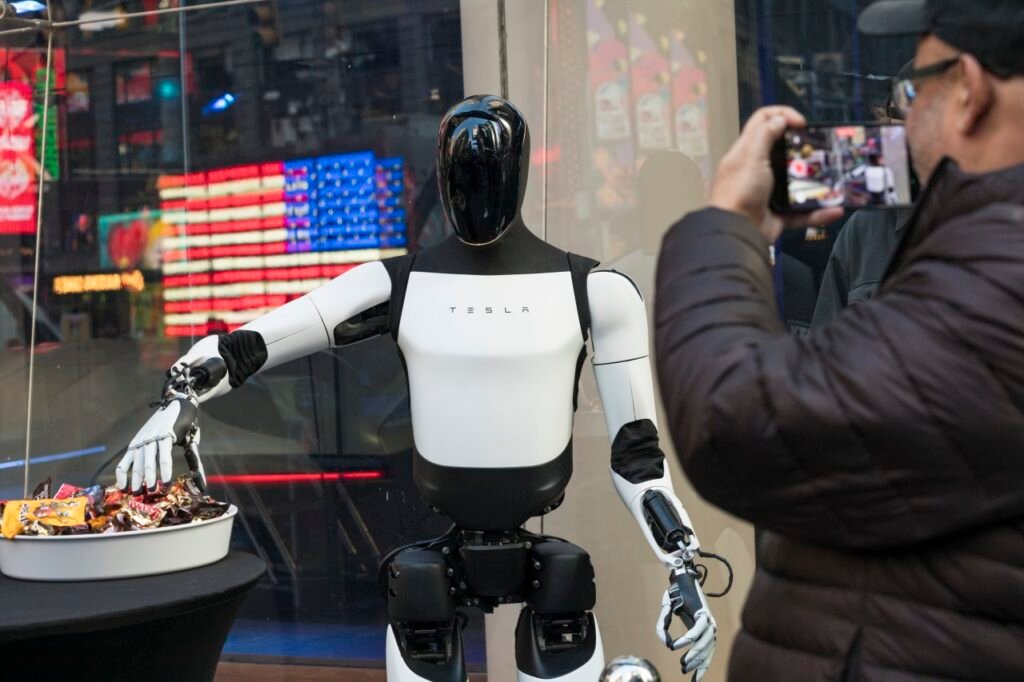
Picture showingTesla’s humanoid robot on public display – Photo Credit: Samson Freeman
Humanoid robots have come a long way since the early prototypes that struggled with balance and basic movement.
Now, in 2026, Humanoid autonomous robots built for real-world applications are currently rolled out in mass numbers for commercial manufacturing activities.
Humanoid Robots taking the World by Storm
Today, Humanoid robots have taken the World by a huge storm with the rollout of newly launched innovative Humanoid robots for Manufacturing, Commercial Services, Factory and Household uses.
Shanghai-based Agibot is probably the largest humanoid robot maker in the world. The company shipped roughly 5,100 units in 2025 — a 39% share of the global market — and crossed 10,000 cumulative units earlier this year, surpassing its first three-year total in just three months. It now offers humanoid robots and robots-as-a-service in more than 17 countries.
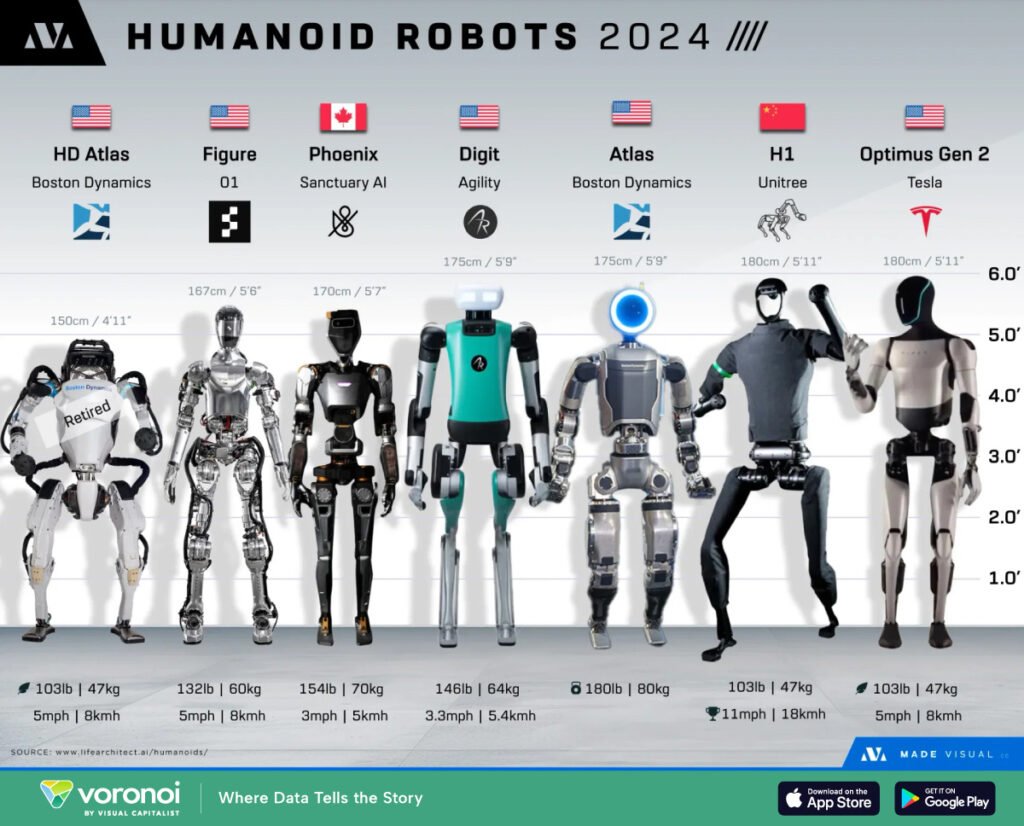
Picture Showing a Visualization, created by Made Visual, compares the new wave of humanoid robots in the last two years – Photo Credit: Harrison Schell
A study by Roland Berger projects that the humanoid robotics market could generate between US$300 billion and $750 billion in annual revenue by 2035, with long-term potential to reach $4 trillion by 2050, rivalling the size of the global automotive industry.
The report said structural labour shortages and ageing populations are becoming major drivers of the sector. Working-age populations in some regions are projected to decline by as much as 22% by 2050, creating a demographic challenge that traditional automation alone may not be able to solve.
Unlike conventional industrial robots, humanoid systems are designed to operate within existing human-centric infrastructure without requiring extensive factory redesigns.
The study said future operating costs could fall to around $2 per hour, potentially transforming manufacturing and logistics operations.
The report said humanoid robots are expected to create new markets beyond the robots themselves, including motors, mechanics, sensors, electronics and production equipment, forming a complex industrial value chain that largely builds on existing manufacturing capabilities.
”The key question is no longer whether humanoid robots will emerge as a viable technology, but how quickly they will scale and which companies will position themselves early enough to capture the opportunity,” said Damien Dujacquier, managing partner for Southeast Asia and Australia at Roland Berger.
Chinese developers were projected to manufacture around 15,000 humanoid robots last year, helping to accelerate cost reductions and improve training capabilities.
In an interview with the President of Agibot’s embodied AI business unit. Dr. Yao Maoqing argues that the humanoid robotics industry is right now crossing a far more important threshold than production capacity: the shift from demos to deployment, and he frames it as a move from what he calls the “X curve” of technology exploration to the early stage of the “Y curve” of real-world deployment growth.
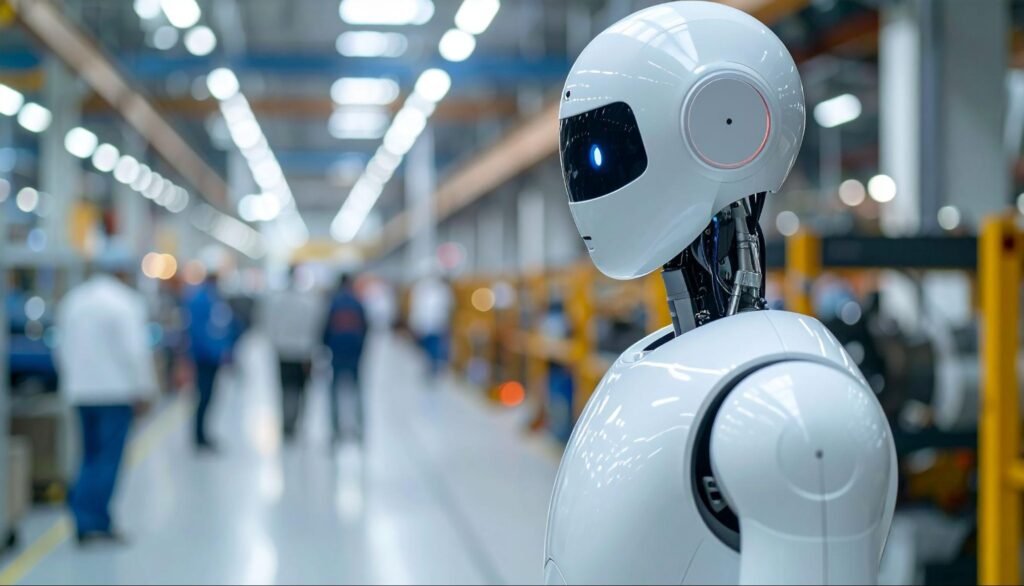
Picture showing a Humanoid Robot on Standby at a Manufacturing Factory in Munich Germany Photo Credit: Andrew Muller/AFP
Today, many people are still asking when robots will become widely adopted. But what we are seeing is that once robots begin to create stable value in real-world scenarios, demand itself may grow faster than many people expect. So whether the future is 100,000 units or more will not be determined only by supply. More importantly, it depends on when the industry truly completes the shift from “selling robots” to “delivering outcomes.” And we are already beginning to see that trend.
Real world Deployments of Humanoid robots in Manufacturing
-CHINA: Chinese humanoid robots Deployed for Car Manufacturing, Training and Assembly
Industrial humanoid robots developed by UBTECH Robotics Corp, a Chinese robot manufacturer based in Shenzhen, south China’s Guangdong province, were introduced to the assembly workshop of a factory of Chinese electric carmaker NIO in Hefei, east China’s Anhui province. They were put to work alongside humans to inspect the quality of automobiles.
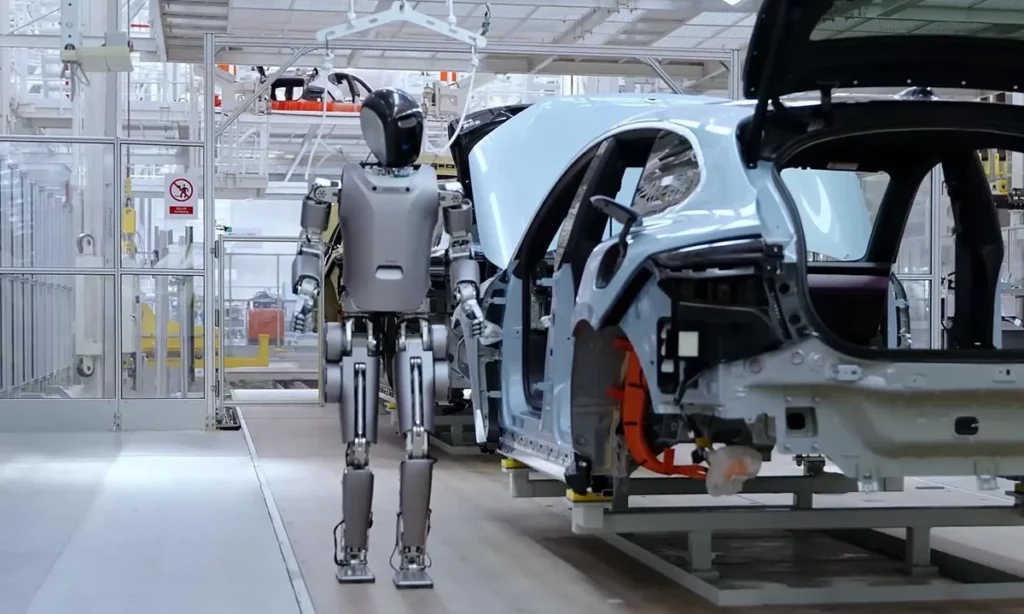
A humanoid industrial robot developed by Chinese robot manufacturer UBTECH Robotics works in an auto workshop. (Photo/Zheng Xuexiong)
These Human-sized machines are equipped with two arms and two legs are slowly making their way into factories. They feature state-of-the-art actuators and sensors powered by artificial intelligence technology.
According to UBTECH Robotics and executive dean of UBTECH Research Institute
”Humanoid robots are now being used in actual car production settings, moving beyond experimental labs. By collecting data from the assembly line and understanding the company’s production needs, they have undergone self-iteration and upgrades for formal deployment,” said Jiao Jichao, vice president of UBTECH Robotics and executive dean of UBTECH Research Institute.
-GERMANY: BMW Automaker Deploy AEON Humanoid Robots in Car Production in Germany.
BMW has becomes the first automaker to deploy humanoid robots in production in Germany. A pilot project with the AEON robot from Hexagon Robotics launches at the Leipzig plant. The foundation was laid by a successful trial run at the Spartanburg plant in the US.
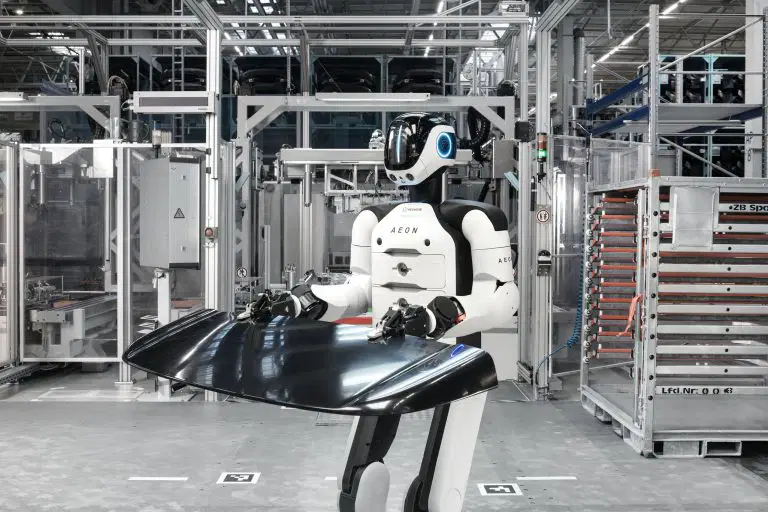
BMW Deploys Humanoid Robots in Leipzig: AEON Rolls Into Production – Photo Credit: BMW
Humanoid robots are currently deployed at the German car manufacturing plant. The pilot project at the Leipzig plant simultaneously marks the European premiere for the concept of so-called Physical AI, in which digital artificial intelligence merges with real machines and robots.
AEON Robots differs from many other humanoid robots by one crucial detail: instead of walking on two legs, it moves on wheels. According to Hexagon, this design decision is the result of extensive testing of various locomotion systems. On the flat floors of a factory hall, wheels are said to be by far the most efficient means of movement in terms of energy consumption and speed. AEON reaches a speed of 2.5 meters per second and can autonomously swap its battery in 23 seconds, which is intended to enable round-the-clock operation.
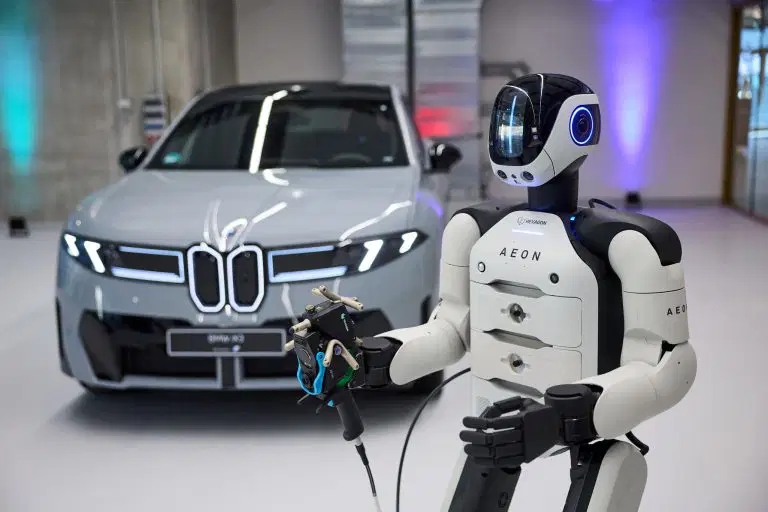
BMW Deploys Humanoid Robots in Leipzig: AEON Rolls Into Production 11: Photo Credit:BMW
AEON’s humanoid body allows various hand and gripping elements or scanning tools to be flexibly docked.
GREECE – Mark One Humanoid Robot for Domestic and Industrial Manufacturing
MARK One is Greece’s first domestically developed industrial humanoid robot, signaling the country’s official entry into advanced domestic humanoid manufacturing. Designed and manufactured by the Greek technology company Axl Imperial, the robot made its official public debut at the Automation & Robotics Expo 2026 in Athens.

Picture Showing the 1st Humanoid Robot developed by Greece Mark One Humanoid Robot by AxI – Photo Credit: AxI
Axl Imperial chief executive Konstantinos Gouliaris described the machine as “an industrial worker” designed to assist with repetitive and potentially dangerous jobs.
Unlike traditional fixed robotic systems, MARK One can move independently, adapt to changing environments and work alongside humans in industrial settings. The robot is also equipped with dexterous fingers, cameras and voice interaction technology, reflecting a shift toward what developers describe as “physical AI.”
-GERMANY and HUNGARY: Apollo Humanoid robot, developed by Apptronik, Deployed for Manufacturing and factory logistics
Apptronik, a robotics company, has unveiled Apollo, a humanoid robot designed to support humans by undertaking hazardous or less desirable tasks, thereby enhancing human safety. Apollo stands out as a leading commercial robot, emphasizing friendly interaction, efficient manufacturing, substantial payload capabilities, and a strong focus on safety.
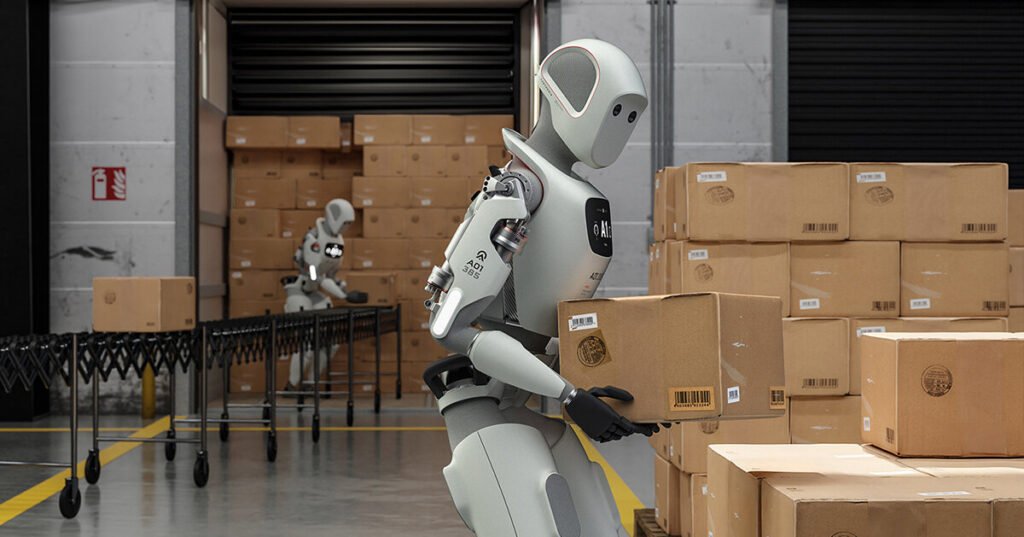
Picture showing Apptronik Humanoid Robot stacking boxes at a Warehouse in Hungary -Photo Credit: Apptronik
Initially, Apollo was intended for use within warehouses and manufacturing plants. However, its application is anticipated to extend to various sectors, including construction, oil and gas, electronics manufacturing, retail, home delivery, elder care, and more. With a height of 172 cm and a weight of 72 kg, Apollo showcases an endearing figure with two expressive eyes. It can carry a maximum capacity of 29 kg, operating with interchangeable battery packs that guarantee up to four hours of uninterrupted functionality.
Apollo empowers individuals to assume more skilled roles, leading to enhanced work efficiency. Apollo contributes significantly by aiding job satisfaction and workforce retention, as it takes on less desirable tasks.
Furthermore, Apollo’s ability to lift heavy objects reduces the risk of physical strain and workplace injuries. Its compatibility with human-designed environments represents the smooth mix of human creativity and technological advancement that made it.
Humanoid Robots to Carry out Home Chores
Humanoid robots are currently rapidly rolled out to Carry out Household chores. This comes as Billionaire Elon Musk says Humanoid robots could eliminate poverty and the need for work. He has told investors the robots could generate “infinite” revenue for Tesla and have potential to be “the biggest product of all time.”
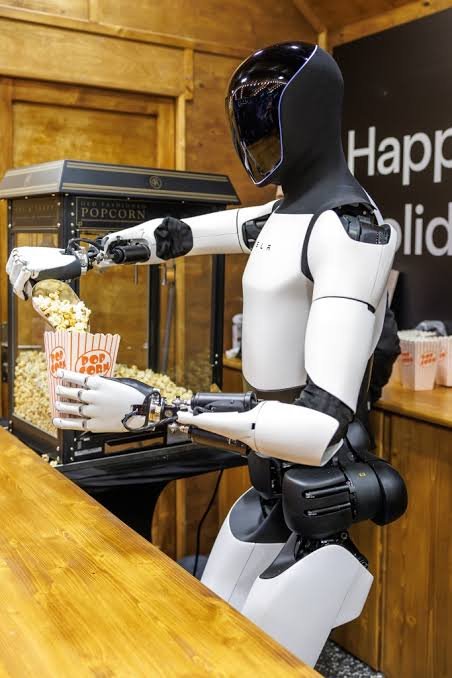
Picture showingTesla’s humanoid robot serving popcorn – Photo Credit: Tesla Robotics
The new breed of bots resemble humans, stand upright and can fold shirts, answer doors, get you coffee and take over back-breaking and monotonous factory work.
“These robots can act, move and behave in ways that we’ve only ever dreamed of before,” Modar Alaoui, founder of the Humanoids Summit, told The Post, predicting we’d better get used to it: “They will get embedded into the fabrics of our everyday lives.”

The Neo Gamma is robot that will take care of all your domestic needs. Photo Courtesy of 1x Technologies
For example, Alaoui says: “You’re going to pull up to the next fast-food place and you’ll see humanoids flipping your burgers and making fries. All the dangerous, boring, dull, mundane tasks will be done by machines. It’s just a very natural evolution to automation.”

The Neo Gamma is robot that can perform all types of house hold chores. Photo Courtesy of 1x
The robots run off an AI chip and can walk at speeds of 5 miles per hour while carrying 45 pounds, according to Tesla, Optimus does everything from waxing the floor to taking a person’s blood pressure, carrying boxes down steps, making pizza and building a “brother” robot.
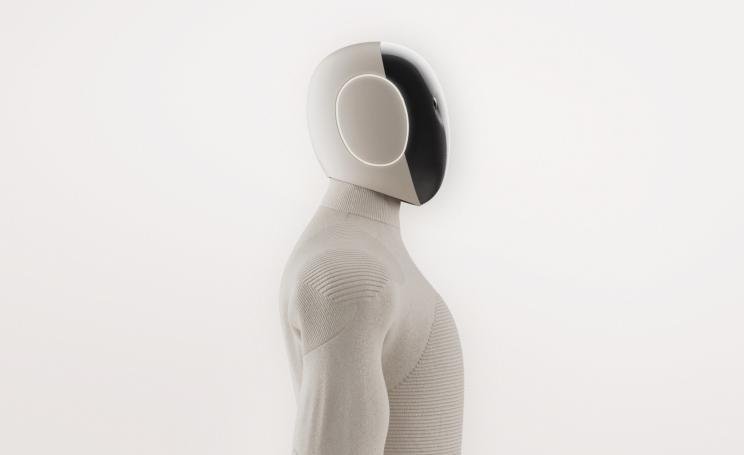
1X Technologies’ Neo Gamma robot, who’s goal is to help around the home: Photo 1X Technologies
Musk has reportedly put the cost of Tesla’s Humanoid robots in the range of $20,000 to $30,000.
Advantages of Humanoid robots in Manufacturing and Home use
-Unmatched Adaptability: Humanoid robots offer unmatched adaptability in manufacturing. Because they mimic human form, they seamlessly integrate into facilities designed for humans. Key advantages of Humanoid robots in Manufacturing and Home usage include the ability to navigate existing workspaces, operate standard tools, work continuously without fatigue, improve workplace safety by taking over hazardous tasks, and quickly adapt to changing production needs.
-Seamless Infrastructure Integration: Traditional factory automation requires heavily modified workspaces. Humanoids are built to operate in brownfield environments, meaning they can use the exact same stairs, doors, and tools that human employees currently use.
-High Adaptability: Instead of being fixed to a single, rigid process like traditional industrial arms, humanoid robots can be rapidly reprogrammed for different tasks. This makes them highly beneficial for low-volume production environments or dynamic, custom assembly lines.
-Around-the-Clock Operations: Humanoids do not require breaks, vacations, or shift changes. They can work continuously to maximize production uptime and improve overall operational efficiency.
-Enhanced Safety and Risk Reduction: By deploying humanoid robots to handle physically demanding, repetitive, or dangerous tasks (such as working in extreme temperatures, handling hazardous materials, or heavy lifting), companies drastically reduce the risk of workplace injuries to human staff.
-Decreased Labor Costs: Automating labor-intensive processes with humanoids can help manufacturers bridge staffing gaps during labor shortages. Humanoid robots can significantly reduce labor expenses within the first year.
-Consistent Quality and Output: With advanced sensors and AI-driven image processing, humanoids ensure high precision and repeatability. This reduces human error, minimizes material waste, and lowers the need for quality control reworks.
Current Challenges and Limitations facing Humanoid Robotics in Manufacturing and Home use
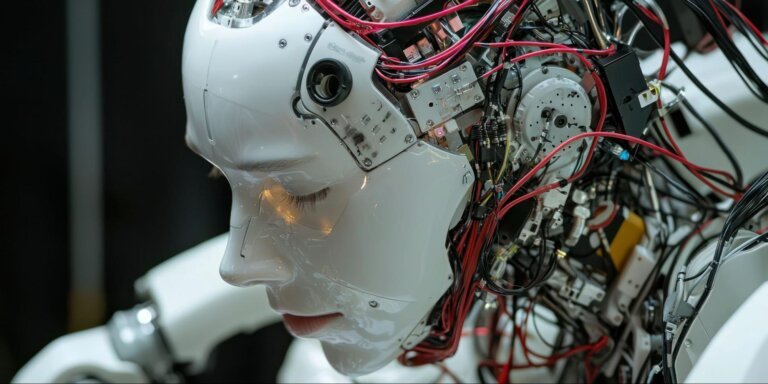
Picture showing the interior Head component of a Robot- Getty Images
Despite the promise, integrating humanoid robots into manufacturing and home usage comes with significant challenges that includes:
Cost: Current humanoid robotic devices range from $20,000 to over $300,000 per unit, without considering integration costs.
Speed and Strength Limitations: Most humanoids move more slowly and lift less than dedicated and fixed industrial automation.
Operation: According to the report by the Bangkok Post, AI architecture was identified as the industry’s primary bottleneck. This comes as Modern humanoid robots rely on vision-language models and require large volumes of synchronised real-world sensor data to learn how to interact with unpredictable environments.
Safety: Although collaborative by design intent, ensuring safe interactions with human workers in fast-paced settings requires extensive testing before it can be implicitly assumed.
Battery Life and Thermal Management: Powering multiple actuators and sensor/control systems is energy-intensive. Runtime per charge is typically under eight hours and can be considerably shorter in high-demand operations.
How Humanoid Robots can Improve Production in Nigeria.
-Manufacturing: Today, Nigeria is largely behind the global pace in terms of manufacturing. Humanoid robots can greatly improve manufacturing in Nigeria by offering AI automated robotic systems for factory production such as car assembling, alcoholic & non-alcohlic beverage productions, sugar production etc.
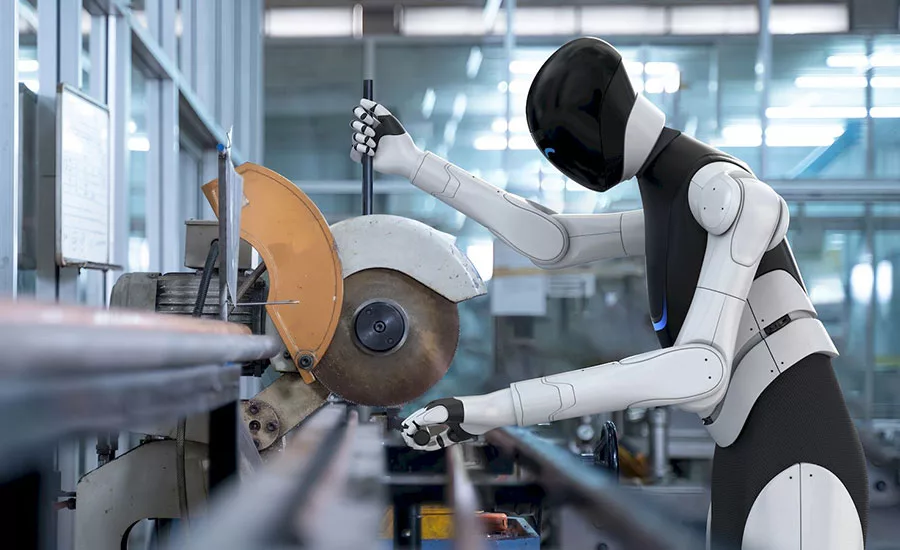
Picture showing a Humanoid Robot Cutting Steel Rods in a Manufacturing Factory – Photo Credit: Andreas Gora/DDP/INSTARimages
-Agriculture: Nigeria is country blessed with rich fertile lands suitable for agriculture. In years past, Agricultural exports in crops like Cocoa, Groundnuts, Yams etc was the sole Mega source of GDP for the nation before the advent of crude oil.
Humanoid robots provide a cleaner, efficient and sustainable means of carrying out labor intensive Agricultural activities. Humanoid robots will greatly improve the countries Agricultural heritage and restore the county back to former glories.
-Mining: Humanoid robots will be a game changer for mining in hazardous areas in the country. Just recently, 37 miners were confirmed dead, and more than 20 others were rescued and treated for severe inhalation in Plateau State. This shows the risk that comes with illegal mining and mining activities in general. Humanoid Robots provide a safer, efficient and sustainable means of carrying out mining activities in Nigeria.
-Oil and Gas Exploration: Humanoid robots could be trained and deployed for Oil and Gas exploration projects by organizations such as NNPC and Dangote Industries. These Humanoid robots are sure to increase productivity while minimizing wastages.
SUBSCRIBE TO OUR NEWSLETTER
[sureforms id=’2360′]






Leave a Reply