Mozambique has officially graduated its first 30 certified drone pilots to strengthen its response to natural disasters such as floods and cyclones. The pilots learned to fly uncrewed aerial vehicles to map damage, find trapped people, and assess danger in real-time.
Rômulo Cunha Corrêa, the African Development Bank’s Country Manager for Mozambique, confirmed that the project has delivered concrete, lasting results. The initiative was financed through a $967,000 KOAFEC grant. It was successfully implemented over 15 months following its launch in April 2025.
Prime Minister Maria Benvinda Levi presided over the ceremony, underscoring the national importance of using drones to strengthen disaster preparedness and response:
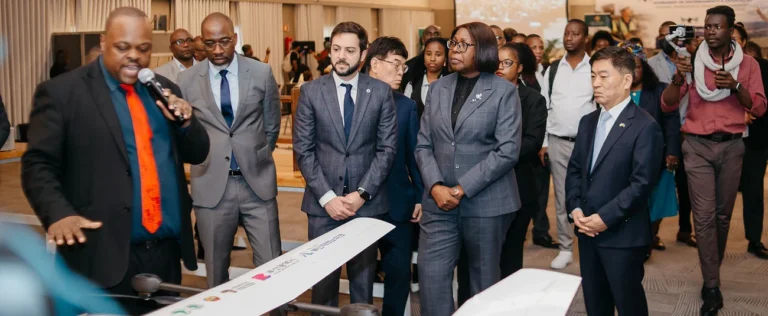
“The use of drones in the management of natural disasters is an initiative that embodies the Government’s commitment to adopting innovative technologies for monitoring extreme weather events, conducive to the protection of human life and the social and economic fabric of our country. The certificate you receive today is more than authorisation to pilot. From now on, you will become part of the country’s first line of response. This mission must be undertaken with discipline and responsibility, because a well-piloted drone can accomplish in a short time what a team would take days to do in disaster areas. A well-piloted drone allows search and rescue teams to obtain precious information about who needs support and what kind of support.”
– Maria Benvinda Levi, Prime Minister, Government of Mozambique
Mozambique faces mounting climate vulnerabilities. Increasingly frequent cyclones and intense tropical storms trigger devastating floods that displace thousands and destroy infrastructure. Meanwhile, prolonged droughts threaten food security and water resources, while rising sea levels endanger coastal communities and ecosystems.
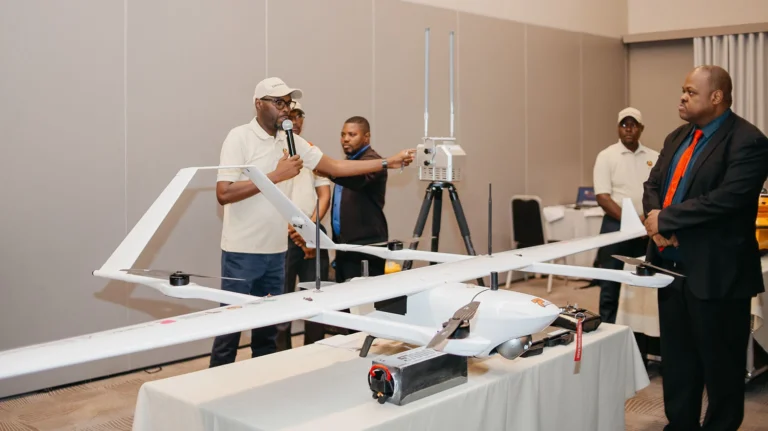
Officials say conventional disaster response mechanisms cannot match the speed and scale of climate-driven emergencies.
The African Development Bank Group supported the initiative in close partnership with the Government of Mozambique. Funded through the Korea-Africa Economic Cooperation (KOAFEC) Trust Fund, the project has strengthened Mozambique’s capacity to leverage drone technologies. These advanced tools will now drive disaster risk management, emergency response, and long-term climate resilience.
Rômulo Cunha Corrêa, the African Development Bank’s Country Manager for Mozambique, said that the project is a huge step in the right direction following successful implementation in a space of over 15 months following its launch in April 2025.
“This project is more than the delivery of equipment. It is about technology transfer, capacity building, innovation, and long-term resilience. It had helped Mozambique build the human and technical foundation needed to use drones, sensors, geospatial data, and digital systems to better protect communities and infrastructure. It fully aligned with the Bank’s commitment to climate resilience, digital transformation, and sustainable development across Africa.”
– Rômulo Cunha Corrêa, Country Manager for Mozambique, African Development Bank Group
At the heart of the ceremony was the graduation of 30 newly certified drone pilots. They are trained in disaster response, agriculture, surveying, and infrastructure management. The practical hands-on program achieved high trainee satisfaction.
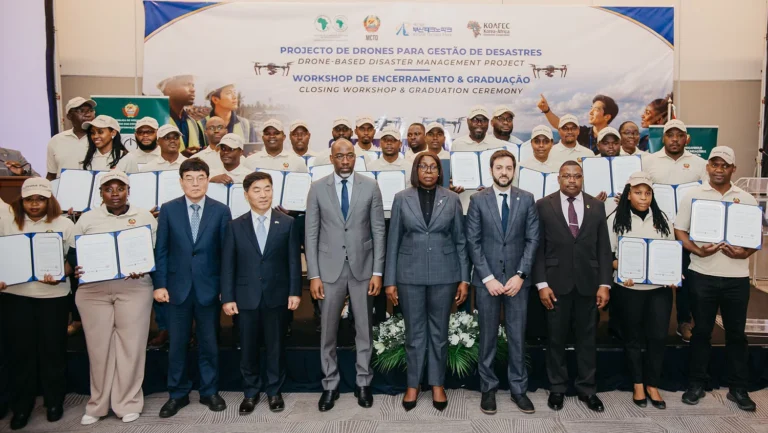
Kisook Kwon, Director of Busan Technopark, described the 30 graduating pilots as the project’s greatest achievement. Kwon emphasised the initiative focused on utilising technology to improve lives.
Friday’s ceremony closes one chapter of African Development Bank–Mozambique–Korea cooperation while opening the next. Building on this momentum, stakeholders plan to expand technology-driven cooperation across Africa.
That momentum will carry forward to the 8th KOAFEC Ministerial Conference, scheduled for Seoul from 8–11 September 2026. Held under the theme “Harnessing AI and Digital Infrastructure for Africa’s Transformation”, the conference will bring together African and Korean stakeholders to advance the exact kind of technology partnership showcased in Maputo.