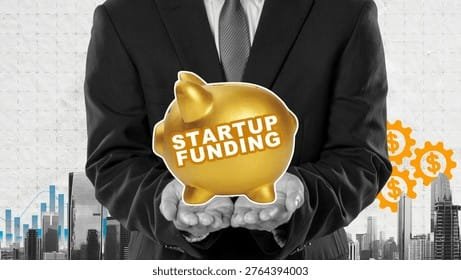
Have you ever read news headlines containing Startups closing huge Million $Dollar funding rounds and Wondered “These Startups must be very successful”. Well you are not alone this line thought. Sadly, history tells us that the reality of business and success goes way beyond huge Million Dollar funding raises as a means to achieve sustained businesses success.
This article highlights 7 Nigerian Startups who have in the past, successfully raised huge $Million funding from foreign investors, yet got bankrupt leading to complete shutdown and final business closure.
Nigeria’s tech ecosystem exploded between 2020 and 2022. Global venture capital flooded in, valuations soared, and headlines celebrated Africa’s next unicorns. Then the funding winter arrived, the Naira crashed, inflation soared, and many of those well-capitalised companies quietly or dramatically shut down.
Collectively, the Startups profiled below raised well over $100 million in funding. Most achieved early traction, hired aggressively, and attracted top Talent and prestigious backers. Yet they could not survive macroeconomic shocks, weak unit economics, Leadership turmoil, regulatory friction, or simple failure to find sustainable product-market fit.
Here is a deeply researched look at some of the highest-profile Nigerian Startup casualties, including founding teams, funding totals, reasons for closure, and what became of the founders.
1. 54gene – Genomics Pioneer That Raised $45 Million in funding
Founded: 2019
Founders: Dr. Abasi Ene-Obong (Lead founder), with co-founders Ogochukwu Osifo, Damilola Oni, and Gatumi Aliyu.
Total funding raised: Approximately $45 million across seed, Series A (Adjuvant Capital), and Series B (Cathay AfricInvest).
Some earlier reports cite higher figures approaching $70 million when including other capital. At some point, 54gene hit a Peak valuation of around $170 million.
What it did: Built Africa’s first major private biobank and genomic database to address the severe under-representation of African genetic data in global pharmaceutical research. It also operated diagnostics labs that generated significant COVID-19 testing revenue.
Why it closed: The Startup got hit badly by COVID 19 leading to revenue drop and severe financial struggles. A pivot into advanced molecular diagnostics proved even more costly. Cash burn remained high while follow-on funding dried up. Leadership chaos followed: Ene-Obong resigned as CEO in late 2022 amid reported internal disputes; the company then cycled through three CEOs in roughly a year. Massive layoffs reduced staff from over 300 to under 40. By mid-2023 the company began winding down operations. Legal battles continued as lead founder Ene-Obong accused major investors of blocking rescue capital and acquisition offers and forcing a fire-sale of assets, including sensitive genomic data. A Lagos court later blocked certain asset sales.
What happened to its Founders after the Collapse?
Ene-Obong co-founded Syndicate Bio in 2023, another genomics-focused venture aiming to build diverse datasets across Africa and other underrepresented regions. The other co-founders have largely stayed out of the public spotlight regarding new ventures.
Okra – Open Banking Infrastructure, $16.5 Million Raised
Founded: 2019
Founders: Fara Ashiru Jituboh and David Peterside.
Total funding: Okra raised $16.5 million in funding including Pre-Seed from TLcom Capital, Seed led by Susa Ventures, Series A led by Base10 Partners.
What it did: Okra Built APIs that lets third-party apps securely connect to Nigerian bank accounts for payments, identity verification, and financial data.
Why it closed: Naira devaluation made USD-denominated Cloud Costs (AWS/Azure) prohibitively expensive. A late pivot to an in-house Naira-priced cloud product called Nebula failed when AWS itself began offering Local-currency billing. Monetisation of the core open-banking APIs was slower than expected, competition intensified (Mono, Stitch), and Peterside left in 2022. The company wounded down in May 2025 and returned an estimated $4–5.5 million in unspent capital to investors in what many describe as an unusually responsible exit.
What happened to the Founders after the Collapse?
Jituboh joined UK-based startup Kernel as Head of Engineering. Peterside had already moved on to other ventures after exiting Okra.
Lidya – SME Digital Lender $16.45 Million Raised
Founded: 2016
Founders: Tunde Kehinde and Ercin Eksin (Both Jumia alumni).
Total funding: Lidya raised Approximately $16.45 million (including a $6.9 million Series A and $8.3 million pre-Series B).
What it did: Lidya Offered collateral-free loans of $500–$50,000 to small and medium businesses using AI-driven credit scoring based on bank statements and alternative data. The Startup Briefly expanded into Poland and the Czech Republic before retreating to Nigeria.
Why it closed: Severe financial distress. Credit defaults, high operating costs, and the broader funding drought left the company unable to continue. Leadership exits accelerated the collapse: Kehinde and CTO Cristiano Machado left in late 2024 amid unpaid salaries. Customer complaints about frozen funds on the Lidya Collect recovery product piled up. The company formally ceased operations in October 2025, stating it could no longer process funds or settle claims.
What happened to its Founders after the Collapse? Public information on Kehinde and Eksin’s subsequent activities remains limited as of Mid-2026.
Edukoya – Edtech That Raised Africa’s Largest Pre-Seed ($3.5 Million)
Founded: 2021
Founder: Honey Ogundeyi (former Google Nigeria roles and serial entrepreneur).
Total funding: $3.5 million pre-seed led by Target Global, with angels including Shola Akinlade (Paystack) and Kuda founders.
What services did EduKoya render? Live tutoring and digital content for K-12 students. At scale, EdTech onboarded over 80,000 students and ran thousands of sessions.
Why it closed: Edukoya ultimately shutdown it’s operations with the company saying it was “ahead of its time.” Also, Limited internet connectivity, high device costs, low household disposable income, and weak conversion from free to paid users made scale impossible. After exploring partnerships, mergers, and pivots, EdTech finally shut down it’s operations in February 2025 and returned remaining capital to investors.
What happened to Founders after the Collapse? lead founder Ogundeyi has kept a relatively low public profile regarding immediate next ventures, though her earlier track record suggests she is unlikely to stay sidelined for long.
Medsaf – Pharmaceutical Supply Chain, $7 Million Raised
Founded: 2016/2017
Founders: Vivian Nwakah (CEO), Temitope Awosika, and João Pinheiro.
Total funding: Medsaf raised $7 million from Y Combinator, Techstars, and other backers.
What it did: Medsaf built a Digital marketplace connecting hospitals and pharmacies to quality-assured medicines to fight counterfeit drugs. It worked with more than 1,000 hospitals.
Why it closed: Outstanding debts from hospitals, FX shocks, failed Series A fundraising, investor pullouts, and a collapsed acquisition attempt. The company quietly wound down around early 2024–2025. Nwakah cited unpaid receivables and the inability to secure bridge capital that would have extended runway into profitability.
What happened to Founders after the Collapse? The founders quitely exited the public atmosphere. Up till date, there is Limited public updates on subsequent projects.
Other Notable Cases
- Kippa (founded 2021 by Kennedy Ekezie-Joseph, Duke Ekezie, and Jephthah Uche): Raised $11.6–$14.3 million for SME bookkeeping and payments tools. Agency banking product shut due to naira devaluation and POS costs; founders largely exited day-to-day roles; the company effectively went quiet/deadpooled.
- Lazerpay (founded 2021 by then-19-year-old Njoku Emmanuel with co-founders): Raised ~$1.1 million for crypto payments. Crypto winter, high burn, failed seed round, and regulatory uncertainty forced closure in April 2023. Emmanuel later founded Ultramarkets, a DeFi perpetuals protocol.
- Thepeer (founded 2021 by Chike Ononye, Michael Okoh, and initially Sultan Akintunde): Raised ~$2.3 million for wallet-to-wallet APIs. Closed in April 2024 citing compliance issues and slow adoption; returned ~$350,000–$358,000 to investors. Later allegations of missing funds and poor governance surfaced.
This article proves that Startup success in Nigeria doesn’t rely only on raising huge amounts of money from foreign investors. In Nigeria today, achieving Sustainable Startup development and upward growth requires proper market analysis, planning, proper product development, deployment, disciplined financial documentation and monitoring.
Many Startup founders get it wrong all together with poor planning. They all go thinking “Once we get investors to put in resources, then we will stabilize and expand our product or service”. This is absolutely WRONG!
A strong and sustainably successful Startup is one that addresses a clear market problem. These startups start their operations in small and modest beginnings, start reaping in little profits right before attracting investors and raising Pre-Seed or Seed funding and expanding their operations.
Nigeria’s startup scene is not dead. Survivors with stronger unit economics, local-currency resilience, and tighter governance continue to raise and grow. But the graveyard of well-funded failures is a permanent reminder: capital is necessary but never sufficient. In a high-volatility market, the companies that endure are those that treat every naira and every customer as hard-won rather than inevitable.