
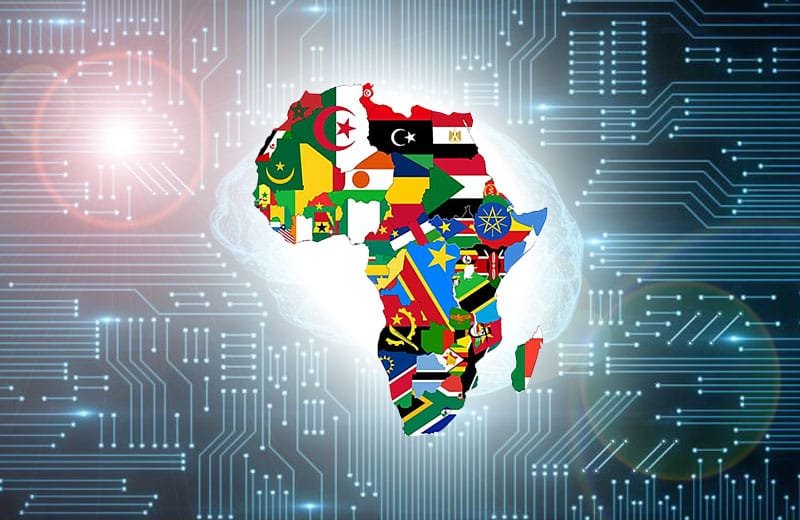
Africa’s economy is expanding rapidly, powered by mobile connectivity, fintech, manufacturing, green Automobiles, and emerging AI applications. Yet a persistent shortage of skilled tech professionals and broader technological knowledge is preventing the continent from capturing its full potential.
This skills gap translates into over $10 billion dollars in unrealised revenue, delayed productivity gains, constrained innovation, and slower structural transformation each year for Africa. The cost is not abstract, it shows up in unfilled vacancies, stalled digital projects, reduced competitiveness, and forgone GDP growth.
Africa’s technology and digital sectors already generate substantial economic value. According to the GSMA’s Mobile Economy Africa reports, mobile technologies and services contributed approximately $220 billion to the continent’s economy in 2024 (about 7.7% of GDP) and rose to $240 billion in 2025 (around 7.8% of GDP). The sector supported roughly 13 million jobs and generated tens of billions in public revenues. Projections point to $270–290 billion by 2030 as 4G, 5G, and digital services expand.
Mobile money remains a standout success. Sub-Saharan Africa leads globally in adoption, with registered accounts exceeding one billion in recent years and transaction values reaching the trillion-dollar range. This has driven financial inclusion and added meaningfully to GDP in high-adoption countries.
The AI market, though smaller, is growing fast. Mastercard and related analyses estimate its size at roughly $4.5–4.9 billion in 2025, with a projected compound annual growth rate near 27% that could take it to about $16.5 billion by 2030.
Digital transformation, cloud, SaaS, and related markets are also scaling, with tens of billions in projected spend. Startup funding rebounded in 2025 after a funding winter, with African tech ventures raising over $1.6 billion. Smartphone shipments grew strongly in 2025, reflecting rising device penetration.
Africa’s overall GDP is in the range of roughly $3–3.6 trillion in recent estimates. Digital and mobile contributions already form a material share, yet the continent still captures only a fraction of global tech value relative to its population and growth trajectory.
Internet usage remains low (around 38% in some recent figures versus a global average near 68%), and a large “usage gap” persists: hundreds of millions live under mobile broadband coverage but do not use the internet due to affordability, relevance, and skills barriers.
Africa’s Skilled Human Technology Capacity
Africa’s tech talent pool is growing quickly but remains small and unevenly distributed relative to needs. Platforms like GitHub place the figure around 4.7 million with the world’s fastest growth rate in recent years with heavy concentration in a handful of countries including: South Africa, Nigeria, Egypt, and Kenya accounting for a large share of both skilled developers and maintenance engineers.
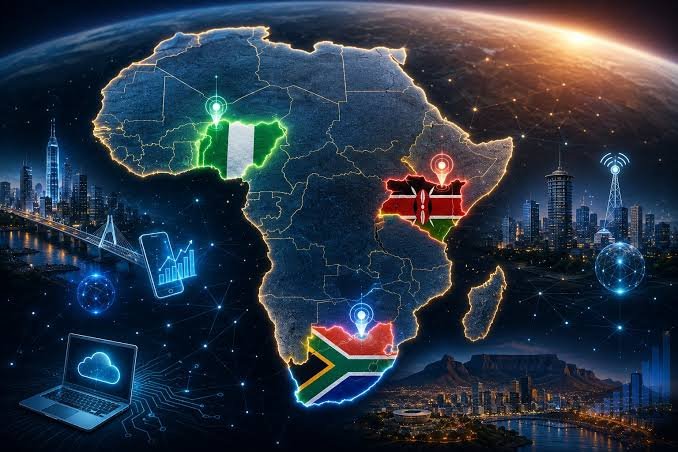
AI specialists represent only a small fraction of this pool with roughly 5% of the global AI workforce despite Africa’s nearly 19% share of world population. University programmes in AI and data science remain limited; many aspiring professionals rely on online courses with uneven outcomes. Foundational digital skills are also insufficient: in Nigeria, only about 7% of 15–24-year-olds reportedly possess marketable ICT skills in some assessments, and advanced skills (cybersecurity, cloud, data analytics, software engineering) lag employer demand across markets.
South Africa produces tens of thousands of digitally skilled workers annually but faces chronic shortages, with surveys showing high percentages of firms struggling to fill ICT roles and only around 42% of IT job applicants meeting requirements in recent data. Brain drain “Japa ” compounds the problem as skilled professionals migrate for higher pay and better opportunities.
How Africa’s Lack of Skilled Tech Professionals Limits Development
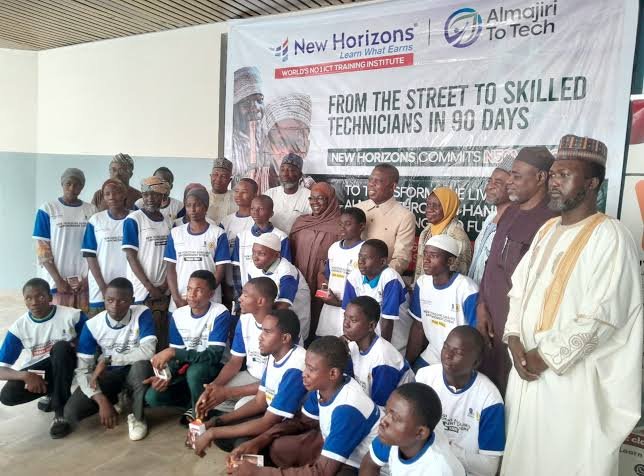
The skills shortfall directly constrains revenue, productivity, and structural change. In Nigeria alone, the Sector Skills Council for ICT and related analyses estimate up to $11 billion in annual unrealised digital-economy value due to the persistent talent deficit. This threatens ambitions to raise ICT’s contribution to GDP significantly and undermines investor confidence even as the sector grows. Broader effects include:
- Delayed digital transformation in government, banking, agriculture, health, automobile, and manufacturing, leaving productivity gains on the table.
- Project delays, higher costs for importing talent or outsourcing, and reduced ability of local firms to scale or innovate.
- Limited capacity to develop and adapt AI solutions for local challenges (agriculture yields, healthcare diagnostics, financial inclusion), despite projections that AI could lift Sub-Saharan African GDP by around 4% over a decade under improved infrastructure, power, internet, and skills conditions.
- Missed opportunities in the global digital services and outsourcing markets, where demographic trends in higher-income countries create demand that Africa’s youth bulge could meet.
- Widening inequality: urban, educated cohorts capture most opportunities while rural populations and women face higher barriers.
- Reduced ability to retain value from natural resources, logistics, and services as these sectors digitalise.
Foundational education quality, limited industry-academia alignment, and insufficient lifelong learning systems mean supply fails to match the rising demand for both basic workplace digital skills and specialised expertise. The result is a paradox of high youth unemployment alongside unfilled tech vacancies.
What Africa Must Do to Improve the Total Number of Skilled Tech Professionals
Closing the gap requires coordinated, scaled action across education, industry, and policy:
- Reform and expand education pipelines. Embed computational thinking, coding, data literacy, and digital skills from secondary school onward. Africa must Expand university and technical programmes in software engineering, AI, cybersecurity, cloud computing, and data science. Prioritise micro-credentials, short practical courses, and recognition of prior learning alongside traditional degrees so that skills match employer needs.
- Scale public-private partnerships and outcomes-based training. Models that pay for verified employment or skills outcomes (rather than just training inputs) have shown high absorption rates. South Africa’s digital skills initiatives and Nigeria’s 3 Million Technical Talents 3MTT demonstrate the potential. Going further, National programmes which equips millions with digital skills in Kenya, Ghana’s coder initiatives, and private efforts by Google, Microsoft, MTN, and others should be expanded and better coordinated.
- Focus on advanced and in-demand skills while building foundations. Africa should Prioritise AI, cybersecurity, data analytics, cloud, and software development while ensuring basic digital literacy reaches far more people, especially women, rural youth, and underserved groups.
- Improve infrastructure and the enabling environment in tandem. Skills without reliable power, affordable connectivity, and relevant local content yield limited returns. Parallel investments must be channeled in these directions to reduce the usage gap and create demand for talent.
- Retain and attract talent. Address brain drain through competitive local opportunities, diaspora engagement programmes, and policies that make return or remote contribution attractive. Facilitate intra-African talent mobility.
- Strengthen data, coordination, and lifelong learning. Better real-time labour market information, industry-led skills councils, and continuous upskilling systems will reduce mismatches. Governments should aim for measurable targets tied to Agenda 2063 and national digital strategies.
Africa already possesses a young, growing population and demonstrated capacity for leapfrogging in mobile money and other areas. The technology market is real and expanding.
Converting that potential into sustained revenue and development requires treating skilled human capital as a strategic priority on the same level as infrastructure.
Without it, the continent will continue to leave billions on the table every year. With deliberate investment and execution, the same demographic and digital trends that currently highlight the gap can become the foundation for inclusive growth.