
Britain has Launched the Worlds first advanced High Security Robot Lab built to speed up disease research and fight the next Global pandemic.
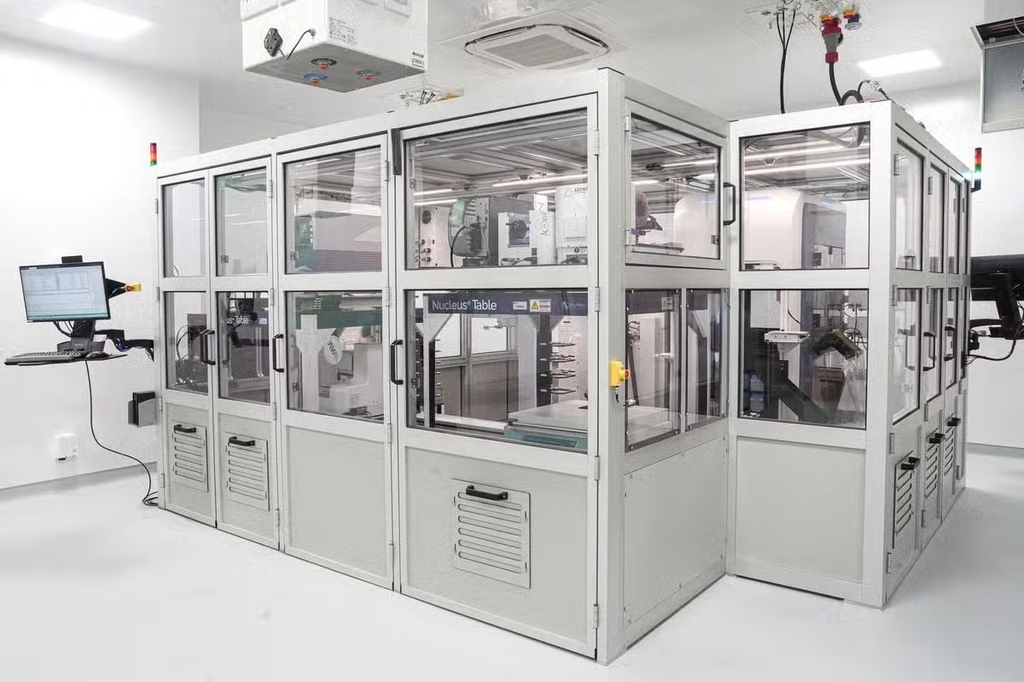
Researchers in Liverpool say a new robotic laboratory could help speed up vaccine development and reduce the need for animal testing.
The £20m facility at the Liverpool School of Tropical Medicine will use lab-grown miniature human organs to test treatments for infectious diseases.
The facility, which has been supported by the Infection Innovation Consortium (iiCON), is due to be fully open by 2027.
Pro-vice chancellor for research and innovation, Prof Giancarlo Biagini, said: “It is really exciting to be involved and it’s going to accelerate the way we develop drugs, vaccines and diagnostics.”

Biagini said that the use of mini organs, such as the heart and brain, is “amazing technology”, adding: “You can actually see the heart beating”.
He said using tissue created from human donors, rather than animals, could improve research and provide more reliable data.
The school’s former boss and founding member of iiCON, Prof Janet Hemingway, said the project will “create several hundred cutting-edge technology jobs”.

She added: “Although the robots will do a lot of the work, we are training humans to develop that technology.
”Clinicians and researchers will be able to spend more of their time thinking how they do the science better rather than routine work.”
New £20m Robot Lab in Liverpool to Speed Up Disease Research
The pioneering £20 million high-security robotic laboratory launched at the Liverpool School of Tropical Medicine, marks a major step forward in the fight against infectious diseases.
Known as the Liverpool Accelerate Laboratory (formerly the Liverpool Robotic Infection Research Laboratory), the facility is the UK’s first Category 3 robotic infection research lab. It combines advanced robotics, artificial intelligence, and human organoid technology to accelerate the discovery of next-generation drugs, vaccines, and diagnostics.
The lab is now open to industry and academic partners, with full operations expected by 2027. Developed through the Infection Innovation Consortium (iiCON), it is designed to transform how researchers study and combat high-risk pathogens while reducing reliance on animal testing.
Cutting-Edge Technology at the Heart of the Lab
The Liverpool Accelerate Laboratory is a secure Containment Level 3 (CL3) facility fitted with state-of-the-art liquid handling systems, collaborative robotics, and AI-driven automation. Robots can operate around the clock, handling repetitive tasks such as precise liquid transfers, incubation, and high-throughput screening of thousands of drug and vaccine candidates without the need for constant human intervention.
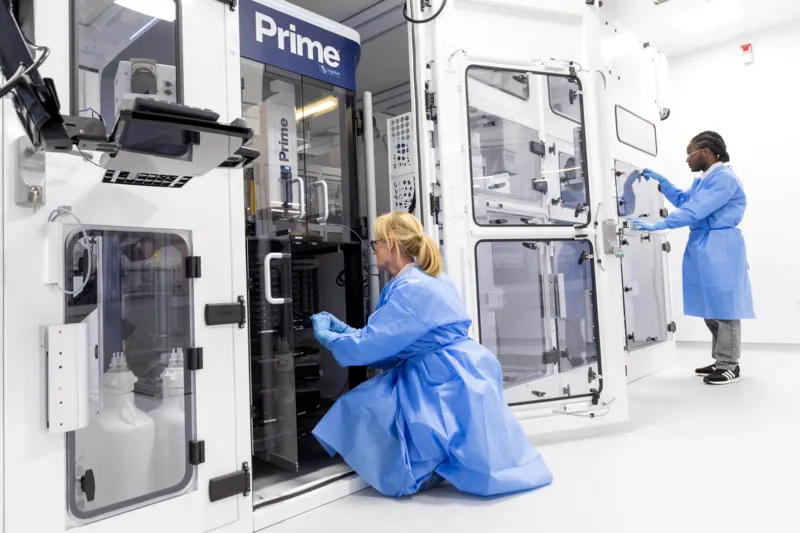
This automation not only increases speed and reproducibility but also enhances safety. Scientists can remain outside the high-containment zone while robots work with dangerous pathogens under negative pressure systems that prevent airborne contaminants from escaping. The building itself is steel-clad and features an air-lock entrance, meeting Schedule Five biohazard security requirements and aligning with forthcoming changes under the Terrorism Act. This positions the lab as a key national biosecurity asset.
Human Organoids: A More Accurate Alternative to Animal Testing
One of the lab’s most significant innovations is its focus on organoid technology. Researchers grow miniature, three-dimensional versions of human organs such as lung, liver, tonsil, and skin from human cells. These organoids closely mimic the structure and function of real human tissue, allowing scientists to observe how infections develop and how potential treatments interact with human biology far more accurately than traditional animal models.
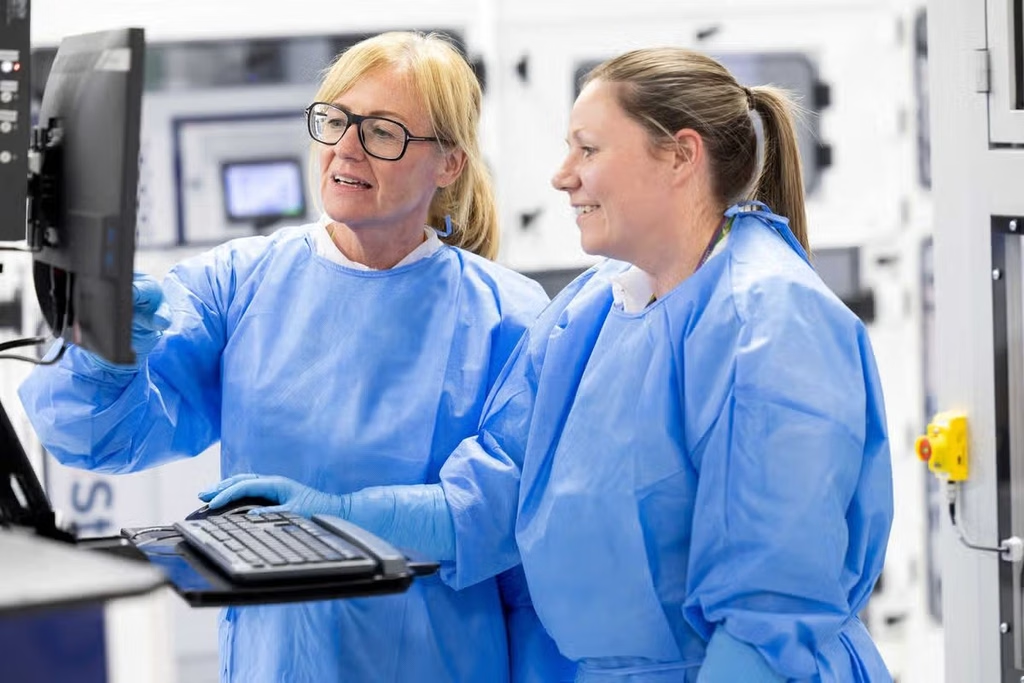
Professor Giancarlo Biagini, Pro-Vice-Chancellor for Research and Innovation at the Liverpool School of Tropical Medicine, described the technology as “amazing,” noting that researchers can even see miniature hearts beating in the lab. Using tissue derived from human donors is expected to generate more reliable data and improve the translation of research findings into effective treatments for patients.
This approach aligns with the UK government’s broader strategy to reduce animal testing in science. By providing human-relevant models earlier in the research pipeline, the lab aims to speed up development timelines, improve predictive accuracy, and support more ethical research practices.
Economic and Scientific Impact of UK’s £20 Million Medical Robotic Lab
The £20 million facility has been supported by £10 million from the Liverpool City Region Life Sciences Innovation Zone programme, with additional funding from Research England’s Expanding Excellence in England (E3) fund and the Wolfson Foundation. Beyond its scientific contributions, the lab is projected to generate £40 million in investment over its first three years and create several hundred high-skilled technology jobs.
Professor Janet Hemingway, founding director of iiCON and former director of the Liverpool School of Tropical Medicine, has already highlighted the dual benefits saying:
“Although the robots will do a lot of the work, we are training humans to develop that technology. Clinicians and researchers will be able to spend more of their time thinking how they do the science better rather than routine work.”
The facility builds on Liverpool’s existing strengths. The city already hosts the largest concentration of Containment Level 3 laboratories in the North West of England, infrastructure that proved critical during the COVID-19 pandemic response. The new robotic lab extends this capability, enabling closer collaboration between academia, industry, and the NHS, and potentially accelerating regulatory pathways for new products.
Infectious diseases continue to pose major threats, particularly to vulnerable populations worldwide. The Liverpool Accelerate Laboratory is designed to tackle high-risk and deadly pathogens safely and at scale. By integrating AI analysis with automated organoid research, scientists can study infection dynamics more rapidly and identify promising antimicrobial therapies with greater confidence.
The lab’s open-access model invites both academic researchers and commercial partners to use its capabilities, supporting innovation across the infection R&D ecosystem. This collaborative approach is expected to strengthen the UK’s position as a global leader in health innovation and pandemic preparedness.
With full operations scheduled for 2027, the Liverpool Accelerate Laboratory represents a significant investment in the future of disease research. It demonstrates how robotics, AI, and human-based models can work together to deliver faster, safer, and more accurate scientific progress.
As Professor Biagini noted, the facility will “accelerate the way we develop drugs, vaccines and diagnostics.” For patients facing infectious disease threats, and for the researchers working to protect them, this new robot lab offers a powerful new tool in the ongoing effort to save lives.