
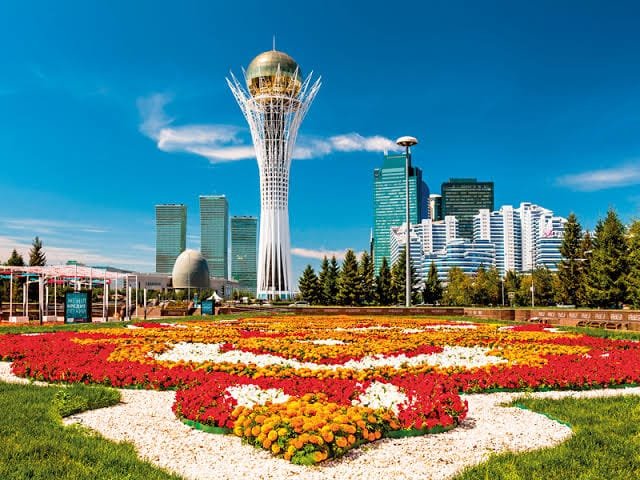
Kazakhstan sits more than 6,000 miles from Silicon Valley, yet in 2025–2026 a growing roster of prominent tech voices has been moving to Kazakhstan.
Telegram founder Pavel Durov has called the country the “economic powerhouse of Central Asia” and praised its ambitions; the company has opened a regional office and launched an AI lab in Astana. Venture capitalist Tim Draper and former Google China president Kai-Fu Lee have also highlighted its potential as an entrepreneurship and AI hub.
On Sunday, former Coinbase tech chief and Andreessen Horowitz partner Balaji Srinivasan said that his live-in startup community has officially opened in Kazakhstan, in another vote of confidence for the Central Asian country.
”Kazakhstan is a high-tech country that recently ranked #1 in the International Physics Olympiads. It’s full of confident, smart, young people. And it’s now recruiting global talent from around the world,” Srinivasan said in an X post on Sunday, announcing the launch.
In August, Srinivasan reopened Network School, his community for founders, crypto enthusiasts, and digital nomads, in Astana after its previous base in Malaysia was shut down. Srinivasan has described the school as “Silicon Valley outside Silicon Valley” and said that he wants to build it in a “techno-optimist country” that is affordable, meritocratic, and attractive to global talent.
Srinivasan isn’t alone in his enthusiasm for Kazakhstan.
During a visit to Astana last week, Binance founder Changpeng Zhao said he was “particularly impressed” by the scale of Kazakhstan’s technology, education, and infrastructure projects.
Venture capitalist Tim Draper and former Google China president Kai-Fu Lee have also praised the country’s potential as an entrepreneurship and AI hub.
This is less a story of Billionaires packing up and permanently relocating their primary residences, and more one of strategic interest, investment, offices, talent programs, and infrastructure deals. Kazakhstan is actively courting global tech talent and capital as it tries to diversify away from oil, gas, and minerals.
Kazakhstan’s biggest structural advantage for compute-heavy tech is energy. It has abundant, relatively cheap electricity historically subsidized by its resource wealth, including coal and uranium.
Officials have highlighted rates around 2.5 cents per kWh for high-performance computing projects—far below many European or U.S. data-center markets. Cold winters in places like Ekibastuz also help with natural cooling for server farms.
This has fueled major AI infrastructure pushes. In 2026 Kazakhstan signed deals worth up to $10 billion with Nvidia-backed Firebird and related partners for a “Data Center Valley” project centered in the energy-rich northeast starting with a 125 MW facility targeted for 2027 and ambitions to scale toward hundreds of megawatts or a gigawatt.
The pitch: turn coal and industrial power into digital export revenue, host large GPU clusters, and attract hyperscalers and AI companies. Separate sovereign AI hub efforts involve local players like Freedom Holding in partnership with Nvidia.
Earlier crypto-mining waves demonstrated the power and real-estate advantages, even if regulation and grid strain later cooled that boom. The country is now trying to bring activity back under clearer rules, including crypto-related incentives and planned “CryptoCity” concepts.
Tax Breaks, Visas, and a Talent-Friendly Pitch
Astana Hub, the flagship tech park, offers aggressive incentives: zero corporate income tax, VAT, and other breaks for qualifying IT companies and residents, funded in part by resource revenues. Digital nomad and “Neo Nomad” visas, plus a Digital Nomad Residency program offering multi-year (up to 10-year) residence permits for IT specialists, aim to attract remote workers, founders, and skilled professionals with relatively light requirements compared with many Western schemes.
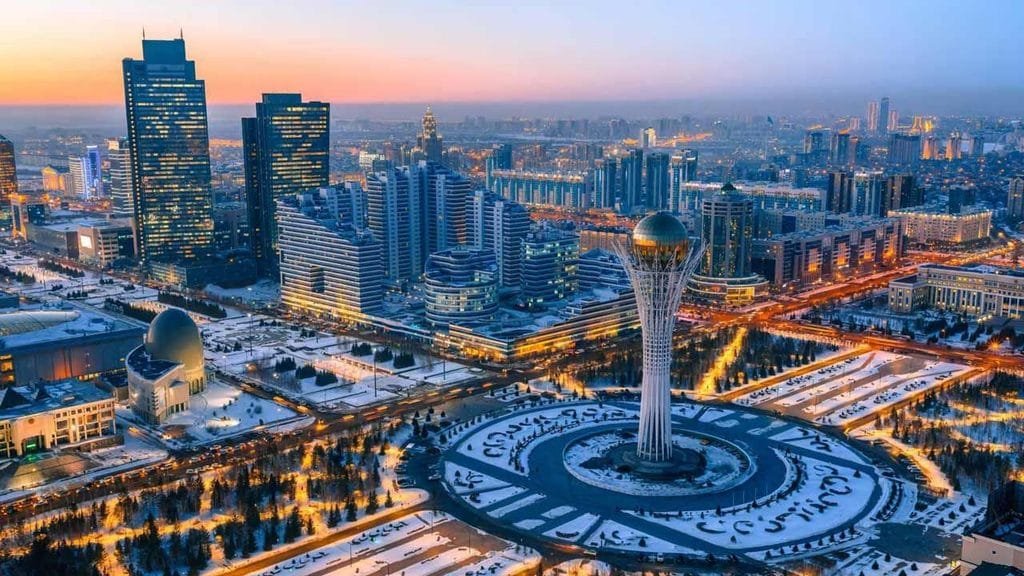
In May, President Kassym-Jomart Tokayev ordered further immigration reforms designed to attract highly skilled workers, entrepreneurs, and foreign investors. Astana Hub, a futuristic-looking techno-park where the Network School is located, also offers tax incentives to qualifying tech companies.
”Artificial intelligence develops where there are talented people, bold ideas, and an environment in which they can be realized,” Zhaslan Madiyev, the country’s deputy prime minister, said in a July press release. “We are building exactly such an ecosystem in Kazakhstan.”
Hundreds of foreign IT specialists have already received related statuses, with applications from dozens of countries. President Kassym-Jomart Tokayev has pushed immigration and investment reforms specifically to draw highly skilled workers, entrepreneurs, and capital. The government frames AI and digitalization as matters of economic diversification and “digital sovereignty.”
A post-2022 wave of Russian IT specialists and startups relocating to Kazakhstan also injected talent, capital, and companies into places like Astana Hub, boosting IT service exports. Local education strengths (strong performance in international science olympiads is often cited) and a relatively young population are part of the pitch.
Sandwiched between Russia and China, with growing connectivity ambitions (including fiber routes), Kazakhstan positions itself as a Eurasian node less entangled in some of the regulatory and geopolitical pressures facing Western hubs or China.
For crypto- and tech-oriented figures who have clashed with regulators elsewhere, the combination of incentives, relative affordability, and government enthusiasm is appealing. Telegram’s deeper presence and Binance’s agreements illustrate the pattern: engagement, offices, and partnerships rather than wholesale headquarters moves.
Though Kazakhstan is still early in this transition. Data-center and AI projects face execution risks around power delivery, financing, chips, and timelines.
The political system is authoritarian by Western standards, and earlier mining experiences highlighted governance and corruption concerns for some observers. Cost of living and quality-of-life factors vary; Astana and Almaty are modernizing but remain distant from established tech ecosystems.
Still, the combination of cheap energy for AI-scale compute, deliberate tax and visa policies, active government recruitment, and visible endorsements from figures like Srinivasan, Zhao, and Durov has put Kazakhstan on the map for a slice of the tech world looking beyond traditional hubs. Whether it becomes a lasting “Silicon Valley of the steppes” depends on delivery but the courtship is real and intensifying.