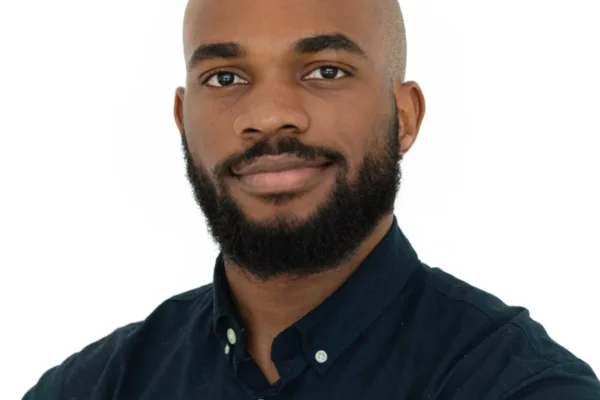
Chika Onochie, a Nigerian pharmacist and doctoral researcher at McGill University, has received a research award valued at up to CAD $100,000 from Québec’s Fonds de recherche du Québec (FRQ).
The funding, awarded under the Doctoral Research Scholarships programme following the Fall 2025 competition, followed a positive recommendation from a peer-review committee and deliberations by the FRQ Board of Directors.
It will support his PhD work developing new biomarkers that could offer deeper insights into male fertility specifically, whether sperm are functionally capable of fertilising an egg.
Infertility affects millions of couples worldwide and is a shared challenge, not solely a female issue.
Male factors contribute to roughly half of all cases. Traditional semen analysis remains the cornerstone of male fertility assessment. It typically evaluates sperm count, motility (movement), and morphology (shape).
These parameters provide useful baseline information, yet they do not always explain why some couples struggle to conceive.
In a notable proportion of cases sometimes classified as idiopathic or unexplained infertility, sperm may appear normal by conventional metrics but still lack the functional capacity to fertilise an egg successfully.
Sperm must undergo a series of complex physiological changes, including capacitation, to become competent for fertilisation. These processes involve finely tuned molecular signalling, redox (oxidation-reduction) balance, and protein modifications.
Disruptions in these pathways often linked to oxidative stress can impair function without necessarily altering the numbers or shapes measured in standard tests. Onochie’s research targets this gap by seeking molecular biomarkers that reveal sperm’s true fertilising potential.
Such biomarkers could improve diagnostic accuracy, guide more precise clinical decisions, reduce unnecessary or prolonged investigations for women, and support more balanced, couple-centred reproductive healthcare.
In many settings, including parts of Nigeria and other low- and middle-income countries, male evaluation has historically been limited or secondary. Expanding the scientific toolkit for assessing male fertility addresses both a biological and an equity issue.
Onochie’s path into this specialised field was shaped by his experiences in Nigeria.
In 2021, he graduated from the University of Benin with First-Class Honours in both the Bachelor of Pharmacy and Doctor of Pharmacy programmes. After graduation he worked as a clinical pharmacist, including at Central Hospital in Benin City, and later as a Clinical Trial Assistant with the International Research Center of Excellence at the Institute of Human Virology Nigeria in Abuja.
In clinical practice he observed that infertility assessments often involved extensive investigations for women, while male evaluation frequently stopped at basic semen analysis. This disparity, combined with the realisation that reliable functional biomarkers were still lacking, sparked his interest in the molecular underpinnings of sperm function.
“I came to understand that the problem was not simply that men were being overlooked, but that we still lack reliable biomarkers that can tell us whether sperm are functionally capable of fertilization,” he has noted.
In 2023 he moved to Canada to pursue a PhD in Pharmacology at McGill University. He conducts his research under the supervision of Professor Cristian O’Flaherty at the Research Institute of the McGill University Health Centre (RI-MUHC).
O’Flaherty’s laboratory specialises in the molecular processes of sperm production, function, activation, and the development of better diagnostic approaches for male infertility.
Onochie’s work focuses on molecular changes in sperm, particularly those related to redox signalling and protein modifications that may serve as indicators of fertilising competence.
He has already contributed to the peer-reviewed literature. In 2025 he co-authored a review on the role of redox-induced protein modifications in spermatozoa in health and disease.
More of his recent work includes studies on how specific molecules and oxidative stress affect sperm quality and on the regulation of redox signalling during human sperm capacitation. These publications demonstrate early productivity and alignment with the laboratory’s expertise.
The FRQ Doctoral Research Scholarship is competitive. It provides substantial multi-year support with a total sum of CAD $100,000 and signals that the proposed research was judged high-quality by independent experts. The award is conditional on the necessary budgetary appropriations by Québec’s National Assembly and related FRQ decisions, standard language for such provincial funding.
Beyond the funding itself, the recognition carries symbolic weight. Onochie has emphasised that the scientific foundation built in Nigeria enabled him to compete successfully on the international stage.
“My training there gave me the foundation to compete internationally, and I am proud to carry that foundation forward in my research.”
The award therefore stands as both personal achievement and evidence of the quality of Nigerian higher education and professional training when students are given opportunities to advance.
Broader Implications for Reproductive Health and African Excellence
Improved biomarkers for male fertility could eventually influence clinical practice. Better tests might help identify treatable causes of impaired sperm function, refine patient counselling, optimise assisted reproductive technologies, and reduce the emotional and financial burden of unexplained infertility. They could also contribute to a cultural shift in which male reproductive health receives attention comparable to female reproductive health.
Infertility remains a couple’s issue. Understanding and addressing male fertility is an essential part of comprehensive reproductive healthcare. By focusing on the molecular details of sperm function, Chika Onochie’s work aims to close an important diagnostic gap and, in doing so, improve outcomes for patients.
From the classrooms and hospitals of Nigeria to a research laboratory in Montréal, this achievement is another reminder that Nigerian talent continues to advance research and innovation on the world stage.
From all of us at SeedufyTech, we say Congratulations to Chika Onochie on this well-deserved recognition. 🎉🎉