
Today Nigeria is facing a serious crisis in the ability to build and own affordable houses for Middle and Low income earners. This plague in housing development has forced Millions of Nigerians to take shelter in rented apartments and rented houses which often come with high costs ranging from ₦1 Million to ₦40 Million per annum in Big Cities like Abuja, Lagos and Porthacourt.
Key Takeaways
- Nigeria is currently faced with a huge housing pandemic which has led Millions of Nigerians scrambling for shelter which often comes with very high costs
- These Huge costs associated with owning new houses stems from a wide range of issues listed below
- Today, AI and Robotics are showing Brilliant innovative features in the Global construction industry
- Nigeria too can learn from these advanced Countries that have deployed AI and Robotics to make affordable housing a dream come true
In Nigeria Today, the cost of Building a 4-Bedroom Bungalow ranges from ₦12 Million-30 Million Depending on the location and Aesthetic Features of the building. This huge cost associated with building new houses will be felt more by Middle-Low income earners as over 70% of Nigerians earn less than ₦12Million Naira per annum.
For a country of over 200 Million people, Nigeria’s inability to lower the costs of building new housing is worrisome as the increased costs of affording shelter either via rent/lease in city areas has ultimately forced many Nigerians to retreat back to villages and rural areas where the cost of housing is marginally low.
As Nigeria’s population continues to surge, many people believe that increased costs of developing new houses might make affordable housing become an illusion for many Middle and Low income earners thereby forcing families to take shelter in uncompleted buildings, schools, internally displaced persons camps and temporary shelters.
Factors Behind the High Cost of Building New Houses in Nigeria
Some of the factors behind the ever rising costs of building new and affordable houses stems from the following:
-Inflation that comes with increased foreign Loans: In Nigeria today, one very big factor behind the high cost of owning new houses is rising inflation. This increasing inflation, is caused as a result of Nigeria’s huge reliance on foreign Loans/Debts which currently means Nigeria will spend about ₦15.81 trillion on servicing its public debt in 2026, one of the largest components of a record ₦68.32 trillion budget. Ultimately, this results in increased prices of building materials and services.
-Inadequate Power supply resulting in High cost of Building Materials: Nigeria today is faced with severely dilapidated power generation and supply. This drop in power production means that Big companies mandated with producing building materials such as cement, Iron rebars, roofing sheets etc incur higher costs in manufacturing these building materials as the manufacturers are forced to turn to alternative power sources which in turn rises their costs of production and ultimately leads to higher final sales prices of these building materials. A good example is the Dangote 3X Cement which sold for ₦10,000 naira barely 2 years ago but today has risen to ₦12,500 naira in a measure which the company attributes to high costs associated with manufacturing the product.
-Rising Insecurity: Today in Nigeria, several parts of the country are faced with terrorism, banditry and insecurity. This increased insecurity disrupts the free flow and transportation of building materials thereby leading to supply chain failures, artificial scarcity and increase in prices of building materials.
-Poor Government Policies: Another huge factor behind the rising cost of building new homes is poor governmental policies and actions. While the Federal Government has made efforts to address Nigeria’s huge housing shortage through Mass housing schemes such as the renewed hope housing programs, which has seen the commencement of the construction of 5000 housing units in selected states in Nigeria to be Mortgaged to Middle-Low income earners. However, the Nigerian Government has failed to provide Housing subsidies and Housing Loans to Middle-Low income workers in Nigeria.
-High Import Taxes: In Nigeria today, the country is heavily dependent on imported building materials such as foreign Doors, Roofing Materials, WC etc. This reliance on imported building materials is often met with increased importation taxes setup by the Nigerian government which ultimately leads to higher cost of these imported building materials.
-High Interest Rates: One very negative aspect associated with Nigerian marketers is high interest rates. This high interest rate means that producers and marketers of building materials often tend to add much increased prices on their goods and products in order to make higher profit and this ultimately leads to increased final prices of building materials.
How AI and Robotics could help to Lower the Cost of Building New Houses In Nigeria
-Adoption of AI in Lean Housing Construction
-Modular Housing through Robotics
-3D Printing for Affordable Mass Housing Development
-Adoption of AI in Lean Housing Construction: Today, the ability to lower the cost of building a new house comes with adopting lean housing construction designs and construction methodologies. Lean housing development simply implies producing new structures that are compactly designed and developed with lesser materials and smart designs.
-Modular Housing through Robotics: One very good method Nigeria can deploy to reduce the huge costs associated with building new homes is to employ Modular Housing Development. What are Modular houses? Modular Houses are Pre-fabricated houses produced off-site in factories, transported to their places of intended usage and installed by building professionals. Modular houses such as Porta Carbins comes in sizes of 5ft, 10ft, 20ft and 40ft. They can also be combined in different sizes to produce deluxe 1- Bedroom, 2-Bedroom, 3-Bedroom and 4-Bedroom houses.
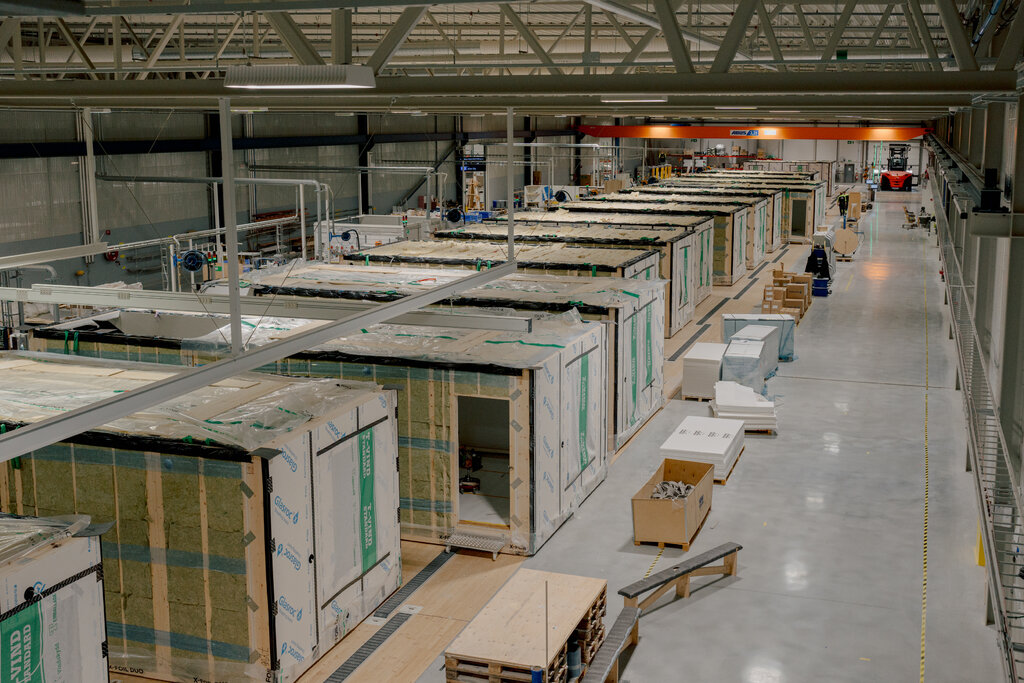
Picture Showing Modular Housing Construction ongoing in a Manufacturing Factory in Oxford America – Photo Credit: Getty Images
Today in Nigeria, Modular houses are gaining much attraction particularly in Major Cities such as Abuja and Lagos due to their factory produced nature which lowers their total cost of production as Modular houses are produced without the use of Blocks, Cement or Steel Rebars. Furthermore, Modular houses are movable in nature which means a modular housing owner can pack up his housing unit, load and transport it via Cargo trucks to be installed and used in his choicest destination. In Nigeria today, Big Modular housing production factories could be setup in Nigeria where Modular houses are produced using Robots thereby speeding up production time and reducing production costs.
-3D Printing for Affordable Mass Housing Development: In recent Times, 3D Printing has been deployed in major countries for housing development and it is yielding huge results. Today, countries like Canada, Turkey, Australia have deployed 3D printing for mass housing development thereby producing complete housing units in less than 24hrs. But first, What is 3D-Printing ? 3D printed houses, are houses which are produced using special 3D printing machines that emit concrete via a nozzle which is controlled by a Building Professional to autonomously carry out the production of a house complete without human assistance.
In Nigeria today, 3D Printing Machines can be deployed for Mass housing developments in different parts of the country as these machines can 3D print a durable modern concrete house complete in under 24hrs while the Roof and external building parts such as Windows, Doors, Plumbing etc are installed. With this method of Modern affordable housing employed, Nigerian Middle-Low income earners can afford new homes which are produced using lesser costs, emit less harmful toxic emissions and lower material wastages.
Some Perceived Challenge & Problems that Might Arise with AI and Robotics In Housing Development in Nigeria
– Climate Demands: Nigeria has two major climate seasons (Dry/Wet) the countries hot climate season can see temperatures tower above….. in parts of the country. This high climate temperatures can pose a huge challenge for Modular houses produced using prefabricated steel as they are highly susceptible to increased room heat during hot Nigerian seasons.
– General Acceptability: One Major aspect Nigerians tend to struggle with is acceptance of change and modern advancement trends. This means that Many Nigerians will favor traditional in-situ houses produced using Blocks, Cement and Sand over Modular or 3D-Printed houses.
– Looming Potential Losses of Jobs: AI and Robotics in urban mass housing development in Nigeria is sure to bring about millions of job losses in the Nigerian construction industry. This comes as Robotics in Modular housing and 3D Printing will surely eliminate many human roles thereby replacing these obsolete roles with Automated parts and little skilled personnel /supervisor. For a country like Nigeria, this could be a huge problem as the construction industry is the highest employer of labour in the country…..
What will be the impact of AI and Robotics on Nigeria’s Construction Industry?
AI and Robotics are surely going to cause a wide range change and impact on the Nigerian Construction Industry however the affordability and acceptability of AI and Robotics will be the determining factor on how widely it will influence construction/affordable housing development in Nigeria. Today, several AI tools have been deployed in the construction industry such as AI Building Information Modelling (AIBIM), AI resource management, AI for concrete setting time and AI for smart material and logistics tracking. These applications of Artificial intelligence in the construction industry, is helping construction professionals to carry out construction projects with higher precision, informed decision making using smart tools and minimize material wastages on construction sites.
While Robotics has witnessed a wide range of innovative construction applications in modern 21st century construction industry such as “Charlotte” a Spider 3D-Printing Housing Robot developed by Crest Robotics which can Autonomously Build a Concrete house complete without human intervention. Other applications of Robotics in modern construction practices include: Automatic Bricklaying Machines, Self-Operated Floor Tilling Machines, and Drones for transportation of construction materials in rough/difficult terrains.
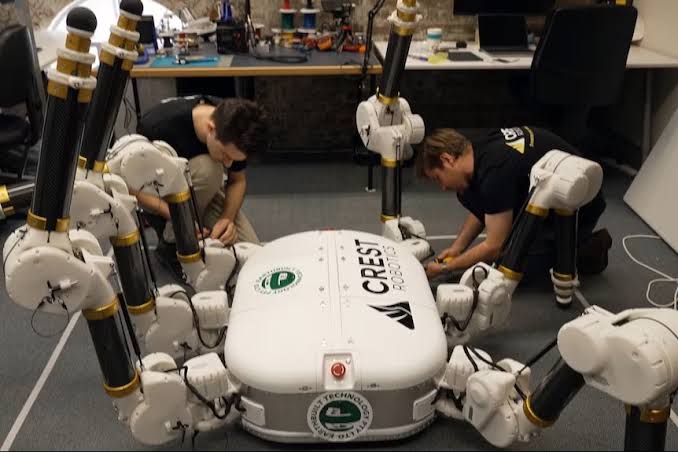
Picture Showing Charlotte Spider Housing Development Robot Built by Crest Robotics – Photo Credit: Crest Robotics
These innovative advances in AI and Robotics in the global construction industry can be a huge plus also on Nigeria’s construction and housing development industry. This comes as Nigeria is currently heavily battling with incessant building collapses in different parts of the country. This spike in building collapse in the country stems from corrupt practices, deployment of quacks/non-professionals to handle construction projects, use of inferior building materials and prevalence of sharp construction practices.
AI and Robotics if successfully deployed in the Nigerian Construction industry can help advance affordable housing for Millions of shelter seeking Nigerians. Furthermore, AI and Robotics will assist Nigerian construction professionals with accurate and concise data needed to make better informed decisions thereby increasing the quality of finished housing projects while minimizing material wastage.
What Must Nigeria Do to Advance the Introduction of AI and Robotics in Nigeria?
-Increase Power Generation: Nigeria must hurriedly invest in sustainable power generation sources thereby Boosting the countries power generation capacity and total power supply. This comes as AI and Robotics require proper consistent power supply that keeps AI Data Centers and Robotic Machines constantly running.
-Create AI and Robotics Construction Training Institutions: Nigeria must hurriedly setup AI and Robotics training institutions where young tech savvy Nigerians can receive adequate training on the development, Control and Application of AI and Robotics on Nigerian Construction projects. Nigerian Building professionals must be adequately equipped with the skills necessary to deploy and use AI/Robotics for affordable housing development in the country.
-Awareness Campaigns: Nigeria must deploy AI and Robotics awareness campaigns in the form of Workshops around the Country. By doing this, Many Nigerians will be enlightened and educated on the various ways of Ai and Robotics application in affordable housing development.
-Introduction of Subsidies for AI and Robotics Housing Development Companies: The Nigerian Government, should introduce AI and Robotics subsidies for construction companies wishing to deploy AI and Robotics for Mass housing schemes. This comes as deployment of AI and Robotics in construction could come with huge costs which might be cumbersome for small/medium construction organizations.
Ultimately, AI and Robotics is going to bring immense benefits to Nigeria’s construction Industry. Nigerian Government must quickly enact progressive AI and Robotics advancing Legislations that fosters the sustainable deployment of AI and Robotics in Nigeria for the purpose of affordable housing creation.
If these Measures are safely and carefully deployed, Nigeria too can enjoy the Automated befits of AI and Robotics in the affordable housing industry.




Leave a Reply