
Nigeria is fast adapting to the current AI trend with increasing Investments in AI, Data Centres, Artificial intelligence Skills Acquisition Trainings, IT and Digital Literacy programmes setup up by the Federal Government but questions continue to linger of AI and Robotics Sustainability and Long term impacts on Africa’s Largest Black Nation.
Key Takeaways
• The World is currently In a global race for AI and Robotics given its impressive “Automation” Features
• Key areas Nigeria could benefit from AI and Robotics if successfully deployed
• Existing Challenges hindering Nigeria’s AI and Robotics Adaptation
• What Nigeria and Africa can do to position it’s self as a Key Actor on the Global AI and Robotics Industry
Today AI and Robotics Technologies are positioned to rapidly influence the global economy. This can be highly evidenced in developed economies where AI and Robotics are currently raising eyebrows with New Amazing AI and Robotics Inventions deployed to solve basic human challenges.
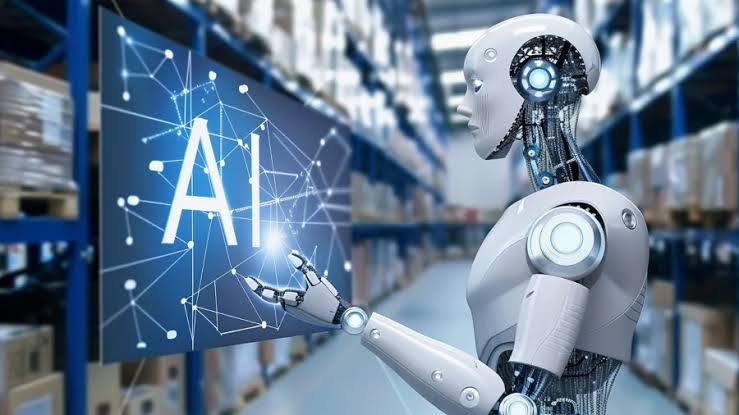
Illustrative Picture of AI and Robotics – Photo Credit: File Photo
Automation and robotics are transforming industries by improving efficiency and productivity. Automation uses technology to perform tasks with minimal human intervention while Robotics uses a combination of Artificial intelligence, Machine Language and Programming to produce physical Machines (Mostly Human like) that efficiently and effectively carry out tasks which normally will be laborious, time consuming and hectic for humans to carry out completely on their own.
Some of the areas of the Global economy that has witnessed a massive influx of AI and Robotics include: Medical Health industry, Manufacturing, Law, Banking, Cyber Defense, Commerce and Finance.
Automation & Robotics deployment in Manufacturing Industries has shown immense potentials to improve efficiency while reducing wastage. Other Benefits of Automation & Robotics Include: Increased productivity, Reduced errors, Cost savings and Time saving.
These benefits highlight the global rush for AI and Robotics however many experts fear the coming of AI and Robotics could lead to Millions of Job Losses, Increase in CyberCrime, and Ultimately end up in Brain Drain.
Some of A few Areas Nigeria could Massively benefit from AI and Robotics
1. Health
Nigeria is currently facing a rapid decline in Health Care and Medical Services championed by the “Japa ” syndrome (a term used to illustrate massive exit of Doctors and Proffesonals from the country seeking greener pastures Abroad).
This Japa Syndrome has Led many Healthcare Proffesonals such as Doctors, Nurses, Midwives and Medical Lab attendants to depart Nigeria and head over to foreign countries like UK, Canada, USA which guarantees better paychecks, work benefits and heavy bonuses.
Back home, this “Japa” syndrome has resulted in a scarcity of Healthcare Proffesonals leaving a huge gap as Hospitals remain largely understaffed. According to the Nigerian Medical Association President, Bala Audu, Nigeria’s doctor-patient ratio is approximately 1,000 per cent below the WHO recommendation. This stark figure underscores a critical healthcare shortfall exacerbated by the exodus of medical professionals seeking better opportunities abroad.
The coming of AI and Robotics could greatly improve the Nigerian Health industry. Today, Countries like China have developed AI Agent Hospitals where Medical AI Agents treat patients thereby reducing waiting time and reducing labor loads on Doctors. Other Countries like India have developed Surgical Robotic Machines which are used to carry out delicate Surgical Operations with a very high precision rate.
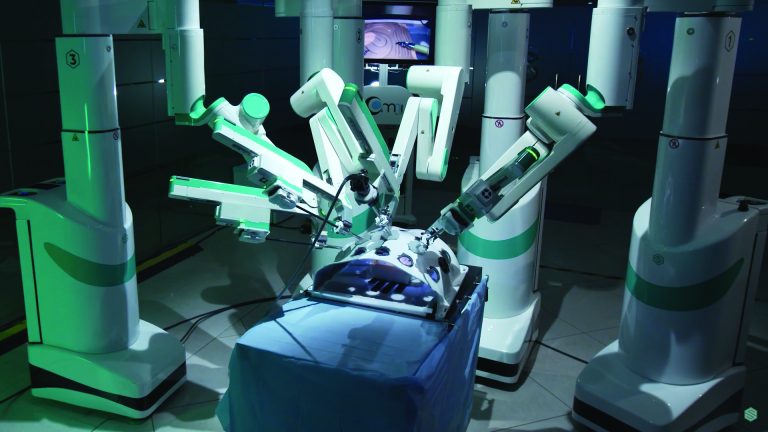
Picture Showing The Da Vinci Surgical Robotic Machine developed by India – Photo Credit: Alamy Photos
These Medical Advances in AI and Robotics could be a game changer for the Nigerian Health Care Industry by improving the effectiveness and efficiency of Health Care service delivery as the country continues to grapple with declining Medical Proffesonals.
2. Housing Development
Another area AI and Robotics could rapidly aid Nigeria’s development is the Housing and Real Estate Development Sector. This comes as a result of a huge gap and shortage that exists in urban housing. As of early 2026, the huge gap and shortage in Nigerian urban housing is officially reported to stand at approximately 14.9 million to 15.2 million units.
Underscoring the scale of the country’s housing challenge and the urgent need for data-driven interventions.
According to estimates associated with the Real Estate Developers Association of Nigeria (REDAN) and industry experts, Nigeria needs to build approximately 2.7 million new housing units annually for the next 10 years to close the widening housing gap. However, rising costs of building materials, transportation and construction labor services means that Millions of Nigerians encounter great difficulty in owning new homes.
Currently, the total cost of Building a 4-Bedroom Bungalow in Nigeria ranges from at approximately ₦5 – 20 Million Naira. This range depends largely on various factors depending on the Location, Quality, and Aesthetic Features, which could even rise higher. Ultimately, this high cost of Building new homes means that Middle – Low income earners in Nigeria may not be able obtain individual homes.
Enter AI and Robotics – Today, modern AI and Robotic Inventions has seen the development of 3D-Printing Machines which are used to construct Modular Houses complete in less than 24hrs using specialised advanced technologies.
3D-Printing Construction Machines such as CyBe Construction a prominent Dutch Technology provider in the 3D Concrete printing sector, offering robotic systems that create structures Layer-by-Layer, which are applicable in international markets, including Canada. While companies like Nidus 3D have led 3D-Printed residential projects in Canada using COBOD technology, CyBe’s technology is considered highly innovative for producing affordable, rapidly built housing.
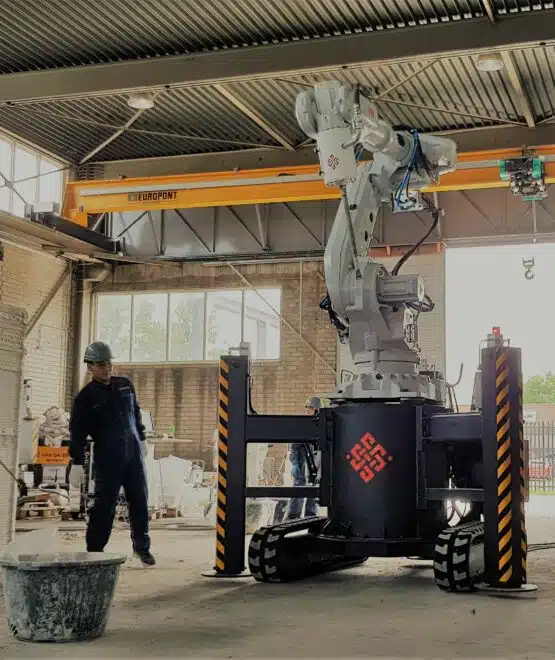
Picture Showing a 3D-Printing Machine from CyBe Construction – Photo Credit: CyBe construction
3D-Printing makes use of concrete emitted out using a specially designed Hose to build a strong, secure and durable home saving huge costs that comes with building traditional houses. These 3D Printers cut the costs of Blocks/Bricks, Transportation and Construction Services thereby saving costs and time for housing developers.
In Nigeria, 3D-Printers deployed in Mass Housing Development projects could produce strong, durable, Low-cost houses for Nigerian Workers and Low income earners.
3. Agriculture
AI and Robotics deployed in Agriculture is another very good area Nigeria can adapt modern Technologies and reap increased GDP returns as the Country looks to diversify its revenue sources and switch its Dependency from Crude Oil which has long been the countries major source of income.
Today, lack of modern Agricultural Tools, Processing, and Storage facilities results in massive food spoilage and wastages in Nigeria thereby worsening food insecurity in the country.
AI in Agriculture Leverages data-driven technologies including AI Powered, Drone assisted monitoring and Robotics to enhance Productivity, manage resources, and increase sustainability. Key applications include precision farming, Disease detection, automated weeding, and predictive analytics for Crop Management, often increasing yields by 15-30% while significantly optimizing water and pesticide use.
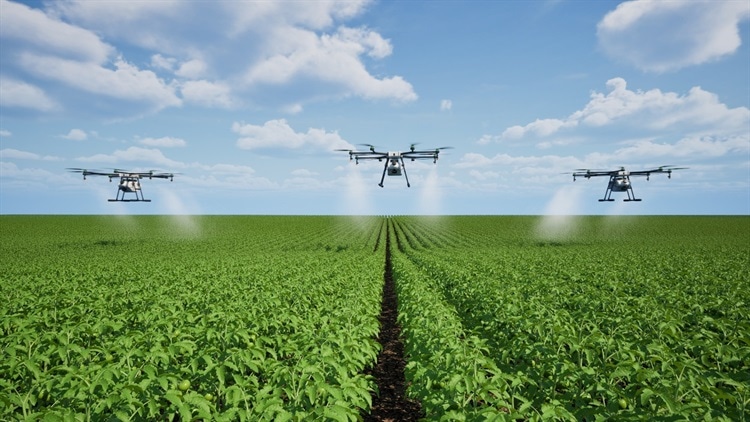
Picture Showing AI, Sensors, and Robotics for Smart Agriculture. Image Credit: Suwin66/Shutterstock.com
AI and Robotics can be deployed in Nigeria’s Agricultural industry in several ways such as Drone Technologies for Herbicide and Chemical farm crop application, Predicative AI tools to monitor seedling selection, crop growth, Determine suitable best harvest times, Post harvest Transportation and Cold Chain Monitoring using AI tools.
If AI and Robotics are carefully implemented in these areas of Agriculture, then Nigeria could witness Massively increase in Crop Production while reducing Post harvest losses to the barest minimum.
4. Security
Africa is grappling with insurgency in different parts of the Continent most notably Nigeria. Born from the activities of Terrorist Groups such as Boko Haram, ISWAP, Miyetti Allah Cautal Hore amongst several others, Nigeria has long suffered with insurgency leading to the Destruction of Lives and Properties in several parts of the country.
This insecurity in Nigeria is promoted by several key players including Foreign Players and Local players furthermore, activities like Illegal Mining have also helped to promote insecurity and insurgency in the country as Miners are forced to pay huge security Levies to Terrorists for protection.
Going by this, Nigeria could win the War against terrorism and Insurgency by deploying AI and Robotics in Millitary Operations. Today, AI and Robotics are currently being used to produce advanced Millitary Gadgets such as Drones and UAV’s.
It is the light of this, that Terra Industries, Africa’s most-funded defence-technology startup, is building a 34,000-square-foot drone factory “Pax-2” in Accra, Ghana, that the company says will become the continent’s largest when it becomes operational in June 2026.
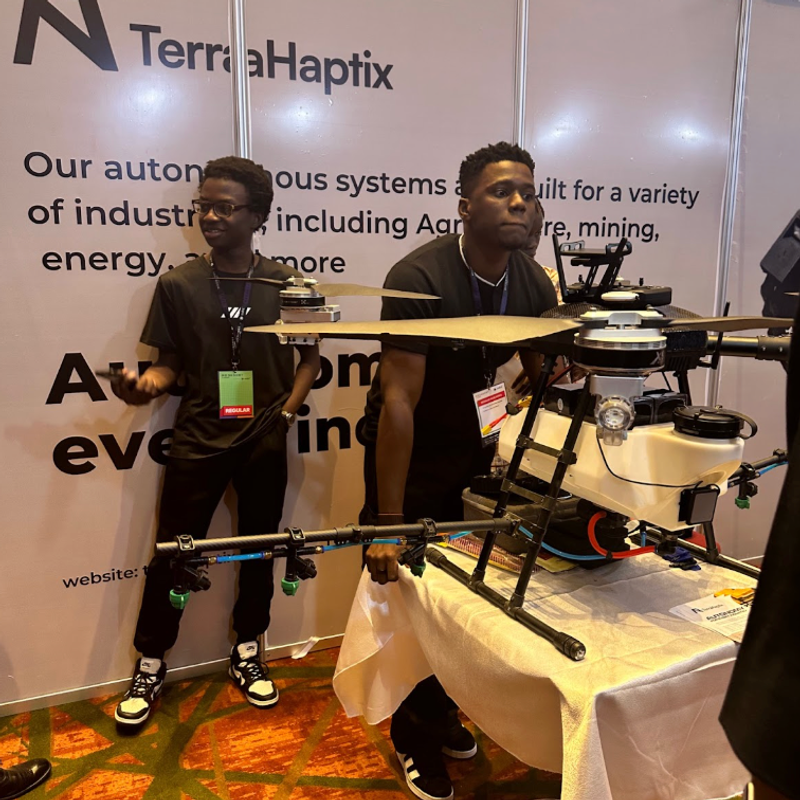
Picture Showing Terra Industries Showcasing their Hybrid Drone: Terra Industries Ltd
The facility will create 120 engineering jobs and produce three of Terra’s aerial systems: the Archer VTOL, a long-range surveillance and strike platform; the Iroko UAV, for rapid tactical deployment; and Kama, a newly announced interceptor drone capable of traveling 300 kilometres per hour and designed for counter-drone defence.
What will be the Impact of AI and Robotics on Nigeria’s Labour Market?
According to the National Artificial intelligence Strategy AI and robotics are set to revolutionize the Nigerian market by driving economic growth, with the AI market alone projected to reach $434.4 million by 2026. Key rewards include significantly enhancing efficiency in agriculture, healthcare, and logistics, fostering innovation, and boosting productivity across industries through automation.
This means that AI and Robotics Automation if carefully deployed in Nigeria will surely improve Nigeria’s Economy in areas of Medical Health Care, Housing Development, Agriculture, Security and many more! However, Nigeria’s multicultural environment alongsides structural, and technical lapses could prohibit AI and Robotics Long-term growth in the country.
Existing Challenges that are Sure to Limit AI and Robotics Full Deployment in Nigeria
* Lack of Data Centres
* Power Shortages
* Lack of Technical Expertise
* High Importation Costs
* Religious & Cultural Acceptance
* Lack of Data Centres
AI doesn’t run on thin air, it demands robust physical and digital foundations. High-performance data centers require massive, reliable electricity, high-speed connectivity, and advanced cooling systems.
The United Nations Economic Council for Africa UNECA highlights a virtuous cycle. The organisation in a recent report stipulates that Africa must borrow and mobilise revenue to capture the growing AI opportunity. Part of its discussions around advancing digital transformation for inclusive growth (aligned with broader Economic Report themes), stresses that public budgets alone cannot bridge the gap.
Nigeria too must invest in Data infrastructure simultaneously as this drives demand for cleaner, more reliable energy generation, which in turn powers broader industrial growth. Without these building blocks, even the most innovative AI and Robotic strategies will falter.
* Power Shortages
Nigeria is grappling with erratic Power supply which ultimately results in Several National Power Grid collapses, thereby affecting the ability of Medium Small and Micro Businesses to effectively do business in Nigeria. AI and Robotics demand cleaner, more reliable energy generation as systems that Power these Technologies must be constantly kept running.
* Lack of Technical Expertise
AI and Robotics systems require Highly Skilled Engineers along with Installation, Technical, and Maintenance Crews. Nigeria’s inability to produce High quality Skilled AI and Robotics Workmen could lead the Country to importing Foreign Workers at huge costs inorder to keep its AI and Robotics infrastructure running.
* High Importation Costs
The recent increase in Import Tarrifs and Taxes by the Federal Government means that Technology exporters will have to incur high fees inorder to get their products into the Nigeria and this inturn could lead to increase in prices of AI and Robotics products and services.
* Religious & Cultural Acceptance
Nigeria is highly religiously and ethnically diverse meaning that the cultural heritage of must always be respected. This cultural diversity sometimes mean that many Nigerians struggle and in most cases reject foreign AI and Robotic Technology Solutions. For example, Deeper Life Religious Group in Nigeria do not permit Blood Donation or Blood Transfusion therefore, such religious and cultural groups will surely have difficulty accepting Medical Treatment from a Robot. However, with proper education, training, awareness and support this challenge is sure to be resolved.
The advent of Artificial Intelligence (AI) and Robotics has precipitated a paradigmatic shift in Global innovation and transformation, driving cutting-edge advancements across nations and industries. The ramifications of its impact on the global ecosystem and specifically on the developmental trajectory of Nigeria and other African nations are profound and farreaching.
Nigeria, as the continent’s most populous country, is singularly Positioned to harness AI’s transformative capacity to address pressing socio-economic conundrums, accelerate economic growth, and pivot the nation into a new epoch of technological empowerment.
Today in Nigeria, AI Chatbots such as ‘Moma’ are currently deployed in Maternal consultations via WhatsApp thereby detecting Pregnancy Complications before they arise and helping to to improve Maternal outcomes in areas with limited specialists
Nigeria must hurriedly Position it’s self as a Leader in AI and Robotics through the Provision of Renewable Power Supply, AI Data Centres, Transportation Chains, Robotics Manufacturing Hubs, AI & Robotics Training/ Skills Acquisition Centres to hasten the development and adaptation of Home grown AI and Robotics Inventions.





Leave a Reply