
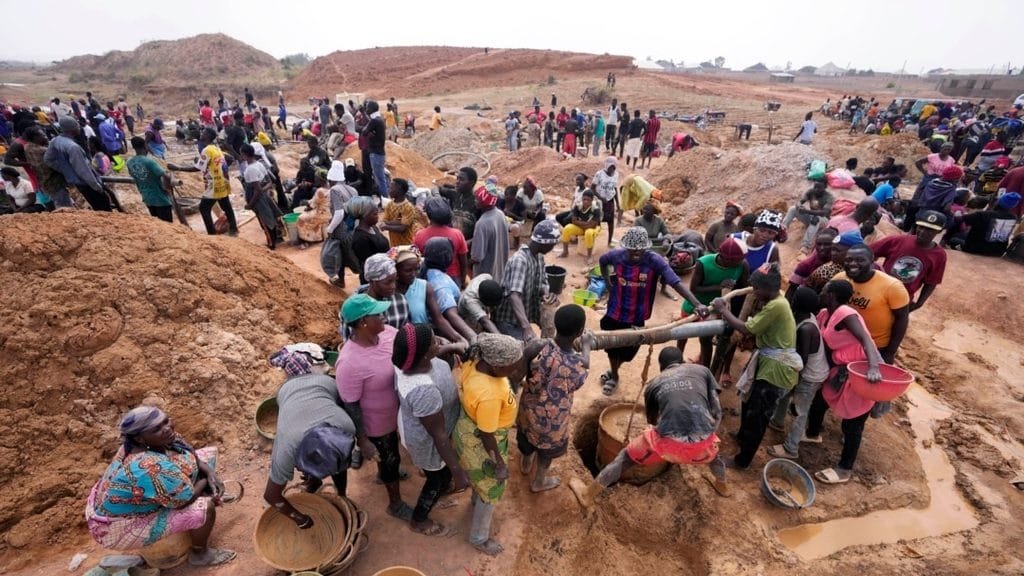
In the early hours of a September morning in 2026, officers in Minna, Niger State, Nigeria, opened a detention cell and found dozens of bodies. At least 37 suspected illegal miners, many of them teenagers, had died after being arrested during raids on mining sites. Survivors later described overcrowding, choking chemical fumes, and a desperate lack of air and water. The incident was not an isolated catastrophe. It was one more grim entry in a lengthening ledger of deaths linked to Africa’s vast, largely unregulated artisanal and small-scale mining (ASM) sector.
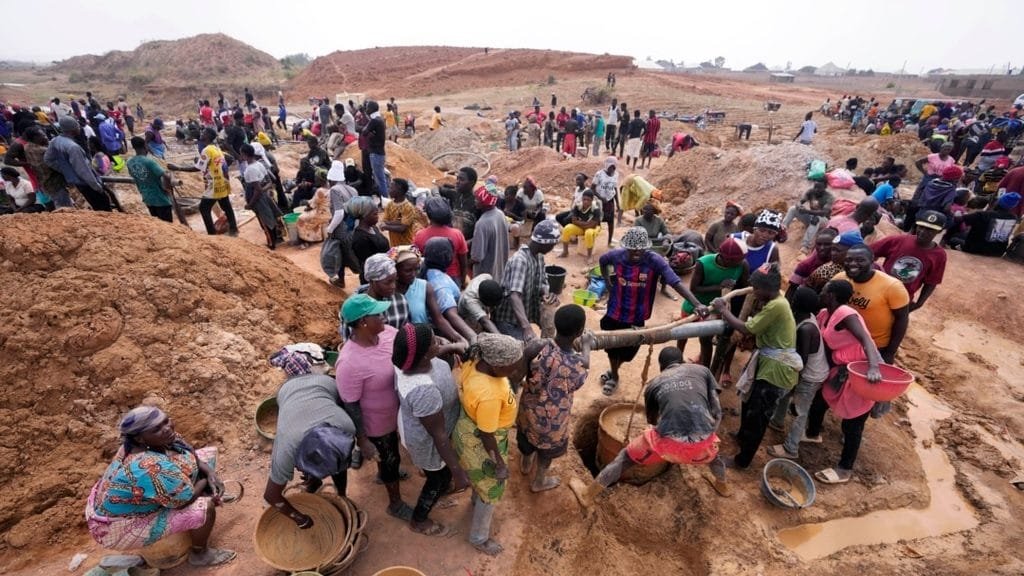
Across the continent, thousands of miners and the communities around them face daily risks of pit collapses, toxic exposure, violence, and exploitation. Estimates suggest roughly 9 to 10 million people work directly in unregulated artisanal and small-scale mining (ASM) in sub-Saharan Africa, with tens of millions more dependent on the income it generates. The great majority operate without licences, outside formal safety rules, and often in conditions that would be unthinkable in industrial mines.
The question that keeps returning is whether technology—satellites, drones, artificial intelligence, blockchain, and digital tracking can finally bring this shadow economy under control, or at least make it dramatically safer and more transparent.
The short answer is that technology can transform visibility and enforcement. It cannot, by itself, end the poverty, unemployment, and institutional weaknesses that drive people into the pits.
Artisanal and small-scale mining is not a fringe activity. It is one of Africa’s largest informal employers. In Ghana, unregulated artisanal and small-scale mining (ASM) has long accounted for a substantial share of national gold output. In Uganda, the sector supports hundreds of thousands directly and millions indirectly. In Zimbabwe, more than a million people are estimated to be involved across gold, diamonds, chrome and lithium. Recent machine-learning analysis of satellite imagery across multiple countries suggests the physical footprint of unregulated artisanal and small-scale mining (ASM) is far larger than official maps show sometimes more than 40 times greater than ground surveys have recorded affecting significant shares of territory and population.
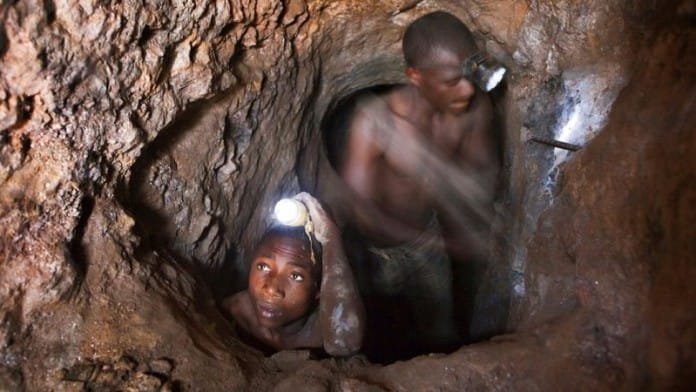
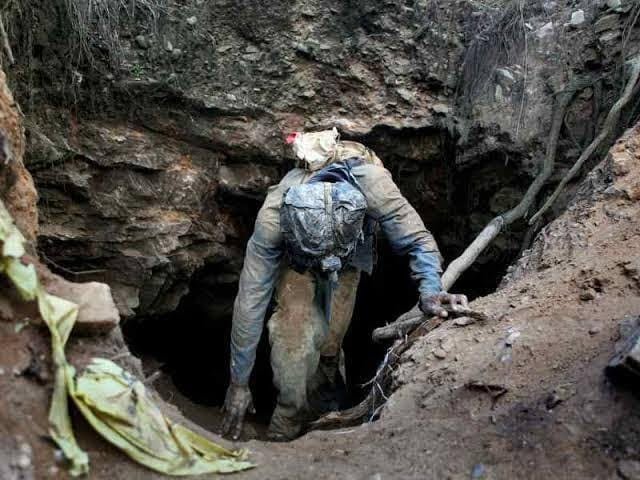
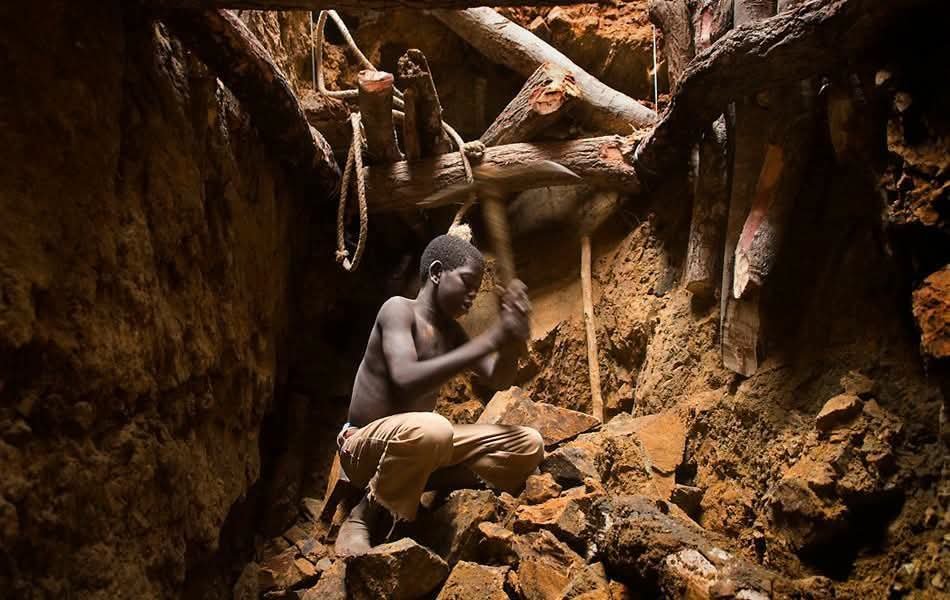
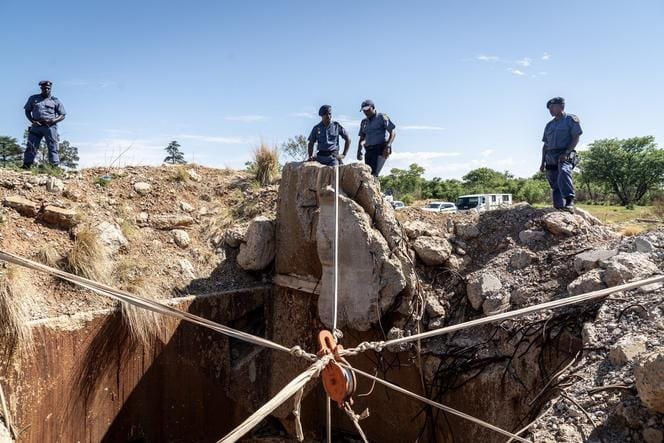
The dangers are structural. Pits collapse without warning. Abandoned shafts and open excavations become death traps for both miners and bystanders, including children who fall in or drown. In Ghana, reports of miners trapped by flooding or mud, and of drownings in old pits, recur with grim regularity. In Mali, a single artisanal gold-mining disaster in 2025 killed dozens, many of them women. In South Africa, the stilfontein stand-off and other underground crises have revealed the scale of “zama zama” activity in abandoned shafts, with body counts climbing into the dozens or hundreds in single events. In Zambia and elsewhere, rainy-season collapses and illegal dump-site digs claim further lives.
Health risks compound the physical ones. Mercury, used widely to amalgamate gold, is released into air, soil and water, causing neurological damage. Lead poisoning has devastated communities in northern Nigeria, with historical outbreaks killing hundreds of children. Silica dust produces silicosis and elevates tuberculosis risk. Cyanide, arsenic and other toxins appear in different mineral contexts. Women, who often handle processing and washing, face particular exposure, as do children living near contaminated sites.
Violence is another constant. In eastern Democratic Republic of Congo, armed groups such as M23 have been documented controlling artisanal mines, subjecting diggers to beatings, forced labour, summary killings and trafficking of gold and coltan. In parts of Nigeria’s northwest, illegal mining has been linked to the financing of banditry and terrorism. Miners become both perpetrators and victims in a cycle that security forces struggle to break.
Environmentally, the sector leaves scars: deforested hillsides, silted and poisoned rivers, destroyed farmlands, and mercury that travels through food chains for decades. Economically, governments lose billions in potential revenue while legitimate operators face unfair competition and security costs.
Technology Seeing What Was Once Invisible
For years, the sheer scale and remoteness of illegal mining defeated conventional policing. That narrative is changing.
Today, Satellite imagery combined with artificial intelligence now allows continuous, wide-area monitoring. Synthetic aperture radar can detect ground disturbance even through cloud cover. Machine-learning models trained on high-resolution optical and multispectral data identify pits, waste dumps, water ponds and access tracks. Projects such as Africa Mining Watch are building open datasets that make the invisible visible for journalists, researchers, regulators and communities.

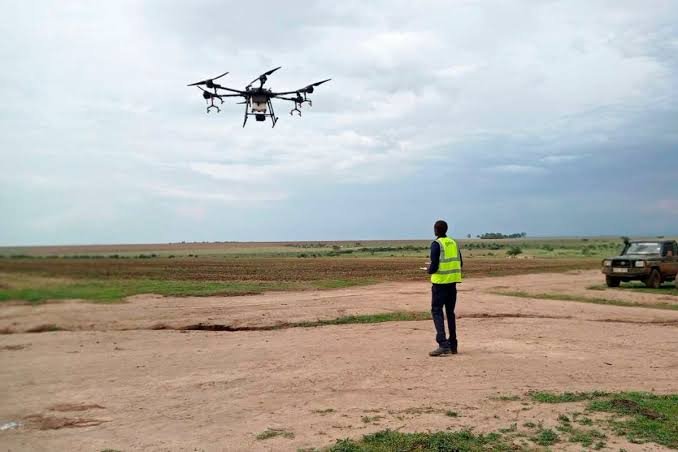
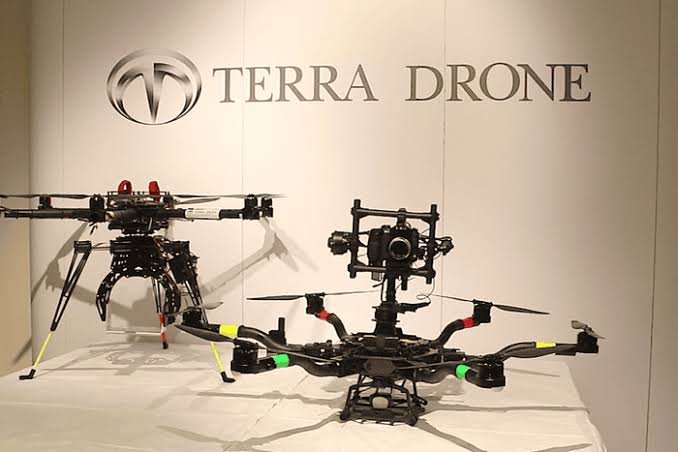
Drones provide the tactical layer. Ghana has deployed more than a hundred across mining corridors, feeding imagery into a National Mine Surveillance Centre. Detection accuracy for illegal sites has reportedly risen from around 58 percent in 2022 to over 90 percent by 2025, while response times have fallen from days to hours. The Minerals Commission has also registered and fitted tracking devices to thousands of pieces of heavy earth-moving equipment, using geo-fencing so that machines operating outside licensed concessions can be disabled remotely. Côte d’Ivoire has distributed dozens of advanced drones to regional mining directorates. Nigeria has approved satellite-based systems manufactured by Terra Industries and is exploring digital identity integration to distinguish licensed operators from illegal ones. The DRC’s mining cadastre has moved toward drone surveillance and AI analysis for title verification and inactivity monitoring.
Blockchain and digital traceability aim at the other end of the problem: the market. By creating tamper-resistant records of mineral origin, these systems help buyers meet due-diligence requirements under regulations such as the EU Conflict Minerals rules. Pilots in Rwanda for tantalum and various gold-tracking initiatives elsewhere have shown technical feasibility. When combined with formalisation of cooperatives and aggregation points, they can open pathways to responsible markets and better prices for miners who comply.
Digital identity systems, mobile registration platforms and simplified licensing apps reduce some of the bureaucratic barriers that keep operators informal. Geo-referenced cadastres and real-time dashboards give regulators a shared operational picture that was previously impossible.
Why Technology Alone Cannot “End” Illegal Mining
Detection is not prevention. A satellite alert or drone image still requires ground response—police, military or specialised units who may be under-resourced, compromised, or simply too slow. In remote or conflict-affected areas, enforcement itself can become lethal, as the Niger State detention deaths illustrate. Aggressive crackdowns without alternative livelihoods often displace activity rather than eliminate it, or push miners into more dangerous, clandestine conditions.
The first-mile problem remains stubborn for traceability. Blockchain is only as reliable as the data entered at the mine. In highly informal settings, the link between a physical bag of ore and its digital token is vulnerable to fraud, coercion or simple error. Many artisanal miners lack smartphones, bank accounts, literacy or the capital to meet compliance costs. Systems designed primarily for downstream buyers can exclude the very producers they seek to reform, driving more trade into illicit channels.
Root causes are economic and political. High youth unemployment, limited formal job opportunities, and the relative accessibility of gold or other minerals pull people into the sector. Licensing processes are often expensive, slow and opaque. Land is frequently allocated preferentially to large-scale companies, leaving little room for formal artisanal claims. Corruption and political patronage can turn formalisation itself into a tool of control rather than empowerment. In some places, illegal mining is protected by powerful local or national interests.
Formalisation programmes that succeed tend to combine technology with patient institution-building: simplified licences, cooperatives, access to finance and equipment, training in safer methods, mercury-free processing, and genuine community consultation. Uganda’s recent issuance of small-scale licences to organised groups, Ghana’s experiments with community mining schemes, and various planetGOLD projects focused on mercury reduction offer partial models. They remain incomplete and contested.
Today, Technology is already reducing the information asymmetry that once protected illegal operations. It can cut response times, improve evidence for prosecutions, support environmental rehabilitation planning, and help responsible buyers source with greater confidence. When paired with equipment tracking, digital identity and geo-fencing, it raises the operational cost of illegality.
Yet the goal should not be the romantic elimination of every informal digger. In a continent with high unemployment and growing demand for critical minerals, ASM will remain a significant livelihood for years. The more achievable and ethical objective is progressive formalisation: bringing more operators into a regulated space where safety standards, environmental rules and fair taxation apply, while using technology to monitor compliance and exclude the worst criminal actors.
That requires sustained political will to simplify licensing, protect genuine artisanal claims, invest in rural alternatives, and treat miners as economic agents rather than purely as security threats. It requires donors and buyers to fund not only satellites and software but also the ground-level capacity including inspectors, cooperatives, processing centres, health services that turns data into safer practice. And it requires humility: technology amplifies existing governance. Where institutions are weak or predatory, digital tools can become instruments of exclusion or repression rather than inclusion.
The miners who die in collapses, toxic fumes or detention cells are not statistics. They are people pushed by necessity into some of the most dangerous work on the continent. Satellites can find their pits. Drones can watch them in real time. Algorithms can flag anomalies. Blockchain can track what leaves the ground. None of those systems, however sophisticated, will keep the next generation out of the shafts unless the underlying scarcity of decent work and the failures of regulation are also addressed.
Technology will not put an end to illegal mining by itself. Used wisely, as one instrument among many, it can help make mining less deadly, less destructive and more accountable. That is still a profound gain and one that thousands of African miners and their families urgently need.