
The United States continues to set the pace in artificial intelligence development and large-scale commercial rollout. In 2025, U.S. private AI investment reached approximately $285.9 Billion, roughly 23 more times than China’s $12.4 Billion and the rest of the world combined together.
Today, investment in Generative Artificial Intelligence alone has surged more than 200% globally with the bulk concentrated in American firms. U.S. hyperscale BigTech companies such as Amazon, Microsoft, Anthropic, Google, Meta, Space X and many others.

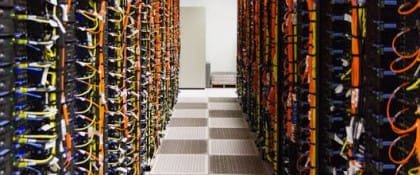
These AI leading companies have poured in hundreds of Billions into the production of what I would call “Super Data Centers produced to support and scale Generative Artificial Intelligence compute infrastructure with projections for 2026 alone running into the hundreds of Billions of dollars aimed at creating the World’s largest concentration of AI-capable computing capacity.
In recent time, AI tools among American companies, particularly larger ones such as Anthropic has emerged as a leader in business AI subscriptions and token usage, with OpenAI and others close behind. This comes as Formal firm-level AI adoption in America, is at a high pace ranging from teens to workers who access and apply generative AI for use in driving American GDP upwards.
One does not need to be an Artificial Intelligence engineer to know that the United States is far ahead of China in Artificial Intelligence and Data Center development. For example, American Developed Artificial Intelligence LLMs such as ChatGPT, Claude, and Gemini outperform China’s highly praised Deepseek Artificial Intelligence model in both usage, productivity and output.
The U.S. also leads in frontier model development, venture funding for AI applications, and the software stack that makes AI usable at scale. Population-level generative AI usage in the U.S. is around 28–31% with a huge intensity of enterprise AI deployment, infrastructure investment, and model innovation which remains unmatched.
In summary, America builds the brains of AI and is furthest along in putting those brains to work inside companies and cloud platforms.
China Leading in Robotics
China owns the physical side of automation which is Robotics. In 2024, Chinese factories installed 295,000 industrial robots which makes up more than half of the whole of the Worlds total fully functional Robots combined. By the end of that year (2024), China’s operational stock exceeded 2 Million units.
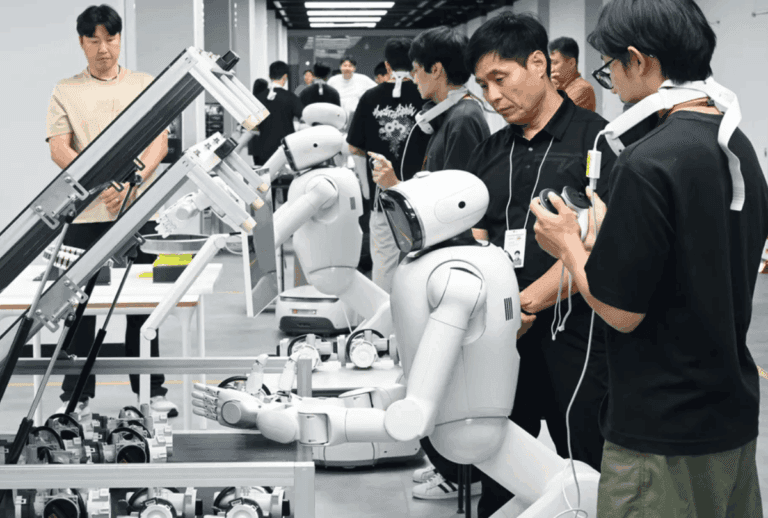
Robot Production in China has accelerated further with Industrial robot production output in China reaching hundreds of Thousands of units annually, with strong double-digit growth continuing into 2025 and early 2026.
Today, Domestic robotic manufacturers now supply more than half of the Chinese market (around 57% in 2024 and higher thereafter), ending long-standing dependence on foreign suppliers such as Fanuc, ABB, and Kuka.
The gap is even more pronounced in humanoid robots. Chinese firms account for approximately 90–97 percent of global shipments. Companies such as Unitree, AgiBot (Zhiyuan), and UBTech are scaling production rapidly, with industry forecasts pointing to tens of thousands of units in the near term and hundreds of thousands later in the decade.
The Communist advantages, include a dense low priced domestic supply chain for motors, sensors, reducers, and structural components used for technology and robot manufacturing.
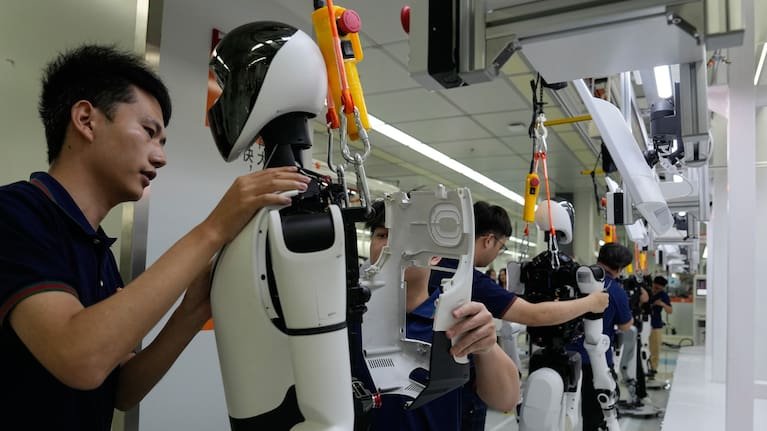
This is backed by a history of targeted aggressive local and central government technology initiatives and support that promotes robots and technology manufacturing using cheaply sources technology raw materials, minerals and metals sourced from my country Nigeria, as well as many other unfortunate countries in Africa which have been turned into harvesting to build Chinese Robots, Drones and Electric Vehicles.
China’s Blueprint for technology manufacturing has far eclipsed the United States given the Chinese Governments visionary planning, spanning successive Five-Year Plans to create a large domestic Technology Manufacturing market that absorbs volume and drives cost reductions resulting in robot building parts that costs as low as $35 dollars.
Going by this, we can simply say that ” 5 years ago, while the United States was busy fighting gay marriages, and funding Ukrainian Wars, China was secretly creating a global platform for Robot manufacturing ” That gap today has grown wide: Author- Nathaniel Uya
This does not mean that the United States is not advancing it’s own Humanoid Robot and products manufacturing industry. Today, the United States is pushing its Robotics manufacturing through American owned BigTech Companies such as Tesla, Boston Dynamics, have developed interesting fully functional humanoid robots and robot dogs which now gradually completing field testing and starting outward sales deployment.
However the pace of US humanoid robots manufacturing, testing and deployment is extremely slow compared to their Chinese counterpart. This comes as high cost of manufacturing robot parts, Batteries and accessories comes at higher costs in US and this slows mass production of Humanoid Robots especially for Smaller Robot Manufacturing companies who may not have the huge finances required to compete globally.
The contrast is instructive. The U.S. excels at manufacturing impressive intangible models of Artificial Intelligence including: model training, software platforms, cloud deployment, and high-value enterprise applications. China on the other hand excels at the tangible layers: mass production of robots, factory automation at continental scale, and the emerging category of embodied AI which consists of robots that combine mobility, manipulation, and increasingly sophisticated onboard intelligence.
This split is not permanent. Chinese companies are investing in AI models and open-source approaches suited to cost-sensitive deployment, while American firms and investors are pouring resources into robotics startups and “physical AI.” The next phase of competition will center on who best integrates advanced AI with reliable, affordable robots that perform useful work in factories, warehouses, hospitals, and homes.
Policy and capital structures reinforce the current pattern. U.S. private markets and hyperscaler balance sheets fund frontier research and massive infrastructure. China’s industrial policy, manufacturing ecosystem, and state-backed financing accelerate volume production and rapid iteration on the factory floor.
The countries that successfully close the loop between software intelligence and physical capability will gain the largest productivity and strategic advantages. For now, the division of leadership is clear: the United States leads in AI deployment; China leads in robotics. Both are racing to own the intersection.
SeedufyTech will continue to keep you posted on the Lastest technology and robot uprising coming from the United States and China.
Our innovative inclined Tech reporting media platform is designed to keep you updated 247 on what is happening in the Robotics, AI and Drone production industry.
Through our Flagship STAR ⭐ Africa Talent Identification and Showcasing program, we giving Global Visibility to Millions of Africa’s Top Technology Talents, Founders and Inventors with impressive Minimum Viable Tech Products.
You can also be a part!!
Quickly log on to SeedufyTech STAR ⭐ page now to be a part !!!