From sickle cell care to breast cancer detection research and digital accessibility, these young Nigerians are demonstrating how homegrown innovation can address real-world challenges.
Nigeria’s innovation landscape continues to produce young minds exploring technology-driven solutions to some of society’s most pressing problems.
From healthcare to assistive technology, a new generation of Nigerian innovators is demonstrating that meaningful innovation does not always begin with a large technology company or a multimillion-naira investment. Sometimes, it starts with a personal experience, an everyday challenge or the determination to solve a problem that affects people’s lives.
Three young Nigerian innovators — Oluwadamilola Adebayo, Kemisola Bolarinwa and Zang Luka — are drawing attention for their work on technologies focused on sickle cell care, breast cancer detection research and digital accessibility.
Their stories, featured in a report by The Guardian Nigeria, highlight the potential of local talent and the importance of creating opportunities for promising inventions to develop and reach the people who need them.
Oluwadamilola Adebayo: Developing CellGuard for Sickle Cell Care

Picture Showing Nigerian Inventor Oluwadamilola Adebayo – Photo Credit: LinkedIn
Oluwadamilola Adebayo is developing CellGuard, a specialised screening and monitoring system designed to support aspects of sickle cell care.
Sickle cell disease requires ongoing management, and technology that supports relevant monitoring may contribute to efforts to improve how care is delivered. CellGuard represents an attempt to explore a locally developed approach to this challenge.
As with any healthcare innovation, further validation and appropriate clinical assessment are important in determining how a system performs and how it might be used in practice.
The project illustrates how Nigerian innovators are exploring technology not simply as a commercial opportunity, but as a way to address significant healthcare needs.
Kemisola Bolarinwa: Exploring Wearable Technology for Breast Cancer Detection

Picture Showing Nigerian Inventor Kemisola Bolarinwa: Photo Credit: Punchng
Kemisola Bolarinwa is developing EwaDX, also known as the Smart Bra Cup Diagnostic Device, a wearable technology intended to support early breast cancer detection.
Her motivation is deeply personal. The loss of her aunt to breast cancer helped inspire her to explore how engineering could contribute to the early-detection challenge.
The concept reflects growing interest in wearable health technology and alternative approaches to screening. However, the device is still under development. According to The Guardian Nigeria, it had reached the working-prototype stage, with clinical trials and regulatory approval still ahead.
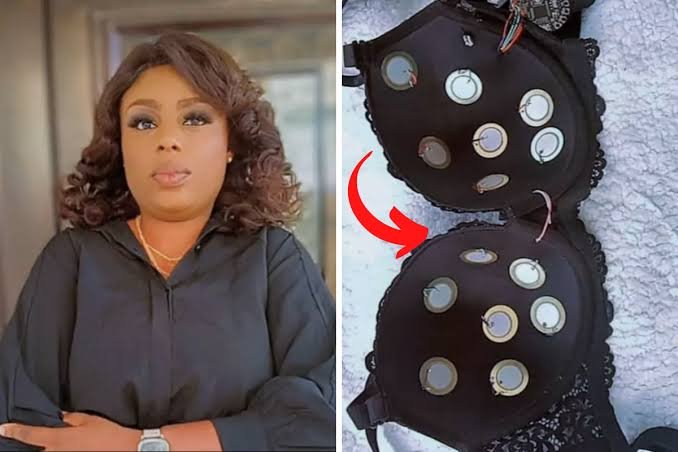
Collage Picture Showing Nigerian Kemisola Bolarinwa and her Breast Cancer Detecting Bra called EwaDX
That distinction matters: EwaDX should not be treated as a clinically proven or approved diagnostic device. Its eventual effectiveness and appropriate use will depend on the necessary testing and regulatory processes.
Nevertheless, Bolarinwa’s work demonstrates how personal experiences can inspire innovators to investigate technology-based responses to real healthcare challenges.
Zang Luka: Making Computer Access More Inclusive

Picture Showing Nigerian Inventor Zang Luka Photo Credit: Facebook
For people with upper-limb disabilities, using a conventional computer mouse can present a significant barrier to digital access.
Zang Luka is addressing this challenge with a Computer Foot Mouse designed to help people navigate computers using their feet.
Assistive technologies such as this can help broaden access to digital tools, education, communication and employment. Their value lies in exploring alternative ways for people with different physical abilities to interact with technology.
Luka also produces USB cables locally, connecting his work to another important area: developing products and manufacturing capabilities within Nigeria.

Picture Showing Nigerian Inventor Zang Luka and his invented mobile technologies- Photo Credit: Facebook
His projects demonstrate how innovation can span both accessibility and local production, creating opportunities to address practical needs with homegrown ideas.
Beyond the Idea: What Does It Take to Commercialise an Invention?
A promising idea is an important starting point, but developing an invention is only one stage of the innovation journey.
For an invention to become a reliable product that people can access and use, its creators may need funding, specialised equipment, testing facilities, technical partnerships, regulatory approvals and access to markets.
Healthcare technologies face additional requirements because safety, reliability and clinical performance must be appropriately established before products can be used for their intended medical purposes.
Without adequate support, even promising inventions can struggle to progress from prototypes to market-ready products.
Initiatives such as InnovateNaija, launched by the National Agency for Science and Engineering Infrastructure (NASENI) and AfriLabs, aim to identify and support promising Nigerian innovations and help move them closer to commercialisation.
Such initiatives can help connect innovators with opportunities, resources and support. Sustained collaboration among inventors, investors, research institutions, industry and public-sector organisations remains important to building a stronger innovation ecosystem.
Why Homegrown Innovation Matters
These three innovators highlight an important point: technology is not only about the latest smartphone, software platform or artificial intelligence tool.
It can also mean developing a system to support healthcare monitoring, exploring wearable devices for future screening applications or designing assistive tools that make computers more accessible.
When local innovators understand the challenges within their communities, they may be well placed to identify needs that deserve attention. Turning those ideas into effective, accessible products, however, requires more than creativity alone. It requires testing, resources, collaboration and opportunities to reach the people who could benefit.
Nigeria’s innovation ecosystem has an opportunity to nurture this talent by supporting responsible development, strengthening local manufacturing and helping promising ideas progress towards practical use.
The Road Ahead for Nigerian Innovators
The work of Adebayo, Bolarinwa and Luka offers a reminder of the possibilities emerging from Nigeria’s growing pool of creative and technically skilled people.
Their projects are at different stages of development, but each reflects an effort to explore a practical response to a real-world challenge.
The next chapter of their journeys will depend on continued development, appropriate validation, investment and the partnerships needed to turn promising ideas into viable products.
At SeedufyTech, we believe African innovation deserves visibility. Through our Invention Discovery and Talent Showcasing initiatives, we aim to spotlight emerging talent, share promising ideas and connect audiences with the people exploring technology-driven solutions to real-world problems.
Because discovering an invention is only the beginning. Helping the right people see its potential is part of what comes next.
SeedufyTech — Discover | Innovate | Empower
Authors Note: This article is an independently written summary based on verified reports. Descriptions of the technologies reflect their reported development status and should not be interpreted as claims of established clinical effectiveness.