
Technology is advancing at a very fast unprecedented pace. Today, Machines are capable of performing tasks that once required human skill, from driving cars to analyzing complex data, enhancing economic structures, finance, and overall society development. Today, Technology plays a crucial role in achieving the UN’s Sustainable Development Goals SDG Goals with specific applications including; using AI, Sensors, and Robotics to improve agricultural productivity and food distribution. (SDG 2), advanced materials for clean energy (SDG 7), and IoT technologies for smart cities (SDG 11)
Key Takeaways:
• Africa’s Reluctance to adopt, develop and scale Local Technology Inventions leading to huge Losses in GDP, New Job opportunities, and Massive Brain drain
• Over Dependence on Imported Foreign Technology Killing Desire for Local Inventions
• A Compressive list of some African Brilliant Technology Inventors, who in the past have produced impressive Technology Inventions but gone unnoticed
In Africa, AI and emerging technologies are projected to contribute around $1.5 trillion to Africa’s GDP by 2030, driving transformative changes across various sectors.These technologies can enhance agricultural productivity through precision farming, improve the efficiency and responsiveness of government services, expand access to quality healthcare, support environmental sustainability, and revolutionize education through personalized learning thereby making them essential for accelerating Africa’s development and fostering sustainable growth.
Africa’s current population, stands at approximately 1.56 Billion people, representing about 18.8% of the global population, with projections indicating significant growth in the coming decades. Africa is home to some of the brightest, most innovative, and most technologically advanced minds on the planet. Africa boasts of thousands of higly skilled tech-savvy young innovators who in the past, have produced several state of the art technology prototypes, but many say they are not getting the necessary government support they need while experts fear the continent risks losing inventors to the global North.
Africa’s innovativeness, can be seen by the largely thriving number of Africans in diaspora, making great strides in Technology in different industries. This is even more evident as the Highest Paid Robotics Engineer in the World hails from Nigeria, Africa. Meanwhile back home in Africa, plagued by astronomical levels of underfunding, the continent has not been able to maximize its full potential. Ultimately,the continents favour for foreign imported technology over local based technology along with its inability to fully support, develop, and scale these local technology inventions has helped widen the technology gap in Africa.
As a continent blessed with abundant natural resources—from vast arable lands and rich mineral deposits to oil and gas reserves paradoxically struggles with widespread resource wastage.
Much of this stems from inadequate technology across key sectors like agriculture, mining, and energy extraction. While the world increasingly relies on Africa’s resources for food, critical minerals, and energy, outdated methods, poor infrastructure, and limited technological adoption lead to massive losses in economic value, environmental degradation, and missed opportunities for sustainable development.
Today, the World is in the midst of the Fourth Industrial Revolution (4IR), a global era, characterized by rapid advancements in new technologies and global connectivity. In recent time, Emerging technologies have shown great potential to accelerate electrification, particularly in areas with fewer centralized network power grids, including Africa. For example, Powergen has installed solar-powered mini-grid projects with battery storage across Kenya and Zambia, providing electricity to rural areas at rates equivalent to that spent currently on kerosene. These types of innovative technological inventions provide solutions to African basic everday needs while ofering the potential for wide scale adaption thereby creating Thousands of job opportunites and incresing revenue.

Picture Showing Students Undergoing Digital Skills Training in Africa – Photo Credit ATI
Today, Africa is home to some of the brightest, most innovative, and most technologically advanced minds on the planet. With 18% of the world’s population and a median age of 19, Africa has a young, fast-growing workforce with Nigeria the Biggest Black Nation, holding 2.8% of the world’s population, representing a huge untapped demographic potential.
Currently there is an epidemic level of brain drain going on in the continent with young African inventors searching for greener pastures abroad to horn their talents and technological skills. Regardless of funding shortage, some African inventors, have decided to apply themselves with what little they have, and what’s more impressive is the fact that these Africans are young.
Below is a list of Young Africans who have in the past conceptualized some of the most innovative technological solutions, tailor-made for the struggles of their immediate communities but gone unnoticed
–Kelvin Doe (Sierra Leone) – Kelvin Doe is a self taught engineer who built his own generator and radio transmitter at the age of 13. At 16, he built a battery that can provide electricity to homes within his community where there is no constant power supply. The battery was made from acid, soda, and metal parts scavenged from trash bins.
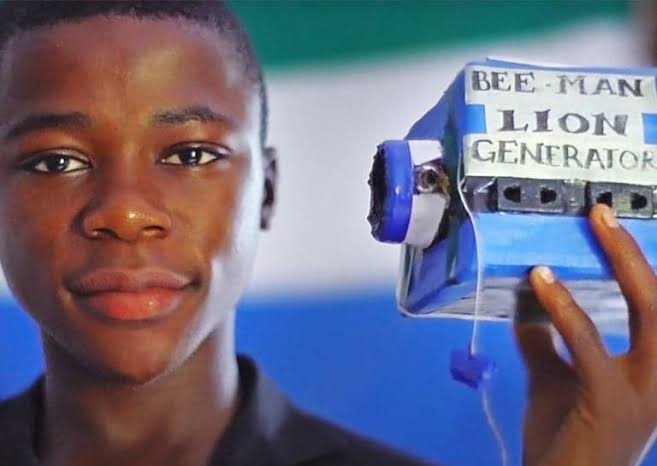
Picture Showing Kelvin Doe is a Sierra Leone born Tech Inventor who invented a Radio Transmitter – Photo Credit Stock Photo
–Thato Kgatlhanye (South Africa) – Thato Kgatlhanye created Repurpose Schoolbags made of recycled plastic bags and integrates solar technology so that children may study for up to 12 hours. The retro-reflective material of the schoolbag also makes the children more visible and safe on their walk to school after dark.
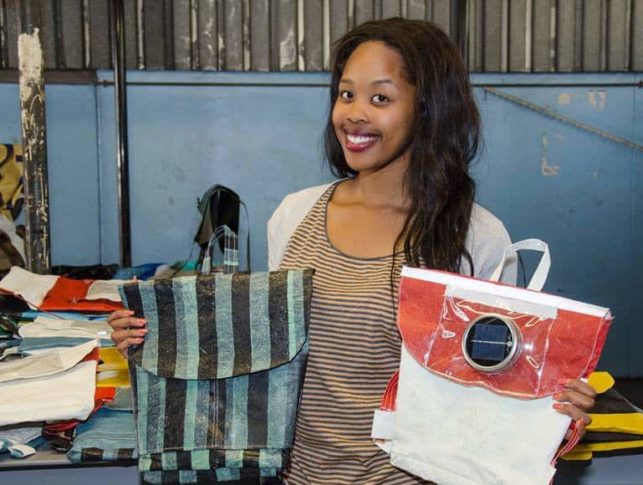
Picture Showing Thato Kgatlhanye from South Africa Produced Solar Bags for School Kids: Photo Credit Samson Modise
–Verone Mankou (Democratic Republic of Congo) – Verone Mankou is the founder of VMK and the inventor of Way-C tablet. He is also the creator of the first African made mobile phone, Elikia (“Hope”). His devices offer affordable smart devices to his country and Africa and increase internet access in the country.
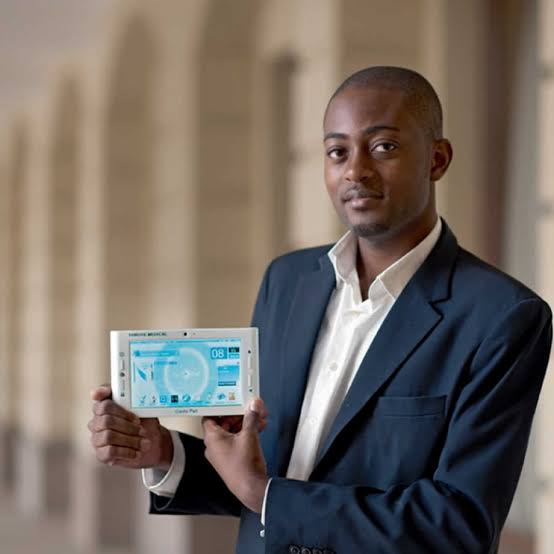
Picture Showing Verone Mankou holding his Medical Tablet called Way-C : Photo Credit Getty Images
–Duro-Aina Adebola, Akindele Abiola, Faleke Oluwatoyin, and Bello Eniola (Nigeria)- These four young Nigerian girls in 2012 invented a urine-powered generator, which could give up to six hours of electricity when powered with one liter of urine. While unorthodox, such an invention has the potential to solve two problems, waste disposal and providing an alternative source of energy.
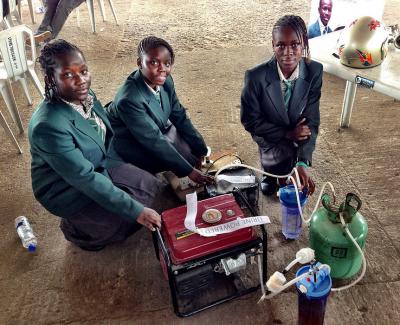
Picture Showing Young Nigerian Inventors Duro-Aina Adebola, Akindele Abiola, Faleke Oluwatoyin, and Bello Eniola Invented a Generotor powered by Urine: Photo Credit: Punchng
–Maxwell Chikumbutso (Zimbabwe) – Maxwell Chikumbutso Invented the World’s First Free-Energy Vehicle. A car that requires no fuel, no recharging, and no external input to operate. Maxwell ’s technology is undoubtedly poised to reshape the future of transportation and energy. The invention is centred around a microscopic energy device he designed. This device converts naturally occurring radio frequencies into pure energy, effectively providing an infinite power source for vehicles, motorbikes, and generators.
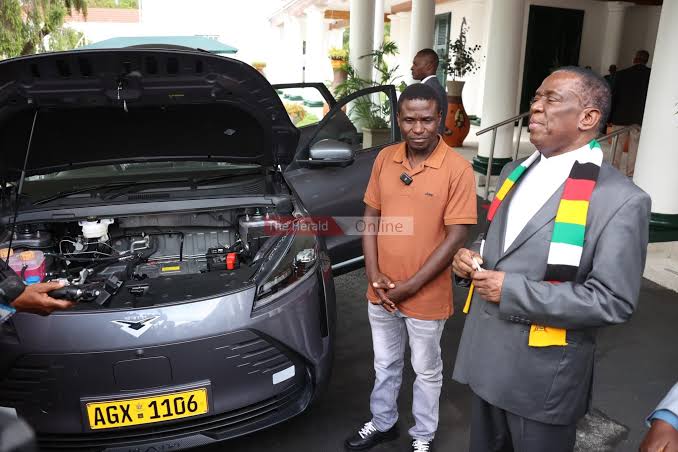
Picture Showing Maxwell Chikumbutso producer of the World’s first free energy car Standing beside Zimbabwean President – Photo Credit AFP
–Simon Peter (Namibia) – Simon Peter a high school student from Ohangwena Region of Northern Namibia, back in 2016, Invented a SIM-Free Phone that Makes Calls Without Airtime capturing the internet’s imagination almost a decade ago. And like many stories of African brilliance, it trended, then tragically disappeared, without the follow-through of capital, protection, or global production.(15)
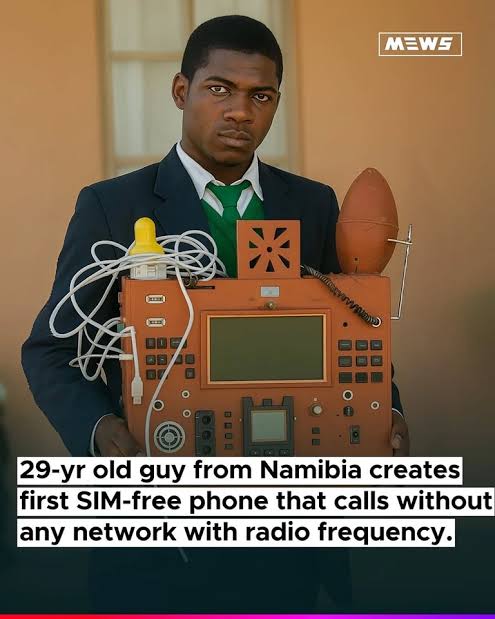
Picture Showing Simon Peter Inventor of a Sim-free phone: Photo Credit: Facebook( Simon Peter)
–Arthur Zang (Cameroon) – Arthur Zang developed Africa’s first handheld medical computer tablet that help diagnose people with heart disease. His patented invention Cardiopad, is a 25 centimeter touch-screen medical tablet that enables health workers to perform cardiac tests such as electrocardiograms (ECG) at far away remote areas and beyond. The reports are then be wirelessly send results to doctors via the Internet for interpretation. Zang’s invention has the potential to help millions of people who suffer from heart related problems, most especially those in the rural areas of Africa.
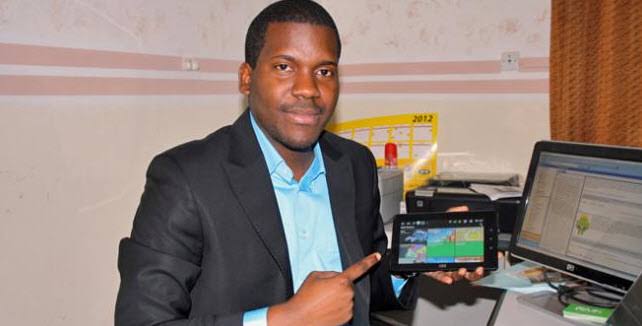
Picture Showing Arthur Zang producer of Africa’s first handled medical computer: Photo Credit: Gemade Israel
–David Gathu and Moses Kinyua (Kenya) – David Gathu and Moses Kinyua two college dropouts created a bio-prosthetic robotic arm operated by brain signals. The brain signals are converted to electrical current, which is then driven into the robot’s circuitry, giving the arm its mobility. The arm has several components, including recycled wood, and moves vertically and horizontally. According to the World Record Academy, this is the first invention of its kind.
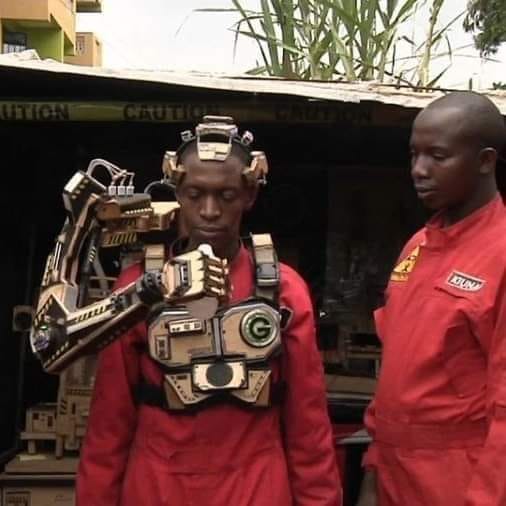
Picture Showing David Gathu and Moses Kinyua Inventors of a bio-prosthetic robot arm that works with your imagination: Photo Credit (Facebook)
–Osh Agabi (Nigeria) – Oshiorenoya Agabi a Nigerian scientist invented a neurotechnology startup called Konikore in 2020 revolutionizing the intersection of biology and technology by combining synthetic neurobiology with silicon technology detects diseases in the human body through breath. By breathing on the Konikore, the patient pushes out the disease in the body which is then read on the machine. This year, he also developed a neurotechnology device that detects explosives and cancer cells.

Picture Showing Osh Agabi Inventor of Konikore a Neurotechnology Startup: Photo Credit Getty Images
–Thérèse Izay Kirongozi – Thérèse, a female engineer from the Democratic Republic of Congo, in 2013 invented human-like robots to help fight a traffic crisis in the country’s capital, Kinshasa. This human-like robot provides an efficient, safe and modern means to control traffic especially in high traffic regions in africa and around the world.

Picture Collage Showing Thérèse Izay Kirongozi and her Invented a human like Robot to fight Road Traffic – Photo Credit Justin Jato
Technology a Silver Bullet for Africa
Technology is a silver bullet, and carries with it an incredible potential to positively transform Africa by increasing the productivity of systems, lowering waste, harmful toxic emissions, creating new job opportunities and driving internally generated revenues at a speed and scale we couldn’t have ever dreamed of before.
Today, Technological, AI & Robotic breakthroughs in areas like healthcare, agriculture, energy, education and mobility is bringing about a new wave of Global development.
Harnessing Africa’s tech savvy demographic dividend and resource wealth requires coordinated policies that foster inclusive, sustainable development and resilient value chains within a complex trade environment. However, Africa remains in the dark in terms of developing, adopting and scaling home based African Technological Inventions. This sadly has led to a surge in good African Brains lost due to foreign migration that offers suitable platforms for development and growth.
Broader Impacts and the Technology Gap
The consequences of wastage in Africa extend far beyond economics:
- Environmental toll — Deforestation, water pollution, soil degradation, and higher carbon emissions undermine climate resilience.
- Social costs — Smallholders and communities bear the brunt through lost income, health risks, and food insecurity.
- Economic paradox — Africa exports raw resources while importing processed goods and food, perpetuating dependency and debt.
The core driver is inadequate technology adoption. Many African countries lack access to affordable modern tools, cold storage, precision agriculture, gas capture systems, or efficient mining equipment. Factors compounding this include limited infrastructure (roads, electricity), skills gaps, high costs for smallholders, weak policy enforcement, and insufficient R&D investment. E-waste from imported obsolete tech further adds to the burden, as recycling infrastructure remains underdeveloped.
What must be done
Africa’s resources represent a tremendous opportunity for prosperity, but inadequate technology turns potential wealth into waste. By embracing modern, accessible solutions, the continent can reduce losses, protect the environment, boost farmer and miner incomes, enhance food and energy security, and position itself as a sustainable supplier in the global economy.
The time for action is now. With rising global demand for Africa’s resources amid climate and energy transitions, failing to address technological deficiencies will only deepen inequality and environmental harm. Investing in technology is not a luxury—it’s essential for turning the “resource curse” into a blessing for generations to come. Policymakers, investors, and innovators must collaborate to build a more efficient, resilient Africa. The rewards—reduced hunger, cleaner environments, and shared prosperity—will benefit the entire world.
International support—through technology transfer, financing (e.g., via climate funds), and capacity building—will be crucial, but success depends on African leadership in creating enabling environments: stronger regulations, skills development, and local innovation hubs.
Africa must hurriedly and hastily deploy Rapid investments in technology, power generation, technology skills and infrastructure development balanced with regulatory and governance reforms to address persistent gaps in connectivity, energy and institutional capacity. Once these essential foundations are firmly established, a wide range of transformative use-cases emerge, primarily driven by the private sector driving sustainable technology development and nationwide growth. Also, Technology Advancement funds & institutions must be setup to identify top Local African Inventors and provide them with necessary funding, resources and support to scale their brilliant technological inventions and products.




Leave a Reply