

Scientists at Changzhou Vocational Institute of Mechatronic Technology have created a “remote kissing” gadget.
Key Takeaways:
• Chinese Scientists Create an Electronic Device that can send a “Kiss” from thousands of Miles away
• The concept which has since gone Viral quickly spreading across international media and many social platforms, turning the product into a global talking point
• Critics call it “Creepy” Comparing the sensation to ” A Warm Pacifier”
•Priced around 260 yuan ($38 USD) per unit in 2023, “Kissenger” received over 20,000 orders in just the first week of sales
The device called ” Kissenger ” (short for Kiss Messenger) was developed to help long-distance couples feel closer despite the miles between them.
In an era where video calls have become the norm for staying connected, many couples in long-distance relationships (LDRs) still crave that irreplaceable physical touch—a simple kiss. Enter the Kissenger (sometimes referred to as MUA or “Long Lost Touch”), a Chinese-developed device that promises to transmit real kisses across continents via smartphone technology.
This silicone-lipped gadget captured global attention in early 2023, sparking fascination, amusement, and a fair share of “creepy” comments online. But beyond the memes, it highlights a deeper human need: intimacy in a digital world.
The concept which has since gone Viral, quickly spread across international media and many social platforms, turning the product into a global talking point with experts describing it as a way for long-distance couples to mimic kissing through connected devices.
The small gadget attaches to a smartphone, and features High precision force sensors, embedded under the silicon lip to measure the dynamic forces at different parts of your lips during a kiss.
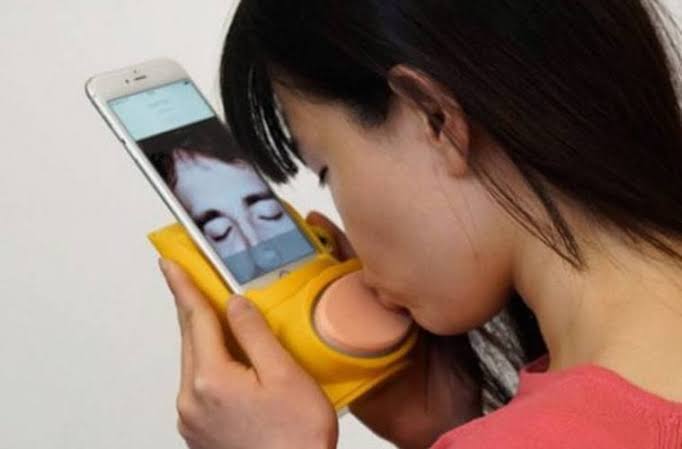
Photo: (Kissenger Stock Photo)
When one person kisses the device, it captures Lip movement and intensity of the kiss thereby instantaneously transmitting the sensation, to another identical device held by their partner thereby recreating the feeling in real time.
The device has mouth-shaped silicone lips with embedded sensors that capture key kiss data, including pressure and movement. That data is sent through a smartphone app to a partner’s paired device, which reproduces the motion to simulate a kiss almost instantly.
The Story Behind the Invention
The device was born out of the isolation of COVID-19 lockdowns in China, where strict measures kept couples apart for months. Zhao Jianbo, then a student at the Beijing Film Academy, was in a relationship but couldn’t meet his girlfriend. Frustrated by the emotional gap in video calls which let you see but not touch, he turned his graduate project into a solution for physical intimacy.
He later founded Beijing-based startup Siweifushe and released the device (branded MUA, mimicking the sound of blowing a kiss) on January 22, 2023. A separate but similar project came from students at Changzhou Vocational Institute of Mechatronic Technology, led by Jiang Zhongli, who drew inspiration from his own long-distance university romance.
These inventions aren’t entirely new. Earlier concepts include a 2011 Japanese “kiss transmission machine,” a 2016 Malaysian device called the Kissinger (with a touch-sensitive pad rather than lips), and an academic prototype also named Kissenger from researchers aiming for multisensory remote affection. The Chinese versions stood out for their realistic 3D silicone lips.
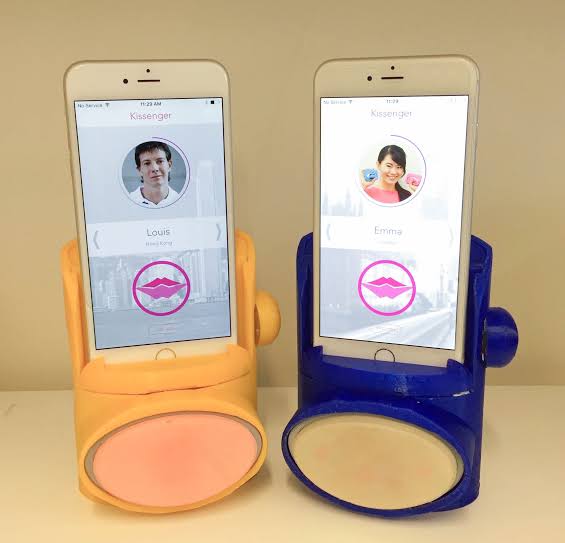
Photo: Remote kissing devices displayed on the table at its owner Jing Zhiyuan’s home, in Beijing, China. Photograph: Tingshu Wang/Reuters
How the Long-Distance Kissing Device Works
The gadget resembles a phone stand or accessory with soft, realistic silicone lips protruding from the front. Here’s the step-by-step process:
- Pair the Devices — Both partners download a companion app and connect their gadgets (which plug into the phone’s charging port).
- Send a Kiss — You press your lips to the silicone mouth. Motion/pressure sensors hidden inside capture the force, movement, and intensity of your kiss.
- Transmit in Real Time — The data travels over the internet to your partner’s device.
- Receive the Kiss — The receiving device’s lips move to replay the motion, while the gadget warms up slightly and replays any sounds you made (like a soft “muah”).
The result? A synchronized, somewhat tactile experience that aims to feel more authentic than a video kiss. Some versions emphasize consent features, requiring mutual agreement before transmitting, and are designed for one-to-one pairing to encourage monogamous use.
It doesn’t simulate tongue action (a common complaint), and it’s more about pressure and basic movement than a full make-out session.
The idea and concept behind Kissenger isnt science fiction but a real experiment exploring how technology could transmit emotions through touch, not just text, voice, or video.Some reporting also noted added features meant to make it feel more “real,” such as transmitting sound, storing recorded kisses, and slight warming effects in certain versions or descriptions of the product.
These extras helped push the device into the broader category of “emotional tech,” where hardware aims to replicate physical affection from afar.
Key Features and Specs
- Silicone lips — Lifelike, unisex design (available in various device colors).
- Sensors — Capture pressure, movement, and sometimes temperature.
- Actuators — Make the lips move on the receiving end.
- Extra Touches — Sound replay and gentle warming for realism.
- App Integration — Pairing, sending/receiving kisses, and possibly storing “kiss messages.”
- Price — Around 260 yuan ($38 USD) per unit in 2023. A pair might cost about $79.
Reactions have been split
Reactions were predictably mixed. On Chinese social media (Weibo), some praised it as a thoughtful fix for LDR struggles: “Finally, we can kiss when we can see but not touch.” Others found it fun or even useful for singles experimenting.
Critics called it “creepy,” comparing the sensation to “a warm pacifier,” and many joked about the missing tongue. There were also concerns about potential misuse for adult content, though the company noted it complies with regulations and can’t fully control user behavior.
Internationally, it went viral with headlines blending wonder and humor. It fits into the broader world of teledildonics and haptic tech devices that simulate touch remotely but this one keeps things relatively PG.
Pros, Cons, and the Bigger Picture
Pros:
- Affordable and accessible entry into haptic intimacy.
- Helps fill an emotional gap for separated couples, families, or even fans (some concepts extend to idols).
- Combines multiple senses (touch, sound, warmth) beyond plain video.
Cons:
- Not a perfect substitute for real human contact—limited movement and no moisture/taste.
- Hygiene questions (silicone lips need cleaning).
- Tech dependence: requires stable internet and paired phones.
- Mixed realism—many users say it doesn’t fully replicate a kiss.
In a world increasingly shaped by remote work, global travel, and digital relationships, devices like this reflect growing interest in multisensory tech. They echo developments in VR, haptics, and even the metaverse, where simulating human connection could become more sophisticated.
Whether the Kissenger/MUA evolves, gets upgraded with better sensors or AI, or remains a novelty, it sparks an important conversation: Can technology truly bridge the physical divide in love?
While some people see it as clever, playful solution for couples separated by distance to electromagnetically share a Kiss with your Loved one from over far distances, Others raised concerns about privacy, data handling, and whether intimate interactions should be mediated and stored by consumer tech.
Kindly Let us know what you think about ” Kissenger ” in the comments section below: Will it be a Hit or a Miss ? Let know your thoughts 💭 💭
Disclaimer
This article is only meant for Educational purpose. The authors In no way refer to this article as yardstick for any sale or purchase of devices or materials. Further information on purchase should be sought from the respective device inventor or designated marketers.




Leave a Reply