
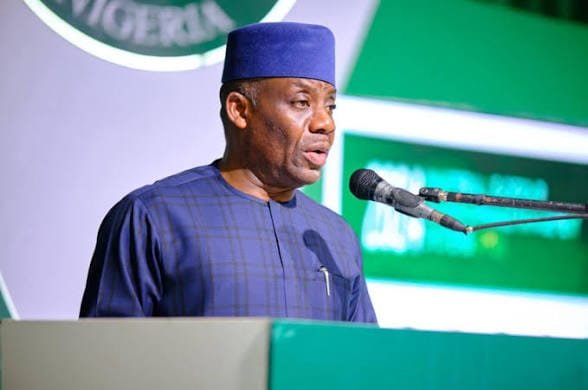
On Monday, April 14, 2026, the Nigeria Customs Service (NCS) made a significant announcement that could reshape the landscape of public revenue management in Africa’s largest economy. During the opening of a three-day training workshop on AI-powered revenue generation, remittances, and reconciliation held in Abuja, Comptroller-General of Customs Adewale Adeniyi unveiled ambitious plans to deploy artificial intelligence across key operational areas. The initiative aims to strengthen revenue collection, minimize leakages, improve the accuracy and timeliness of remittances to the Federation Account, and drastically reduce audit queries from oversight bodies.
Key Takeaways:
• Nigerian Customs Service Set to Deploy Artificial intelligence for Better Revenue Generation
• Stakeholders view AI as a tool that fosters Transparency and Curbs Leakages in revenue generation and remittance
• The Body as has already begun deployment of AI for Revenue Generation
This move comes at a critical juncture for Nigeria. With a national budget approaching ₦60 trillion and heavy reliance on non-oil revenues to fund infrastructure, security, and social programs, agencies like the NCS are under immense pressure to deliver more with greater transparency. Traditional manual processes have long been plagued by inefficiencies, human errors, under-declarations, and systemic leakages that erode potential collections. AI, according to NCS leadership, represents a proactive leap from reactive firefighting such as responding to legislative summons to data-driven, predictive governance.
The Challenges Facing Nigeria’s Customs Revenue Ecosystem
Nigeria’s Customs Service plays a pivotal role in border management, trade facilitation, and revenue mobilization. In recent years, the NCS has recorded impressive collections; for instance, it has consistently contributed hundreds of billions of naira monthly through duties, levies, and excise. Yet, persistent issues undermine these gains. Revenue leakages occur through undervaluation of imports, misclassification of goods, smuggling, and discrepancies in declarations. Reconciliation processes—matching collected funds with remittances to government coffers often involve multiple stakeholders, including collecting banks, platform providers, internal and external auditors, the Revenue Mobilisation Allocation and Fiscal Commission (RMAFC), and National Assembly committees. These multi-layered interactions frequently result in audit queries, delays, and disputes.
Comptroller-General Adeniyi highlighted this during his address, noting the Service’s shift away from a culture of constant legislative summons toward collaborative partnerships. He acknowledged that while infractions have reduced over time due to ongoing reforms, reconciliation challenges continue to attract scrutiny. Stakeholders in the revenue value chain: banks, auditors, and oversight institutions sometimes operate with fragmented systems, leading to anomalies that AI can now help detect early.
Growing trade volumes add complexity. Nigeria’s ports handle millions of containers annually amid expanding global supply chains. Manual oversight struggles with pattern recognition in vast datasets involving weights, values, origins, and classifications. Under-declarations, for example, where importers report lower weights or wrong HS codes to slash duties, represent a classic leakage point. Without advanced tools, these go unnoticed until audits flag them months or years later.
How Artificial Intelligence Will Transform NCS Operations
The deployment of AI is not a vague futuristic promise but a targeted intervention across the revenue value chain. NCS officials explained that AI-powered systems will analyze massive datasets in real-time to identify anomalies, predict risks, and automate routine tasks.
Key applications include:
– Anomaly Detection in Trade Declarations: Machine learning algorithms can scan import/export documents for inconsistencies such as mismatched cargo weights, unusual pricing patterns compared to global benchmarks, or suspicious routing through high-risk origins. This goes beyond rule-based checks to learn from historical data and flag subtle fraud indicators that human officers might miss.
– Enhanced Revenue Assessment and Collection: AI tools can automate valuation processes using predictive analytics, cross-referencing declarations against international trade databases, market prices, and risk profiles. This minimizes under-valuation while speeding up legitimate clearances, supporting the government’s ease-of-doing-business agenda.
– Improved Remittances and Reconciliation: One of the most promising areas is automating the flow from collection to remittance. AI can reconcile transactions across platforms almost instantaneously, reducing errors in fund transfers to the Federation Account. It will generate audit-ready reports with traceable digital trails, making it easier to demonstrate compliance and transparency.
– Risk Management and Predictive Insights: By processing trade volumes and patterns, AI will help prioritize high-risk shipments for physical examination while allowing low-risk ones to clear faster via non-intrusive methods. The Service has already begun integrating AI into non-intrusive inspection regimes, such as scanner data analysis, and plans to expand this significantly.
– Fraud Prevention and Leakage Reduction: Advanced models can detect collusion patterns, unusual officer assignment trends, or spikes in certain declaration types that signal systemic issues.
Adeniyi emphasized that AI is “no longer a concept” but a practical tool offering “unprecedented opportunities to optimise revenue processes, minimise leakages, improve remittance accuracy, and ensure seamless reconciliation.” He urged other stakeholders—banks, platform operators, and auditors—to adopt similar innovations for collective gains, as the NCS is only one link in the chain.
The three-day training in Abuja, held at the Ladi Kwali Hall, marks the beginning of capacity building. Officers and relevant stakeholders are being equipped with skills to harness these tools effectively. This human-AI synergy is crucial; technology alone won’t suffice without a skilled workforce that understands both customs procedures and data science fundamentals.
Global Context and Lessons for Nigeria
Nigeria’s AI push in customs aligns with worldwide trends. Many advanced economies have integrated AI into border management for years. Singapore’s Customs uses predictive analytics for trade facilitation and risk targeting. The United States Customs and Border Protection employs machine learning for cargo screening and fraud detection. The European Union’s customs authorities leverage AI for tariff classification and valuation under their Union Customs Code.
These implementations have yielded measurable results: higher collection rates, reduced processing times, fewer disputes, and stronger compliance. For developing nations like Nigeria, where resources are constrained and trade volumes are rising, AI offers a cost-effective multiplier. It democratizes expertise by augmenting officers’ capabilities rather than replacing them.
In the African context, countries like Kenya and Rwanda have made strides with digital customs platforms. Nigeria’s move could position it as a regional leader if executed well, especially with the African Continental Free Trade Area (AfCFTA) increasing intra-African trade flows that demand efficient, transparent border processes.
Benefits Beyond Revenue: Transparency, Efficiency, and Economic Impact
The NCS initiative promises multifaceted gains. Reduced audit queries will ease the administrative burden on the Service and foster better relations with the National Assembly and Auditor-General’s office. House Committee on Public Accounts Chairman Hon. Bamidele Salam commended the proactive approach, noting that robust engagements in recent years have already lowered infractions. AI-driven transparency could further minimize summons, allowing focus on policy collaboration rather than defensive explanations.
Efficiency improvements will benefit traders. Faster, more predictable clearances reduce demurrage costs, storage fees, and delays that inflate consumer prices. In a country battling inflation and high logistics costs, this could provide indirect economic relief.
On a macro level, plugging leakages could boost non-oil revenue significantly. Even a 10-20% reduction in avoidable losses—through better detection of undervaluation and improved remittances—would translate to billions of additional naira for national development. This supports broader fiscal discipline amid debt servicing pressures and the need for diversified revenue streams.
Moreover, AI adoption signals Nigeria’s commitment to digital transformation. It aligns with national strategies like the National Digital Economy Policy and could spur local tech innovation if the NCS partners with Nigerian AI startups or universities for customized solutions.
Potential Challenges and the Road Ahead
While promising, successful AI deployment faces hurdles. Data quality is foundational; fragmented or inaccurate historical records could lead to flawed models. Integration with existing systems like the Nigeria Customs Integrated System (NICIS) and the emerging National Single Window requires careful planning to avoid disruptions.
Cybersecurity is another concern. As operations become more digital, robust protections against hacking or data manipulation are essential. Capacity gaps persist—many officers need upskilling in data literacy alongside traditional customs training. The training workshop is a start, but sustained programs, possibly in partnership with institutions like the Nigerian Institute of Advanced Legal Studies or tech firms, will be necessary.
Ethical considerations matter too. AI decisions must remain explainable and free from bias to maintain public trust. Clear governance frameworks for AI use in enforcement will prevent misuse.
Collaboration is key, as Adeniyi noted. Success depends on banks, auditors, platform providers, and oversight bodies aligning their systems. The NCS cannot operate in isolation within the revenue ecosystem.
Looking forward, the Service plans to scale AI across more modules, building on early integrations in non-intrusive inspections. Full rollout could take months to years, but pilot phases in major commands like Apapa or Tin Can Island Ports would provide quick wins and lessons.
A Forward-Looking Step for Nigeria’s Economy
The Nigeria Customs Service’s decision to deploy artificial intelligence marks a bold, necessary evolution in public service delivery. By targeting revenue generation, remittances, and audit efficiency, the initiative addresses longstanding pain points while embracing global best practices. Comptroller-General Adeniyi and his team deserve commendation for this proactive stance at a time when fiscal innovation is vital.
If implemented thoughtfully with strong capacity building, stakeholder buy-in, and continuous evaluation—this AI strategy could not only increase collections and cut leakages but also enhance Nigeria’s reputation as a modernizing trade hub. In an era of rapid technological change, the NCS is positioning itself as a forward-thinking institution that leverages innovation for national benefit.
As the training concludes and deployment begins, all eyes will be on the results. Reduced audit queries, smoother remittances, and higher verifiable revenues would validate the approach. For ordinary Nigerians, the ultimate payoff lies in a more efficient economy where government revenues translate into tangible development that includes: better roads, security, healthcare, and opportunities.
The Monday announcement in Abuja may prove to be a turning point. Artificial intelligence, when wielded responsibly in the service of transparency and efficiency, has the potential to strengthen the foundations of Nigeria’s fiscal architecture. The journey has just begun, but the direction is clear: a smarter, more accountable Customs Service powering a stronger economy.
This development reflects Nigeria’s growing embrace of technology to solve complex governance challenges. With sustained commitment, AI could help the Nigerian Customs service to Supercharge Revenue Generation.





Leave a Reply