
African Continental Free Trade Area, AfCFTA Secretary-General Mr. Wamkele Mene said on Tuesday that “Africa will need more than 700 data centres to support the digital trade architecture envisioned under the African Continental Free Trade Area.
Key Takeaways:
•Africa In Dire need of New Data Centres to Boost African Digital Infrastructure, Capacity and Growth
•Africa Currently hosts less than 1% of the Global Commercial Data Capacity
•Increasing African Data infrastructures will bring with lots of New business opportunities and Jobs for Africa Cytizens
As the AfCFTA’s Protocol on Digital Trade gains momentum, experts and Officials at forums like the ongoing 2026 GITEX Africa Forum in Marrakech hosting the continent’s largest international trade show with dedication to technology, innovation and infrastructure Without which, Africa risks watching its Data and its economic opportunities flowing offshore.
Africa currently has about 220 data centres, representing roughly 1% of global commercial data centre capacity, according to the Africa Data Centres Association this is a worrying shortfall increasingly viewed by policymakers and investors as a key bottleneck to digital trade expansion in Africa.
A Bold Vision for Digital Trade
The AfCFTA, the World’s Largest free trade area by number of participating countries, is transforming how Africa trades. Its newly adopted Protocol on Digital Trade aims to create a seamless, trustworthy ecosystem for e-commerce, digital payments, data flows, and cross-border services. The goal? Boost intra-African trade, which currently lags far behind potential, and position the continent as a global digital player.
At recent AfCFTA events, officials including representatives from the secretariat have repeatedly highlighted the infrastructure gap. “Current estimates suggest Africa needs around 700 data centres to meet demand and fully participate in the global digital economy,” noted discussions at the 2025 forum. This figure, originally flagged in reports from the Africa Data Centres Association, is now central to AfCFTA’s digital strategy.
Africa’s Digital economy is projected to reach $712 billion by 2035. But without the physical backbone and reliable, high-capacity data centres, this remains a Dream rather than a Reality.
Why 700 Data Centres? The Scale of the Challenge
Today, Africa hosts less than 1% of the World’s Data centres. Most data generated on the continent is stored and processed overseas, creating risks to digital sovereignty, higher latency, and lost economic value.
South Africa dominates: It accounts for the lion’s share of existing capacity.
The rest of the continent lags: Reports estimate that Africa outside South Africa would need to add nearly 1,000 MW of capacity and around 700 facilities just to catch up to current South African levels and meet rising demand.
The AfCFTA Digital Trade Protocol explicitly calls for investment in regional data centres, cloud systems, and shared infrastructure to address these constraints and promote local data hosting
Current Landscape
Africa’s data centre market is expanding rapidly. Valued at around $1.17 billion in 2025, it’s projected to hit $4.36 billion by 2031, growing at a compound annual rate of 14.46%.
Major players like Raxio, Teraco, and Africa Data Centres are building facilities in countries such as Nigeria, Kenya, Ivory Coast, and Ghana. AI demand is accelerating this Boom. McKinsey estimates AI could add $2.9–4.8 trillion to Africa’s economy by 2030 if necessary infrastructure keeps pace. Yet the gap remains massive. Only 220 data centres exist continent-wide against the 700 needed
AfCFTA’s Role: From Policy to Pipelines
The Protocol on Digital Trade isn’t just paperwork. It encourages:
Harmonized regulations for data flows
Public-private partnerships (PPPs) for broadband and data infrastructure
Regional collaboration on cloud and computing facilities
AfCFTA Secretary-General Wamkele Mene and Secretariat officials have stressed that Digital trade is key to competitiveness. They urge Governments to commit funds and mobilize investment as this is exactly what’s needed to turn the 700-centre vision into reality.
Today, Countries like Kenya (positioning as a digital payments hub) and Zambia are leading by example. Nigeria, with its growing tech ecosystem in Lagos and Abuja, is also poised to benefit.
Challenges on the Horizon
Building 700 additional Data Centres won’t be easy:
Power shortages: Facilities need 20–50 MW of reliable electricity which remains scarce in many countries.
High costs: Billions in investment required.
Skills and regulation: Talent gaps and fragmented rules slow progress.
Sustainability: Data centres are energy-intensive; green solutions are essential.
Without coordinated action across the 54 AfCFTA member states, the Digital divide could widen.

Picture Showing Africa’s 10MW data centre in Lagos – Photo Credit: Digitalisation World
Opportunities: A Game-Changer for Africa
Jobs and innovation: Thousands of Tech roles in Construction, Operations, and Data Science.
Digital sovereignty: Keep African data in Africa.
Trade boost: Faster, cheaper cross-border e-commerce and services.
AI and future tech: Local infrastructure to power the next industrial revolution.
Public-private partnerships, smart financing, and AfCFTA-backed regional hubs could make it happen. The continent’s youthful population and entrepreneurial spirit are already driving start-ups in fintech, e-commerce, and agritech.
The Digital Surge Driving Demand
Africa’s digital landscape is transforming rapidly. Mobile internet users numbering around 416 million, with smartphone penetration projected to rise significantly.
Data traffic is surging due to fintech innovations, e-commerce, streaming services, and the rise of artificial intelligence (AI). Sub-Saharan Africa alone could see monthly data usage per smartphone increase substantially by 2030, pushing overall regional data traffic from roughly 2.3 exabytes to 11 exabytes per month.
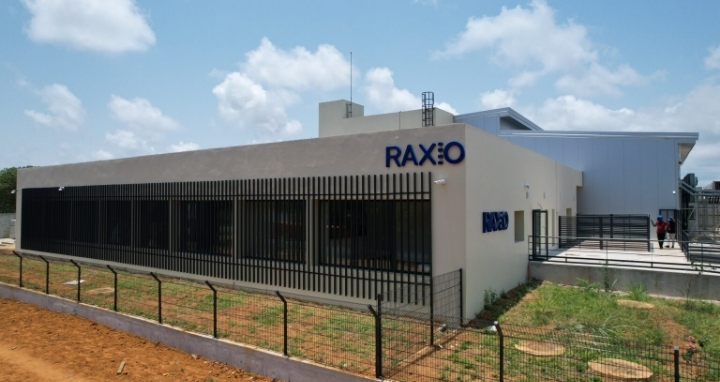
Picture Showing Raxio Data Centre Ivory Coast- Photo Credit: Empower Africa
Sectors like mobile money with hundreds of millions of accounts generate vast transaction data requiring secure, low-latency processing. Tech startups and unicorns in Nigeria, Kenya, South Africa, and Egypt are scaling rapidly, while governments push e-governance and smart city initiatives.
The African Continental Free Trade Area (AfCFTA) further amplifies this by enabling cross-border digital trade, demanding reliable, localized infrastructure.Without sufficient local data centers, much of Africa’s data is stored and processed offshore, primarily in Europe and North America.
This reliance creates high latency, increases costs, and exposes sensitive information to foreign jurisdictions. As AI applications demand real-time processing, offshore dependency becomes unsustainable—latency-sensitive services simply cannot thrive when data must travel thousands of miles.
Economic and Strategic Imperatives Necessary to Boost Africa’s Data Infrastructure
Investing in data centers is not merely about storage; it is about economic empowerment. The Africa data center market was valued at approximately USD 3.49 billion in 2024 and is projected to reach USD 6.81 billion by 2030, growing at a CAGR of around 11.79%.
Other forecasts point to even stronger expansion, with IT load capacity potentially tripling to 1.2 GW or more by 2030 in key markets. McKinsey estimates that the five largest African markets could see capacity grow from about 400 MW today to 1.5–2.2 GW by 2030, requiring $10–20 billion in investment and unlocking $20–30 billion in broader value chain revenue.
Data centers have the potential to drive job creation, skills development, and local innovation. They attract hyperscalers like Microsoft, Google, AWS, and Equinix, while enabling local operators to build carrier-neutral facilities. In Nigeria, existing centers already demand significant power, signaling broader industrial ripple effects. Renewable-powered projects, such as Microsoft’s geothermal initiative in Kenya with G42, demonstrate how data centers can integrate with Africa’s vast clean energy potential, including solar and hydro resources.
The Road Ahead: Time to Act
Africa stands at a pivotal moment in its digital evolution. With a population exceeding 1.4 billion and a youthful demographic driving innovation, the continent is experiencing explosive growth in internet usage, mobile connectivity, and data-intensive services. Yet, its digital infrastructure lags dramatically behind global standards. Africa hosts less than 1% of the world’s data center capacity despite representing about 18% of the global population. This gap underscores an urgent need for expanded data centers across the continent to support sustainable economic growth, enhance digital sovereignty, and unlock the full potential of Africa’s digital economy.
The AfCFTA Chief’s call for 700 Data Centres isn’t hyperbole—it’s a pragmatic roadmap for Africa’s digital destiny. As the Protocol on Digital Trade rolls out, Governments, Investors, and the Private sector must move from talk to trenches.
Africa doesn’t just need data centres. It needs a connected, sovereign, and thriving digital single market. The infrastructure gap is clear. The opportunity is massive. The question is: will we build it?






Leave a Reply