

In the bustling corridors of Indian hospitals, where surgeons once battled hand tremors, fatigue, and the inherent limitations of human dexterity during complex procedures, a quiet revolution is unfolding. Social media has been abuzz with claims that India have engineered a robot that can perform complex surgeries with zero a error rate.”
Key Takeaways:
• India Develops a Surgical Robotic Machine that carries out Complex Surgeries with High Precision and Zero Rate Errors
• The Robotic Surgeon is already changing the face of healthcare with over 60,000 Surgeries Successfully completed
• The Robot can also be used to carry out highly complex cardiac surgeries performed remotely, marking India as a serious contender in global surgical robotics.
This invention captures public excitement and national pride, the surgical Robot is profoundly inspiring to the nation.
India has indeed developed one of the world’s most promising indigenous surgical robotic systems called the “SSI Mantra” which delivers exceptional precision surgeries, enables telesurgery over vast distances, and is dramatically lowering costs to make advanced care accessible.
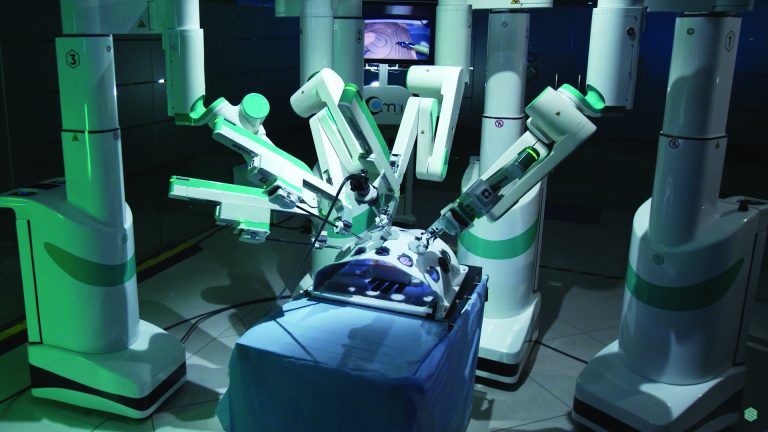
SSI Mantra surgical robot
This isn’t science fiction or a flawless autonomous machine operating without oversight. Instead, it’s a surgeon-controlled robot that minimizes human error to near-zero in critical movements, filters out physiological tremors, and provides 3D high-definition visualization for unparalleled accuracy. As of 2026, the SSI Mantra has powered thousands of successful procedures, including highly complex cardiac surgeries performed remotely, marking India as a serious contender in global surgical robotics.
This post dives deep into the technology of its development, real-world impact, challenges, and the future it promises for healthcare in India and beyond.
We’ll explore how Indian innovation is reshaping the operating theater.
Why Robots Matter in Human Surgery
Traditional surgery, even minimally invasive Laparoscopy, relies on the surgeon’s hands. No matter how skilled, humans experience natural tremors (amplified under magnification), fatigue during long procedures, and limited range of motion inside the body. These factors contribute to error rates that can lead to complications like bleeding, infection, or incomplete tumor removal.
Globally, surgical complications affect millions annually. In complex procedures such as cardiac bypasses, prostatectomies, or intricate cancer resections, even a millimeter’s deviation can have life-altering consequences.
Robotic systems address this by offering:
– Tremor filtration
– Scaled movements (a surgeon’s hand motion can be reduced to micro-movements)
– Enhanced 3D vision
– Ergonomic consoles that reduce physical strain
The da Vinci system from Intuitive Surgical pioneered this field in the early 2000s, but its high cost often exceeding $2 million per unit plus expensive consumables limited its adoption in developing nations. India, with its vast population and uneven healthcare access, needed an affordable alternative. Enter Indian ingenuity.
The Birth of SSI Mantra: A Surgeon’s Vision
The story of India’s robotic surgery breakthrough centers on Dr. Sudhir Srivastava, a renowned cardiothoracic surgeon with decades of experience in the United States and India. Frustrated by the inaccessibility of robotic technology in his home country, Dr. Srivastava invested his life savings and founded SS Innovations in the early 2010s. The goal was clear: create a “Made in India” surgical robot that matches or exceeds global standards while costing a fraction of imported systems.
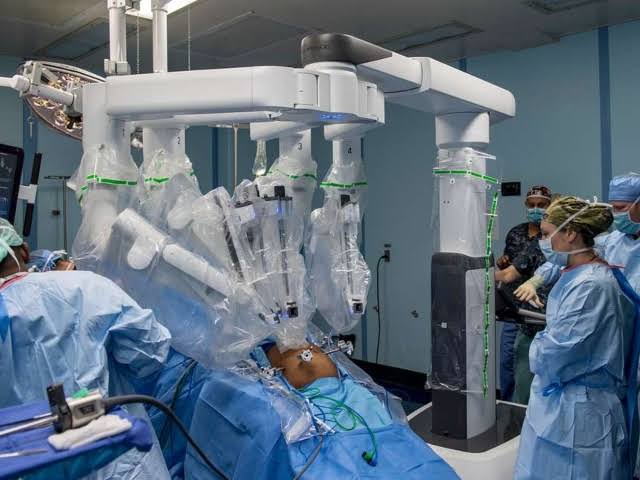
SSI Mantra surgical robot has already preformed more than 60,000 Surgical Operations
Developed at the Atal Incubation Centre, the SSI Mantra (often stylized as SSi Mantra or SSI Mantra 3 in its latest iteration) emerged as a modular, multi-arm system. Unlike some competitors with fixed configurations, Mantra offers flexibility with 3 to 5 robotic arms, making it adaptable for various specialties.
Key features include:
– An open-face ergonomic console with a massive 32-inch 4K 3D high-definition monitor, allowing surgeons a more natural, immersive view without the enclosed “tunnel vision” of some systems.
– Advanced tremor-filtering algorithms and motion scaling for sub-millimeter precision.
– A suite of over 40 specialized SSi Mudra endo-surgical instruments, many designed for reusability to cut costs.
– Integrated telesurgery capabilities with ultra-low latency, approved by India’s CDSCO for remote procedures and proctoring.
The system received regulatory clearances and began clinical pilots around 2022. Early trials at institutions like Rajiv Gandhi Cancer Institute involved complex abdominopelvic procedures, demonstrating safety and efficacy. By mid-2025, SS Innovations had surpassed 100 installations across India and several other countries, with thousands of procedures completed, including over 200 cardiac cases.
What sets Mantra apart isn’t a literal “zero error” autonomous operation—true fully autonomous complex surgery remains experimental globally, as seen in 2025 Johns Hopkins tests on gallbladder procedures achieving 100% accuracy in controlled settings—but rather near-elimination of surgeon-induced errors through robotic assistance. The robot doesn’t “perform” surgery independently in clinical use; highly trained surgeons control it masterfully from the console, leveraging the machine’s stability.
How The Mantra SSI Achieves Precision
At its core, the SSI Mantra uses advanced kinematics, force feedback (haptic elements in newer versions), and real-time imaging. The robotic arms mimic and enhance human wrist movements with seven degrees of freedom, far surpassing laparoscopic tools. Surgeons report that procedures feel intuitive, with the system translating hand gestures into precise actions inside the patient.
One standout capability is telesurgery. In January 2025, the Mantra system enabled India’s first robotic cardiac telesurgeries over 286 km, connecting Gurugram to Jaipur with latency as low as 40 milliseconds virtually imperceptible. Surgeons performed beating-heart Totally Endoscopic Coronary Artery Bypass (TECAB), one of the most demanding procedures, with “flawless precision.” By 2026, longer-distance feats included operations spanning over 2,000 km.
This low-latency performance relies on robust 5G or dedicated networks, redundant safety protocols, and on-site backup teams. The system has also facilitated telesurgery across international borders, such as a procedure linking Mumbai to Oman.
In terms of error reduction:
– Tremor elimination: Human hand tremors (typically 6-12 Hz) are filtered out entirely.
– Fatigue mitigation: Surgeons operate seated in comfort, maintaining peak performance for hours.
– 3D visualization: Depth perception reduces accidental tissue damage.
– Data logging: Every movement is recorded for review, training, and quality assurance.
Studies and real-world data show reduced blood loss, shorter hospital stays, lower infection rates, and faster recovery compared to traditional methods. While no system claims absolute zero errors (medicine involves variables like patient anatomy and unexpected bleeding), Mantra’s track record demonstrates complication rates competitive with or better than global benchmarks in validated procedures.
Real-World Impact: Transforming Lives in India
India performs over 60,000 robotic-assisted surgeries annually as adoption grows, but costs previously restricted it to elite urban hospitals. The SSI Mantra changes that equation. Priced at roughly one-third of leading imported systems (installation around 50 million INR or ~$600,000-$700,000), with significantly cheaper instruments and maintenance, it democratizes access.
Hospitals in tier-2 and tier-3 cities, as well as government facilities, are adopting it through initiatives like the “MantraM Yatra”—mobile demonstrations and training tours across states like Bihar. Specialties benefiting include urology, gynecology, general surgery, oncology, and cardiac procedures. Over 5,000 procedures were logged by mid-2025, with numbers climbing rapidly into 2026.
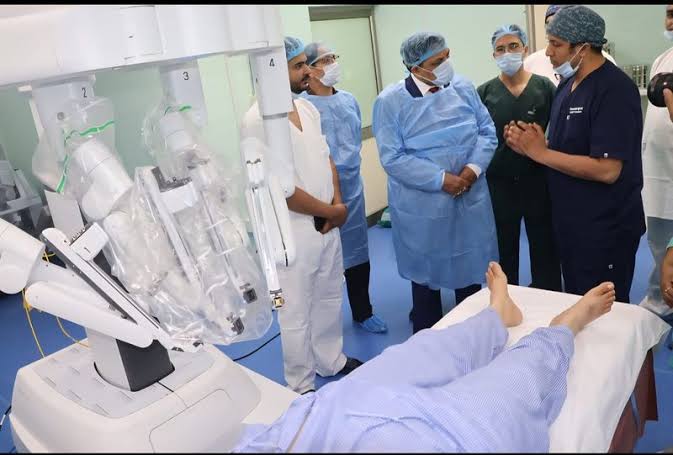
Dr Sudhir Srivastava and a group of Surgeons with the latest generation of the SSI MANTRA surgical robot.
Patient stories highlight the difference. A farmer in rural Rajasthan undergoing prostate surgery via Mantra might return to work weeks earlier than with open surgery.
Cancer patients experience more complete resections with reduced margins. Cardiac patients benefit from minimally invasive approaches that avoid sternotomy (chest cracking).
Training is another pillar. SS Innovations offers simulators and dual-console setups for proctoring, allowing experienced surgeons to guide novices remotely. This addresses India’s shortage of super-specialists, potentially scaling expertise nationwide.
Economically, the ripple effects are huge. Lower costs mean more procedures covered under government schemes like Ayushman Bharat. Reduced hospital stays free up beds. And exporting the technology positions India as a medical tourism and tech exporter hub.
Challenges and Realistic Expectations
No technology is without hurdles. Critics note that while Mantra reduces errors dramatically, outcomes still depend on the surgeon’s skill, team coordination, and patient factors. “Zero error rate” is aspirational marketing or viral exaggeration as real medicine embraces probabilistic safety, not perfection. Early systems faced learning curves, and long-term data is still accumulating.
Cost, though lower, remains a barrier for many public hospitals. Infrastructure for telesurgery (reliable high-speed connectivity) is uneven in rural areas. Regulatory harmonization for global exports and liability questions in remote procedures need ongoing attention.
Technical challenges include instrument durability, AI integration for predictive analytics (future enhancements), and competing with established players. However, SS Innovations is addressing these through iterative updates, reusable tools, and mixed-reality training platforms like SSi Maya.
Globally, Fully Autonomous robots are progressing
2025 experiments showed AI completing gallbladder removal with 100% accuracy in trials—but ethical, safety, and regulatory barriers mean human oversight will remain essential for the foreseeable future. India’s contribution lies in accessible, surgeon-empowered robotics rather than replacement.
The Broader Landscape of Indian Surgical Robotics
SSI Mantra isn’t India’s only innovation. Meril Life Sciences developed the CUVIS Joint robotic system for knee replacements, emphasizing automation in orthopedics. Other startups and researchers explore eco-friendly designs or AI-assisted planning. Institutions like AIIMS and Apollo Hospitals have long used imported systems and are now integrating indigenous ones.
The market is exploding: from under $1 billion to potentially $4 billion by 2031. Events like the Global Multi-Specialty Robotic Surgery Conference (SMRSC 2026) in New Delhi showcase this momentum, with sessions on telesurgery, training, and expanding indications.
International interest is growing. Installations in Indonesia, Philippines, Ecuador, and beyond signal “Made in India” quality. Collaborations with global surgeons validate the platform’s versatility.
Towards Future Smarter, More Accessible Surgery
Looking ahead to 2030 and beyond, the SSI Mantra ecosystem could incorporate:
– AI enhancements: Real-time decision support, anomaly detection, and personalized procedural planning.
– Portable and mobile units: For disaster zones or remote villages via “MantraM” concepts.
– Haptic feedback improvements and augmented reality overlays.
– Expanded telesurgery networks: Enabling expert care from urban centers to the farthest corners of India and the Global South.
India’s demographic advantages
Vast engineering talent, large patient volumes for rapid iteration, and cost-conscious innovation positions it uniquely. If current trajectories hold, indigenous robotic systems could help close healthcare gaps, reduce medical tourism outflows, and even reverse brain drain as talented surgeons return to use cutting-edge homegrown tech.
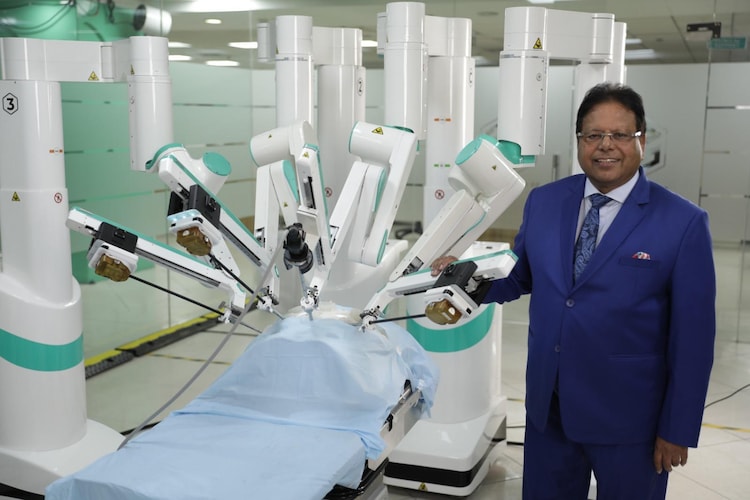
Dr Sudhir Srivastava with the latest generation of the SSI MANTRA surgical robot.
Challenges like data privacy in connected systems and equitable training must be tackled proactively. Yet the potential is transformative: fewer complications, better outcomes, and surgery as a precise, reproducible science rather than an art limited by human frailty.
Conclusion: Pride in Precision, Hope for Humanity
The viral Indian robot achieving “zero error rate” in complex surgeries captures a deeper truth. Through the SSI Mantra and the vision of pioneers like Dr. Sudhir Srivastava, India is engineering a future where surgical precision approaches the ideal way of minimizing avoidable errors, extending expert care via telesurgery, and making advanced procedures affordable for millions.
This isn’t about replacing surgeons but augmenting them. It’s about turning imperfections into excellence. As installations grow, procedures multiply, and borders dissolve through remote capabilities, India’s robotic surgery story inspires not just national pride but global hope.
Healthcare equity remains elusive worldwide, but innovations like the Mantra system light the path. Surgeons will continue to guide, decide, and innovate, now with tools that let their expertise shine without the constraints of flesh and fatigue.
In the operating rooms of tomorrow, the steady hand of Indian engineering may well be the difference between life and a better life. The robot doesn’t claim perfection on its own; together with skilled humans, it delivers outcomes once unimaginable.
For patients in Africa or anywhere else facing complex surgery, this progress signals a borderless advancement in medicine. India has shown that great ideas, determination, and engineering prowess can heal the world one precise robotic movement at a time.
This breakthrough reminds us that technology, when rooted in empathy and accessibility, becomes a powerful force for good. What are your thoughts on robotic surgery’s role in the future? Share in the comments.
Disclaimer!
This publication is made for Educational and awareness purposes. It is not made for the sale of any product or service. The information provided here are based on verified human aided research and studies.




Leave a Reply