After watching Lake Victoria fish farmers suffer devastating yearly losses due to sudden oxygen depletion, Kenyan engineer Elizabeth Gakinya decided to tackle the problem with technology.
As the founder of Trident Analytics, Gakinya built a smart monitoring system specifically tailored for smallholder aquaculture.
Since 2021, fish mortality primarily driven by severe hypoxia (oxygen deprivation) have plagued Kenyan aquaculture, particularly around Lake Victoria.
In response to these recurring agricultural crises, electrical and electronics engineer turned aquaculture entrepreneur Elizabeth Gakinya has introduced an artificial intelligence solution designed to mitigate farmer losses.
By turning reactive farming into proactive management, Gakinya’s Ksh 90,000 setup gives small-scale producers the tools they need to protect their yields and scale their businesses.
Elizabeth Gakinya’s, Smart AI Technology is designed to help fish farmers monitor their ponds before such problems occur.
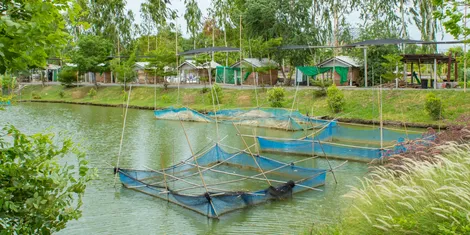
When Gakinya started fish farming, she realised many farmers were losing fish because they only discovered problems after it was too late.
That inspired Gakinya, who studied Electrical and Electronics Engineering, to develop a smart aquaculture system that uses sensors and artificial intelligence to monitor fish ponds and alert farmers before losses occur.
The aquaculture expert and founder of Trident Analytics shared her innovation during Episode 25 of Co-op Bank’s Youth Forums, which focused on Smart Fish Farming for Young People.
The financial literacy programme equips young people with practical skills in business, employment and entrepreneurship.
For Gakinya, successful fish farming begins with water quality, which she described as the foundation of a healthy pond.
”The key thing for fish farming is water. You have to make sure the water is clean and well oxygenated,” Gakinya said.
She explained that she first built a prototype by placing sensors in her own fish pond, allowing the system to collect data and send it directly to her mobile phone.
The technology measures key water quality indicators, including temperature, pH and dissolved oxygen.
Every 15 minutes, farmers receive updates on the condition of their ponds through their phones.
”We have designed a system that allows a farmer to measure the elements and get everything on the phone: oxygen, PH and temperatures,” Gakinya said.
Adding, “Immediately there is a problem; a farmer gets a notification like ‘increase water to X level’ or ‘remove water to X level’.”
The system also includes a standalone buoy fitted with sensors beneath the water surface, alongside aerators and water pumps that work together to maintain suitable pond conditions.
The complete device costs about Ksh90,000. “Our system is fine-tuned for smallholder aquaculture farmers even with one pond,” she said.
Beyond monitoring water quality, Gakinya has developed automatic feeders fitted with AI-powered cameras that observe the size and colour of fish to help farmers assess their health while improving feeding efficiency.
”We have auto feeders which have AI cameras which look at the size of the fish and fish colour, which tells you of the health of the fish,” she said.
She added that the platform also enables farmers to build digital records of their operations, allowing them to monitor pond conditions over time and potentially strengthen their applications for financing.
”With these records, a farmer can even use the data to ask for a loan,” Gakinya said.
Beyond basic monitoring, the hardware—which costs approximately Ksh 90,000 and is tailored for small-scale operators—includes automated feeders equipped with AI vision cameras. These cameras analyze the size and coloration of the fish to monitor health indicators and streamline feeding routines.