
The saying “every man is made of a woman” is biologically true and culturally resonant. This comes as every brilliant innovator, outstanding engineer, and excellent founder was born of a woman. This means that Albert Einstein’s brain cells where formed of a womans body cells, Ben Calsons gifted hands were created of woman’s cell composition and even Elon Musk’s coding abilities came of his mother’s cell structure.
Today, Women constitute roughly half the global population, half the consumer base, and a massive reservoir of underutilized cognitive talent.
Investing in women Technological development might be the key to sustainable future technology and innovative development.
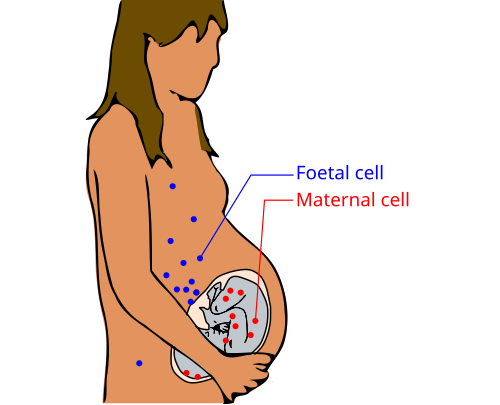
This comes as the exchange of cells between a mother and a fetus is a well-documented phenomenon that scientists have known about for more than 50 years. It’s called microchimerism, and it goes both ways: every human who has ever been pregnant retains cells from their fetus, and every human retains cells from their mother.
The claim that women “hold the key to future Technology growth” is deep and requires precision. Progress depends on expanding genuine participation in Technology by capable, interested women. Not on treating sex as a proxy for ability or enforcing numerical parity that ignores well-documented average differences in interests and preferences because Intelligence is not tied to a single gene or parent. Hundreds of genes from both parents work together to shape cognitive ability.
Biologically speaking, Women have two X chromosomes (XX) and men have one (XY). Some genes related to cognitive function sit on the X chromosome, meaning mothers pass these down to both sons and daughters
A mother’s genetics determines how clever her children are, according to researchers, and the father makes no difference.
Women are more likely to transmit intelligence genes to their children because they are carried on the X chromosome and women have two of these, while men only have one.
A category of genes known as “conditioned genes” are thought to work only if they come from the mother in some cases and the father in other cases. Intelligence is believed to be among the conditioned genes that have to come from the mother.
So here’s the deal. When you were a fetus back when you were basically a parasitic blob of ambition with no name, the placenta was doing a lot more than filtering nutrients. Cells were crossing it. Your mother’s cells were drifting into your body. Yours were drifting into hers. Not a lot of cells, but enough. Enough that they’d show up on tests decades later. Enough that researchers would find them in hearts and livers and thyroids and brains.
I think about this constantly now, which is probably not healthy. But consider what it actually means. You are not, strictly speaking, one person. You are mostly you, sure. But scattered through your body like Easter eggs nobody hid on purpose are cells that belong to someone else. Cells with her DNA. Her genetic code running in your blood stream
The Role of Milk in Fetal Brilliance and Innovative Capabilities
Milk and dairy play a meaningful role in supporting fetal and early childhood brain development, helping to lay the foundation for cognitive growth and lifelong learning potential.

The first 1,000 days from conception through age two represent a critical window when the brain grows rapidly and forms essential connections. During this period, the American Academy of Pediatrics highlights 14 key nutrients for healthy neurodevelopment and mental health. Dairy foods such as milk, cheese, and yogurt supply roughly half of them, including iodine, choline, protein, zinc, vitamin A, vitamin B12, and selenium.
- Iodine supports thyroid hormones that guide brain cell development and communication. Dairy is a major source for many women; just one 8-ounce glass of milk can provide a substantial portion of daily needs. Inadequate iodine in early life is linked to lower cognitive outcomes.
- Choline contributes to brain cell structure, memory, attention, and learning. Milk helps meet choline needs that many people (including pregnant women) fall short of.
- Protein is essential for overall brain growth and the building of neural tissues and neurotransmitters.
Maternal dairy intake during pregnancy supplies these nutrients to the developing fetus, while continued dairy consumption in early childhood supports ongoing myelination, cognitive skills, and healthy growth. Some research also points to benefits from dairy fats and components that aid brain structure.
While breast milk remains uniquely tailored for infants and is associated with cognitive advantages, everyday dairy milk and products offer an accessible, nutrient-dense way to nourish developing brains—supporting the building blocks of focus, learning, and intellectual potential from the very start. Pairing dairy with a balanced diet maximizes these benefits during this irreplaceable window.
The Under-Represented Nature of Women in Technology Today
In our World today, despite the fact that women are the main and major entry point of humans into the world, in America, Africa, Asia and all over the world, Women remain the most underrepresented in core technology roles.

According to a report by The World Bank, women make up less than a third of the world’s workforce in technology-related fields in America. This comes as Women make up 35% of employees in STEM in the U.S. To further worsen the divide, Women are around 26-27% of the STEM workforce, a rise from 8% in 1970 but still far from parity, even though they’re nearly half of the total U.S. workforce.
While in Africa, Women make up 30% of employees in STEM however the African Continent is heavily plagued with lack of STEM Job opportunities and unemployment thereby relegating most women to roles like Office Secretary, Bank Customer Service assistants and Helpers.
These patterns appear early. Girls and boys show diverging interests in computer science and engineering by secondary school, even when math performance is comparable or when girls hold a comparative advantage in reading.

Cross-national data and large meta-analyses of vocational interests consistently show average sex differences: men score higher on “things-oriented” interests (machinery, systems, abstract rules), while women score higher on “people-oriented” interests.
Effect sizes for engineering-related interests are substantial (d ≈ 0.8–1.2). These differences appear across cultures and, notably, are often larger in more gender-egalitarian societies — the so-called gender-equality paradox.
Greater male variance in certain cognitive traits also concentrates more men at the extreme right tail of distributions relevant to high-end technical work, though mean ability differences are small or domain-specific. Interests and life priorities (including average differences in emphasis on work-centered versus balanced lives) explain more of the occupational sorting than discrimination alone.
Why More Women in Technology will shape for Future of Technological Growth
Presently, Technology faces persistent shortages of high-skilled workers. Any friction that deters qualified women — whether cultural stereotypes, inflexible career paths that clash with family formation, or environments perceived as unwelcoming shrinks the available talent pool.
High-performing women already contribute disproportionately in fields where representation is stronger including biology, and design roles. Therefore, expanding pathways into systems, infrastructure, AI safety, hardware, and deep tech increases the absolute number of excellent contributors.
Women drive a large share of consumer spending and increasingly shape enterprise purchasing. Products designed primarily by demographically narrow teams risk blind spots in usability, safety, health applications, and consumer appeal. Diverse teams (including but not limited to gender) can surface different failure modes and user needs.
Women-founded startups remain a small fraction of venture-backed companies and receive a disproportionately small share of total funding. Yet available data frequently show female founders generating more revenue per dollar raised and burning capital more efficiently. In deep tech and certain scientific domains, women-led ventures have secured notable funding in recent years. Expanding access to networks, capital, and technical education for women who choose these paths can accelerate practical innovation.
How can the Total Number of Women in Technology be increased?
Effective strategies start from evidence rather than ideology:
- Reduce artificial barriers: Address documented bias in hiring and evaluation where it exists, improve parental leave and flexible work without creating dual tracks that penalize ambition, and combat hostile or exclusionary cultures.
- Broaden the interest pipeline early without denying average preferences. Interventions that increase exposure to coding, spatial reasoning, and systems thinking for girls who show aptitude can expand the pool of those who choose technical paths. Single-sex STEM programs sometimes show promising effects on interest and identity for girls.
- Judge by contribution, not identity. Quotas that ignore distribution of interests risk mismatch, resentment, and lowered standards. The highest-leverage approach is removing obstacles so that the women who are both capable and strongly interested can rise on merit.
- Support female founders and technical leaders through networks, targeted capital where markets fail, and visibility of role models who succeeded on substance rather than symbolism.
Women do not hold a mystical key simply by virtue of sex. High-agency individuals of both sexes drive technological progress. However, a sector that systematically draws from only part of the talent distribution, designs primarily for part of the user base, and leaves capital-efficient founders underfunded is leaving growth on the table.
The biological fact that every person is born of a woman is a reminder of interdependence, not a political slogan. The practical imperative is simpler: identify ability and interest wherever they appear, remove unnecessary friction, and let excellence compound. Technology’s future will be built by those who can build it best and a larger share of those people will be women.