California officials have ordered a San Francisco startup to stop staging human-versus-robot cage matches after an unsanctioned bout that went viral.
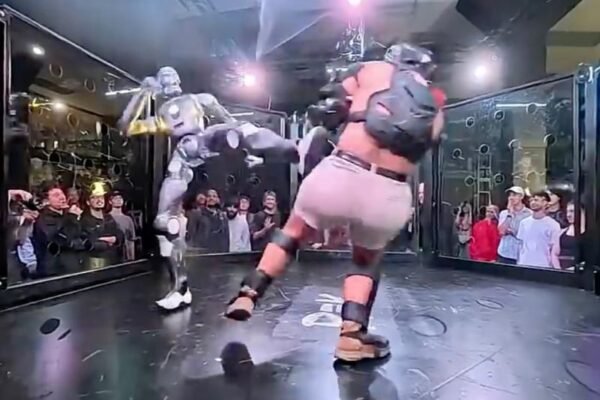
In mid-September 2026, Robot Entertainment Kombat (REK) which styles itself as “the humanoid robot fighting league” hosted what it billed as a historic “Human vs. Robot” event in San Francisco.
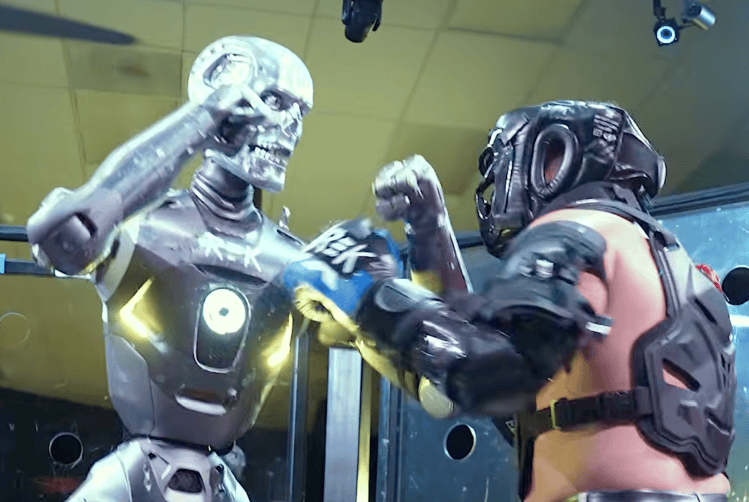
Social media influencer Frankie LaPenna entered a cage against multiple remotely operated humanoid robots, including a roughly 6-foot, steel-framed EngineAI T800 model modified with a Terminator-like head.
Videos of the bouts, in which the robot delivered powerful kicks that sent LaPenna flying into the cage walls or onto the mat, circulated widely online, drawing millions of views and a mix of awe, dark humor, and unease.
LaPenna, wearing protective gear including a helmet, gloves, and pads, faced three robots.
He knocked some down and even helped remove one robot’s head in a bout, but the machines’ ability to recover quickly and keep coming wore him down.
He injured his hand punching a metal frame.
A crowd of about 100 watched.
The robots were not fully autonomous: human pilots controlled them in real time via remote virtual-reality systems or similar setups, with onboard AI assisting balance and posture.
REK has drawn inspiration from the film Real Steel, positioning its events as a way to deliver high-impact combat spectacle without putting humans at direct risk.
What happened in the Human vs Robot fight?
The Sept. 18 exhibition featured social media influencer Frankie LaPenna facing three different robots. In a video posted to his YouTube channel, LaPenna appeared apprehensive before the match, joking nervously as he prepared to enter the cage against robotic opponents, including a 200-pound humanoid machine advertised as capable of delivering kicks with up to 850 pounds of force.
The first matchup was brief. LaPenna quickly toppled a smaller robot with a kick, ending the bout within seconds. The second fight was more physically demanding, pitting him against the company’s 6-foot-tall “Terminator” robot. During the contest, the machine landed a powerful kick that knocked LaPenna across the cage despite his protective gear, drawing loud reactions from spectators.
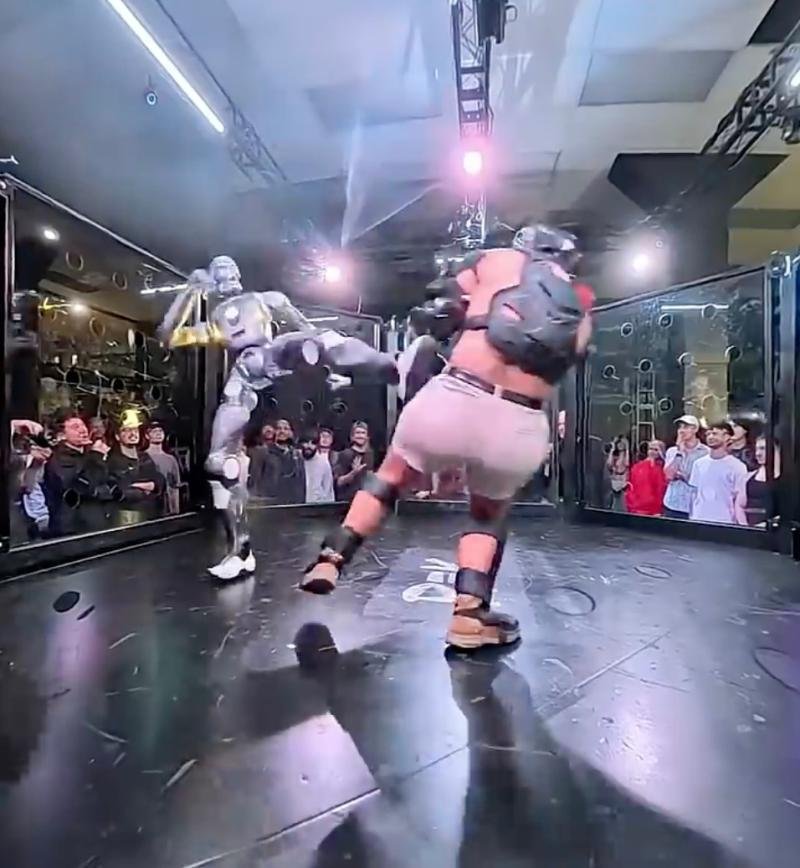
LaPenna recovered and continued fighting, eventually pushing the larger robot to the ground to secure the win. The influencer won two of his three matchups overall, according to footage from the event.
His final bout came against a faster robot called the “Predator.” Speaking after the fight, LaPenna said the machine’s ability to repeatedly get back up and continue attacking wore him down over time. Unlike a human opponent, he said, the robot never appeared to tire.
The Regulatory Response
The California State Athletic Commission (CSAC), which oversees professional and amateur boxing, kickboxing, and mixed martial arts in the state, took notice. Around late September, it sent REK and its CEO, Cix Liv, a cease-and-desist letter.
The letter ordered them to stop holding, promoting, or advertising any boxing or mixed martial arts contest, match, or exhibition involving any human in California without prior CSAC approval and the required licensing.
It cited relevant sections of the California Business and Professions Code including provisions making unlicensed promotion or participation a misdemeanor and specifically referenced the September 18 San Francisco event as an “unsanctioned human versus humanoid robot cage fight.”
Liv publicly shared the letter on X with the caption “We made it boys,” treating the regulatory pushback as a badge of notoriety. In interviews and posts, he has argued that the law defines a “match” or “contest” as a fight between two or more persons, so a humanoid robot does not fit the definition.
He has said the company’s longer-term vision is robot-vs-robot MMA-style combat and that they contacted regulators beforehand only to be told the activity was illegal despite the absence of an explicit statute addressing human-vs-robot bouts.
CSAC has emphasized safety and the integrity of regulated combat sports. In statements, the commission has stressed that unsanctioned events put the physical and financial well-being of participants at risk and will not be tolerated.
It has also indicated it will consider updated guidance as robot technology evolves. There is no blanket statewide or federal ban specifically targeting human-versus-robot fights. The core issue is whether these events fall under existing combat-sports licensing, medical oversight, insurance, and venue requirements that apply when a human is involved in a full-contact contest.
Public reaction has been predictably split: some see dystopian sci-fi coming to life (complete with Terminator aesthetics and comments about “this is how it starts”), while others view it as novel entertainment or a stunt that overstepped basic licensing rules. For now, California regulators have drawn a clear line: any cage match involving a human requires their approval. Robot-only bouts appear free to continue—for the moment.
REK, founded by Liv who has a background in VR and mixed-reality ventures and has spoken of legally adopting his online persona after identity theft, operates out of San Francisco, including a storefront on Van Ness Avenue used for workshops, demos, and robot customization.
The company has hosted robot-focused events and markets itself around “real robots, real combat.” Demand for more human-vs-robot matchups reportedly surged after the viral LaPenna bouts, though Liv has indicated that particular format was more of a publicity stunt and not the primary plan going forward.
Despite the state’s cease-and-desist letter, the company’s website lists events planned in seven U.S. cities, including Tokyo, Vancouver, and California, as well as an upcoming event called “REK Deathmatch” on Friday, Oct. 9, in San Francisco.
The company has by far the biggest footprint in its home state, with San Francisco hosting six events and San Clemente, Palo Alto, and Los Angeles each with one planned, the website shows.
The company’s events typically feature MMA-style bouts between humanoid robots. The Sept. 18 match against influencer Frankie LaPenna appears to have been its first involving a human participant. It is unclear whether the company’s Oct. 9 event in San Francisco will include another human-versus-robot fight or only robot-versus-robot matches.
Liv contacted state regulators before organizing the events but was told the fights were illegal, he said on a social media post.
”They said what we are doing is illegal, yet there is no law for it,” Liv said. “The law clearly states that a boxing match is between ‘two persons’ as defined by law.