
Early detection remains one of the most powerful tools against cancer and infectious diseases like HIV. The challenge has always been access as lab tests are accurate but require specialized equipment, trained technicians, and time.
Enter a new handheld device developed by researchers at the University of Illinois Urbana-Champaign aims to change that.
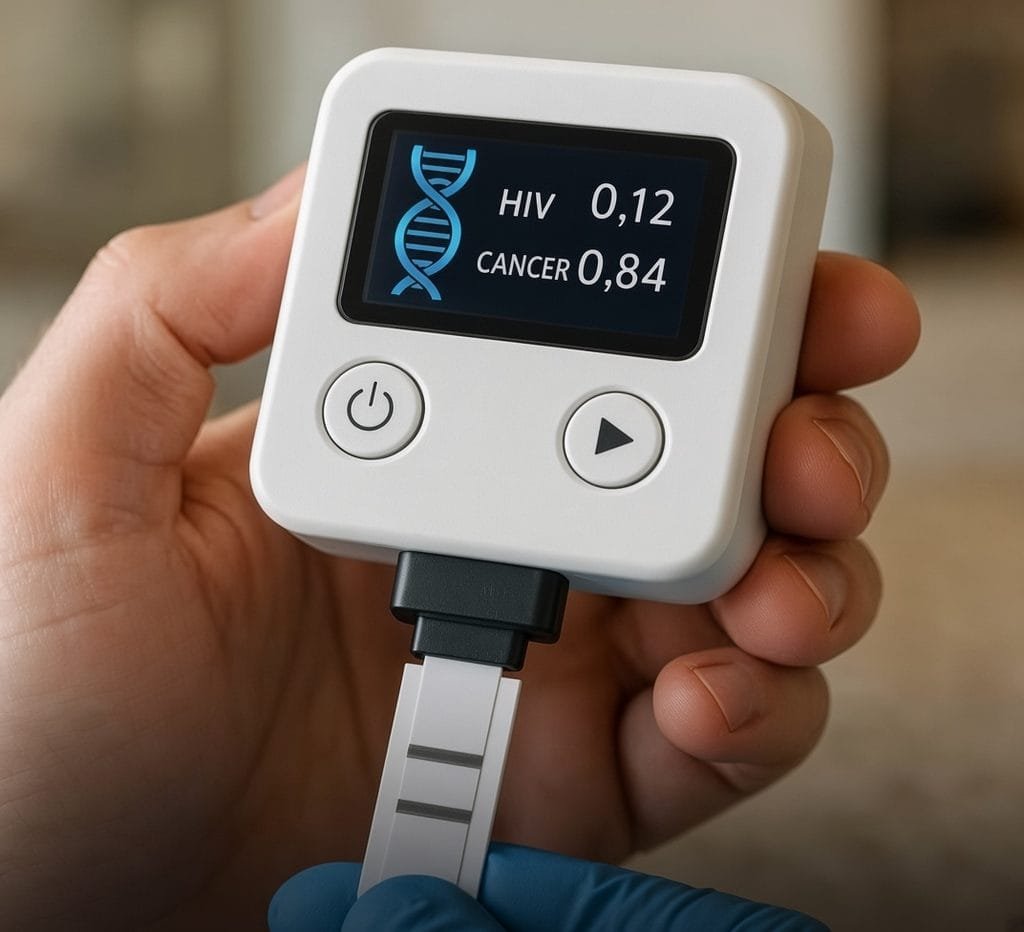
The device, called the VPodDuo (the “V” stands for virus), is a compact fluorometer roughly the size of an AirPods case. It can read and compare results from fluorescence-based tests for pathogens and cancer-associated biomarkers, delivering performance comparable to expensive laboratory instruments.
The work, led by researcher Han-Keun Lee along with Computer Engineering Professor Brian Cunningham and Bioengineering Professor Xing Wang, was published in the IEEE Sensors Journal in July 2026.
Why Fluorescence Matters and Why It’s Hard to Miniaturize
Many at-home tests (think COVID antigen or pregnancy tests) rely on simple visual lines. They’re convenient and inexpensive, but their sensitivity is limited. Laboratory fluorescence assays, by contrast, measure subtle changes in light intensity and offer far higher accuracy. The problem has been packing that capability into something small, portable, and affordable.
Cameras can detect fluorescence, but they need complex optics and precise alignment, making devices bulky and costly. Lee’s team took a different route: photodiodes—semiconductor sensors that convert light into electrical current. The engineering challenge was calibrating two photodiodes (one for the test sample and one for a control) so they produce consistent, reliable readings in a tiny package. Development from the original VPod to the dual-channel VPodDuo took about a year and a half.
What It Can Detect
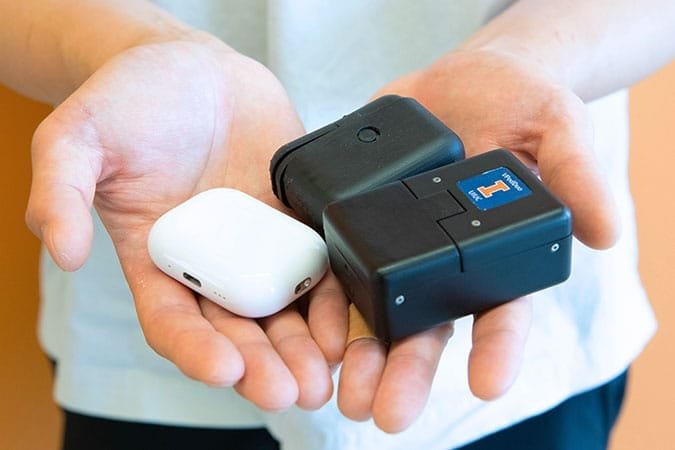
In validation tests against three lab-grade fluorimeters, the VPodDuo delivered comparable analytical performance for:
-Zika virus
-Staphylococcus aureus
-HIV
-A lung cancer-associated circulating tumor DNA sequence
-A microRNA biomarker linked to lung cancer
“I was really surprised by how this tiny device can be used for different kinds of assays,” Lee said. “One of the surprising things was that this inexpensive fluorometer that we developed has the same analytical performance when compared to very expensive laboratory equipment.”
Professor Xing Wang noted the broader potential: the platform can detect not only viruses but also cancer-related markers such as microRNA.
The researchers emphasize that the device is only one piece of a complete diagnostic workflow. Sample collection, processing, and mixing with reagents still need tighter automation and more robust methods before the system is ready for routine home or point-of-care use. Lee is now focusing on those upstream steps.
Independent experts see the promise. David Erickson of Cornell University, who was not involved in the research, highlighted the difficulty of maintaining laboratory-level sensitivity and clinical performance in such a small form factor. He expressed hope that tools like this will eventually make diagnostics more widely available, inexpensive, and rapid.
Lee’s ultimate goal is straightforward: get the technology into people’s hands so frequent, convenient testing becomes possible, especially for cancer, where earlier detection can dramatically improve outcomes.
“There are all these different cancer therapies, they’re outstanding,” he said. “We just need to be able to bring the technology to the patients.”
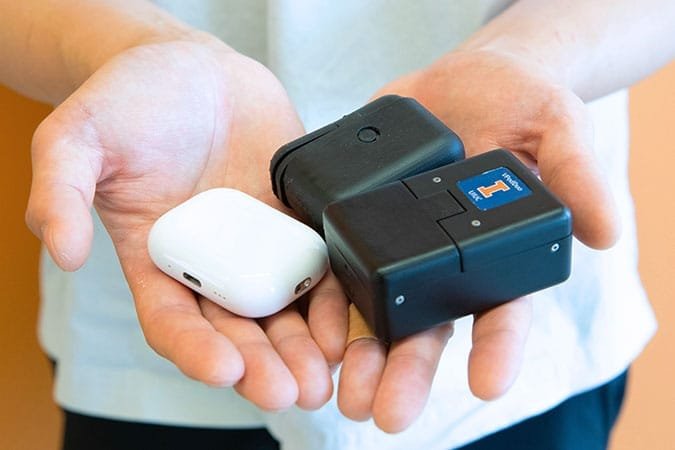
The VPodDuo demonstrates that high-performance fluorescence detection no longer has to live only in a lab. If the remaining engineering and sample-handling hurdles can be cleared, a device small enough to fit in a pocket could help shift diagnostics from centralized facilities into homes and community clinics worldwide.
Source: Adapted from reporting by Mandy Letterii in Medscape Medical News, August 31, 2026, covering research published in the IEEE Sensors Journal.