The South African Department of Science, Technology and Innovation has announced the launch of a manufacturing facility to produce AI humanoid “IRIS” tutor devices at the Dube TradePort in Durban.
CEO of BSG and Technologies, Thandoh Gumede, said that the long-term goal is to deploy the company’s IRIS robotic tutors at all 23 000 schools across South Africa. She did say in a 2025 interview that they would not be developed to replace teachers but to enhance the learning experience for pupils.
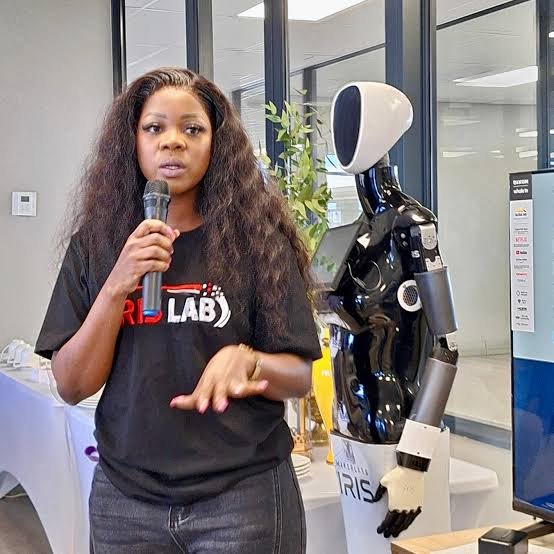
She used to be a teacher herself of maths and physical science and she said that she encountered several challenges that she believes these robots could help with. “She is a tutor robot, which means that she is assisting our teachers. Our teachers are going through a lot. They work at school, then get back home and are still working, when are they getting their time with their families?”
She went on to explain that IRIS devices function similarly to AI tools, which teachers can prompt via keyboard input or voice commands. They use AI and machine learning to provide information. Designed to resemble humanoids, they provide visual feedback via a display on their chests and audio feedback through speakers.
These humanoids could assist teachers with marking and with analysing the curriculum and learner results. This, she hopes, will make teaching more efficient. Learners can also use the robot to help in explaining concepts in each of South Africa’s 11 official languages.
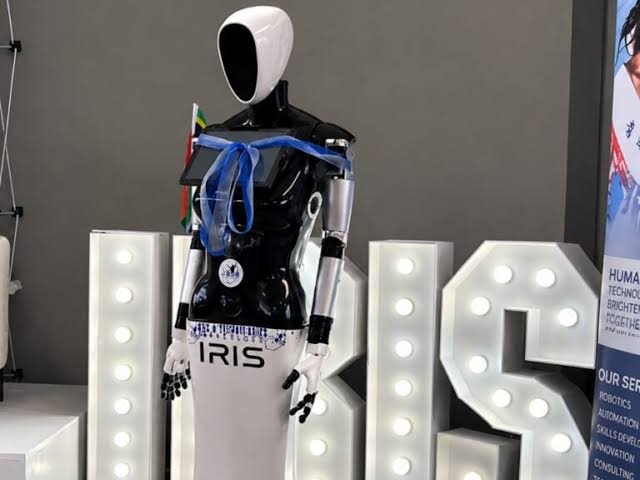
Nomalungelo Gina, deputy minister of science, technology and innovation, welcomed the launch of the IRIS manufacturing facility in Durban, saying that the initiative had the potential to create 20 000 jobs over the next five years – an example of how innovation could drive industrial development and economic growth.
South Africa is currently experiencing high teacher vacancy rates amid record unemployment. As of August 2026, there were 27 000 vacant teaching posts. The Eastern Cape had the most vacancies, with more than 5 000, followed by KwaZulu-Natal at 4 700 and Gauteng at more than 3 900. The hope is that these humanoids could help to fill the many gaps.
“I developed IRIS because I wanted to create a platform that helps teachers, administrators and learners work together more effectively,” said Gumede at the launch of the facility. “It took more than seven years of persistence, self-funding and continuous development to reach this stage,” she said. Not having the funds to hire developers, she taught herself to code and develop the robots’ software.
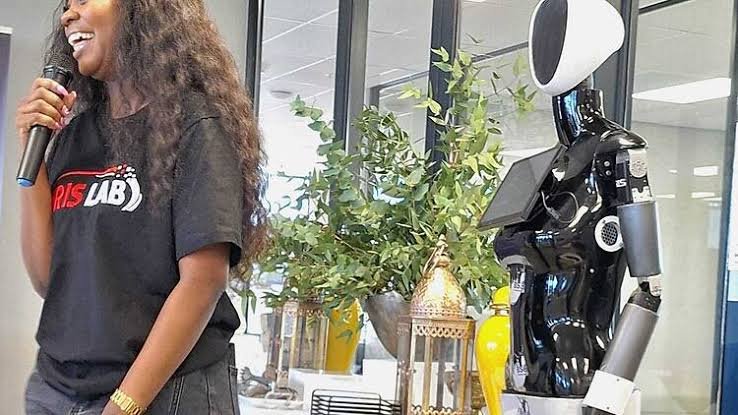
Gumede said, “Our goal is to see IRIS deployed in all 23 000 schools across South Africa, ensuring that every learner has access to quality educational support regardless of where they live. At the same time, we aim to create 20 000 jobs over the next five years through manufacturing, technical support, training and the growth of the innovation ecosystem”.
So, it won’t be long before every South African classroom has a robot in it. Let’s hope they behave.
Nigerian Secondary School Students develop a Robot Teacher “Max Zulum” for Schools, and insecure Communities in Nigeria
Recently, SeedufyTech reported how a team of secondary‑school pupils from Borno State unveiled a home‑grown humanoid robot designed to teach children, especially in hard‑to‑reach and crisis‑affected areas of the northeast and Nigeria.
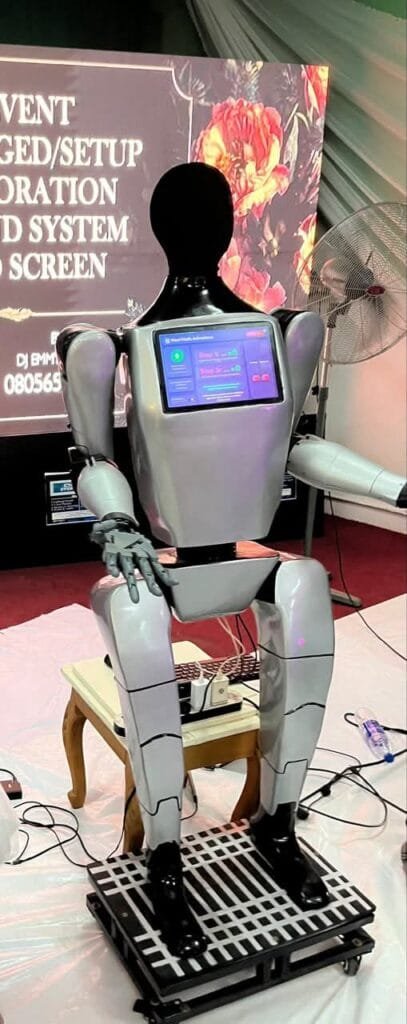
The prototype, named “Max Zulum” after Governor Babagana Umara Zulum, was displayed on Tuesday at the graduation ceremony of the “Empowering Ideas, Empowering Communities” Artificial Intelligence (AI) Bootcamp and Data‑Analytics Fellowship.
The showcase, held in Maiduguri, marked the culmination of a six‑month training programme funded by Maxzeeton Technology and supported by the Borno State Information and Communication Technology Development Agency (BICTDA).
The students, drawn from six schools across the state, received instruction in coding, robotics, AI, and data analytics before collaborating to build the teaching robot.
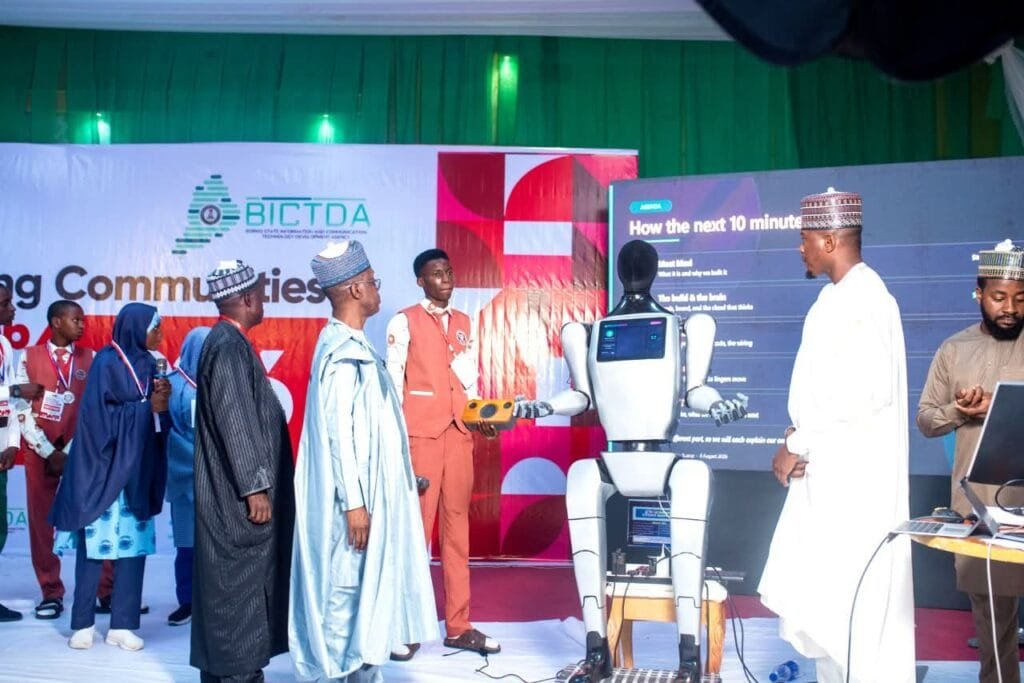
The Managing Director of Maxzeeton Technology said the robot was designed to guide learners step‑by‑step, especially when they are faced with difficult mathematical problems.
“After just six months of intensive training, our students have turned theory into a functional prototype that can support pupils both at home and in the classroom,” he said.
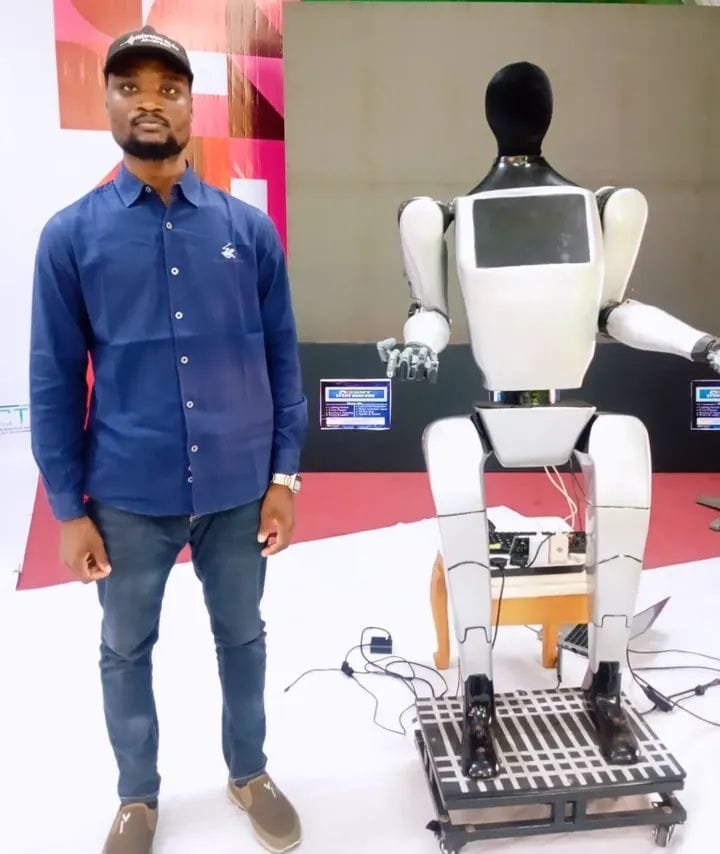
”The humanoid robots stand as a symbol of local technological advancement, self-reliance, and the growing potential of homegrown solutions in Artificial Intelligence and Robotics.
“As part of this landmark initiative, Maxzeeton Technology also officially onboarded 100 youths into the Data Analytics, Artificial Intelligence, and Robotics Fellowship Programme today.
“The programme is designed to equip university graduates and young people with globally relevant digital skills and prepare them for opportunities in the rapidly evolving technology-driven economy,” he added.