
The construction industry is undergoing a technological revolution, with robotics playing a crucial role in improving productivity, safety, and precision. As labor shortages continue to challenge the industry and projects become increasingly complex, construction companies are adopting robots to automate repetitive, dangerous, and time-consuming tasks.
The proliferation of construction robotics has pushed the sector a step closer to towards changes that could ease Global reliance on aging human labour, which has been become difficult to recruit and retain in Modern times.
Figures from the Building and Construction Authority (BCA) show that to date, more than 25 types of robots have been deployed across about 60 projects, from virtually no robots at construction sites in 2022.
Those in the sector tell The Straits Times that robotics solutions can one day reduce manpower needs, but there are hurdles to overcome first.
These include worker levies, accommodation and transport fees, as well as salaries and allowances.
SUBSCRIBE TO SEEDUFY TECH NEWSLETTER
[sureforms id=’2360′]
The challenge has been compounded by manpower shortages – contractors say firms are competing for labourers with other countries and a lack of interest from locals and young people to join the construction industry.
In 2025, construction labourers were the top job vacancy among non-PMET roles across all sectors, according to the Manpower Ministry.
As at December of the same year, non-residents accounted for close to four in five of the 566,800 persons working in the sector.
“Frankly speaking, whose son wants to go into a construction site?” said Edmund Ng, whose company – a subcontractor specialising in painting – started using robots in 2025.
“The younger generation isn’t interested in this line because it is dirty, hard work. But if work is playing with robots, it might be something that attracts them,” he said.
Top 7 Robots most widely used in Construction as at July 2026
From bricklaying and concrete printing to demolition and site inspections, robots are transforming how buildings and infrastructure are designed and constructed. In this article, we’ll explore the top 7 most used robots in the construction industry and how they are reshaping the future of construction.
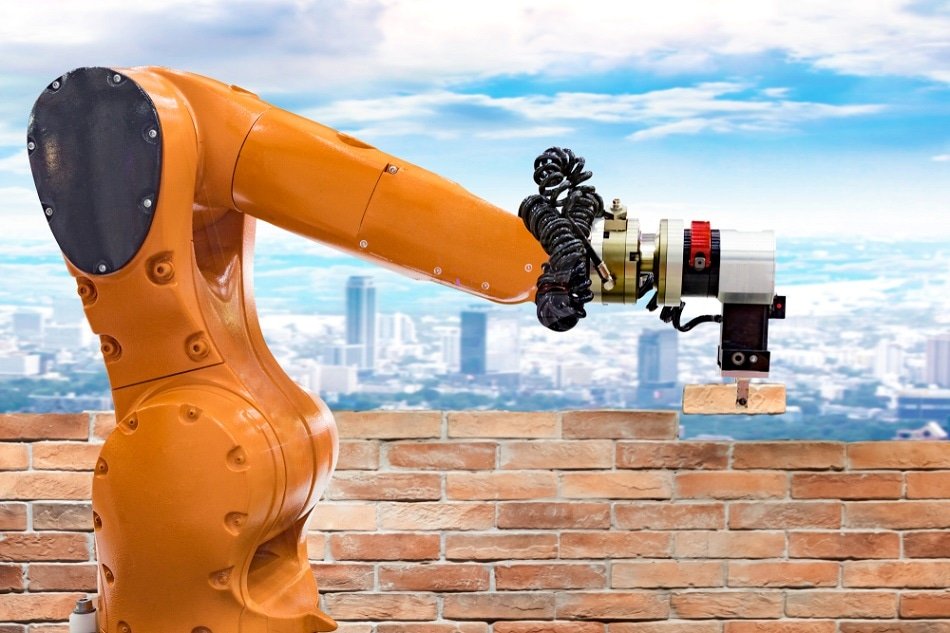
1. Bricklaying Robots
Bricklaying robots are among the most recognized construction robots today. They can lay thousands of bricks in a single day with exceptional precision, significantly reducing labor costs and construction time.
Key Benefits:
-High-speed brick installation
-Consistent mortar application
-Reduced material waste
-Improved accuracy
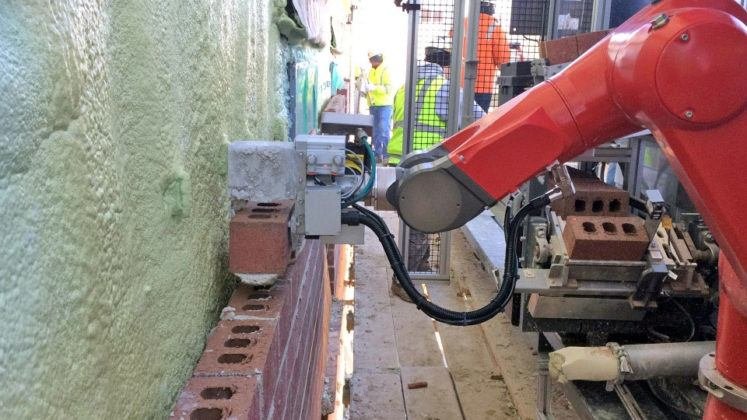
A robot carrying out Brick Laying works at the Changi East Depot construction site on May 20. PHOTO CREDIT: CHONG JUN LIANG
These robots are ideal for residential and commercial building projects where large-scale masonry work is required.
2. Concrete 3D Printing Robots
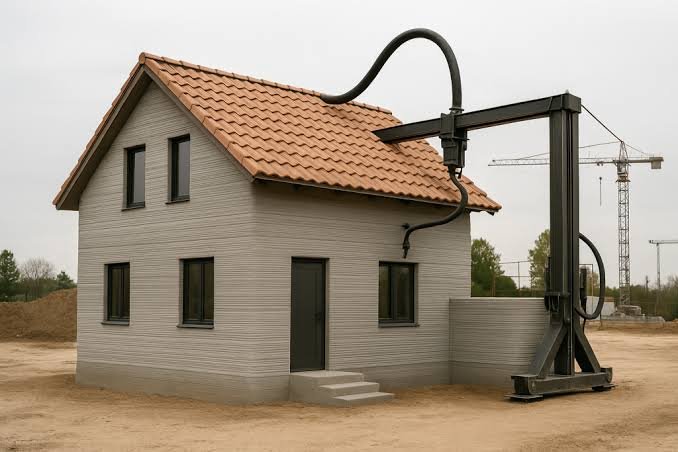
3D printing robots are revolutionizing the construction sector by creating walls and entire structures layer by layer using specialized concrete mixtures.
Applications:
*Affordable housing development
*Custom architectural designs
*Emergency shelters
*Infrastructure projects
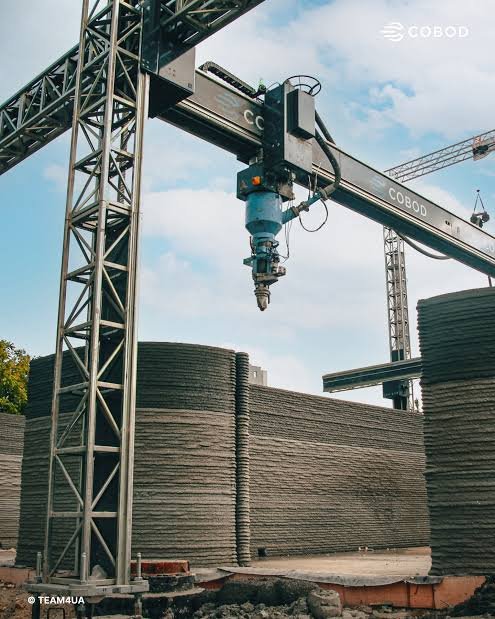
A 3D Printing Machine emits concrete via a nozzle used in the construction of modular concrete houses. PHOTO CREDIT: COBOD
Benefits:
-Faster construction
-Reduced material waste
-Lower labor costs
-Greater design flexibility
4. Autonomous Excavation Robots
Excavation robots use GPS, artificial intelligence, and sensors to dig trenches, grade land, and prepare construction sites with minimal human intervention.
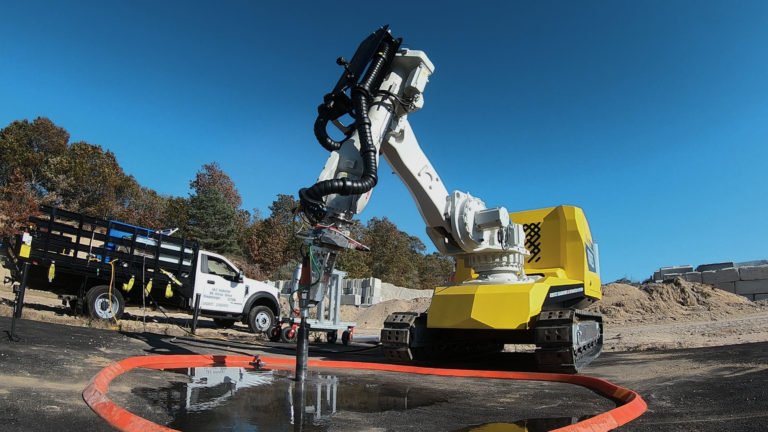
The RRES Excavation Robot prototype features an ABB robotic arm that various sensors and tools can be automatically attached to it. PHOTO CREDIT: RRES ROBOTICS
Advantages:
-Precise excavation
-Increased productivity
-Reduced fuel consumption
-24/7 operation capability
5. Autonomous Material Transport Robots
Transporting heavy materials around construction sites is physically demanding and time-consuming. Autonomous material transport robots move equipment, tools, bricks, and construction materials without human operators.
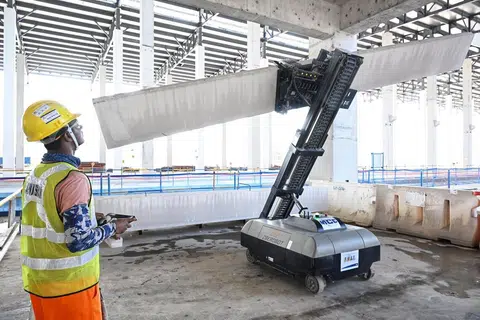
An Autoclaved Lightweight Concrete panel installation robot in action at the Changi East Depot construction site on May 20. ST PHOTO: CHONG JUN LIANG
Advantages:
-Reduced manual handling
-Continuous operation
-Lower labor requirements
-Improved site logistics
Many modern systems use sensors and obstacle detection to navigate safely through busy construction sites.
6. Painting and Finishing Robots
Painting robots automate interior and exterior finishing work by applying paint with exceptional consistency.
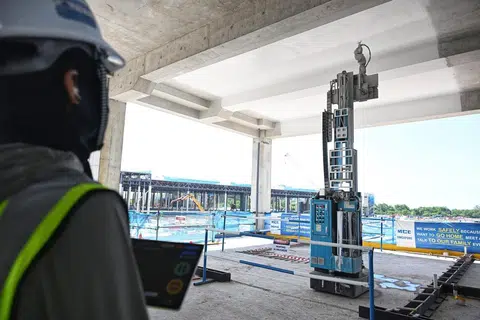
A robot carrying out painting works at the Changi East Depot construction site on May 20. PHOTO CREDIT: CHONG JUN LIANG
Advantages:
-Uniform paint coverage
-Reduced overspray
-Faster project completion
-Lower labor costs
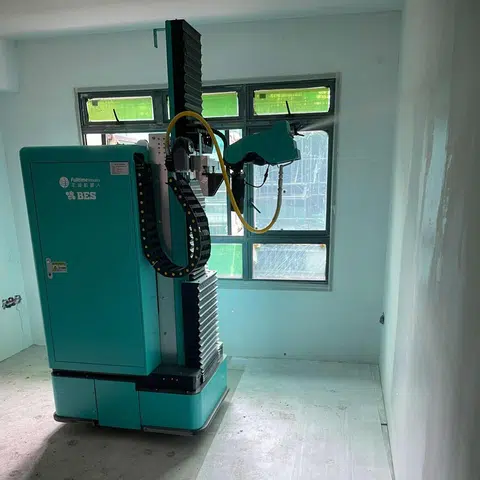
A painting robot at work in a Build-To-Order project construction site. PHOTO CREDIT: HDB
7. Demolition robots
Demolition robots are remotely controlled machines designed to safely demolish buildings and structures in hazardous environments.
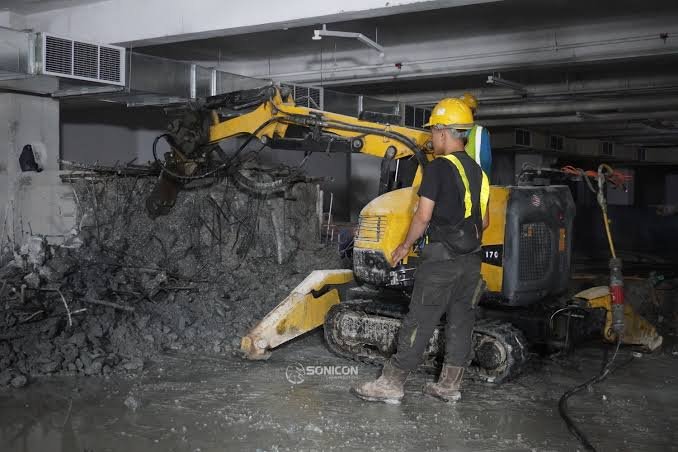
A robot carrying out demolition works at the Beijing construction site on May 20. PHOTO CREDIT: YANG JULIAN CHOW
Common Uses:
Concrete breaking
Tunnel demolition
Nuclear facilities
Industrial plants
Unlike traditional demolition equipment, these robots reduce worker exposure to dust, falling debris, and structural collapse.
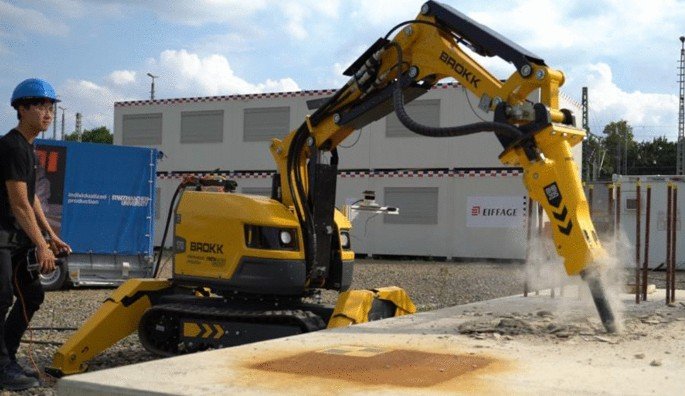
A robot carrying out demolition works at the Beijing Railway construction site PHOTO CREDIT: YANG JULIAN CHOW
Bonus
8. Construction Inspection Drones
These robots are becoming increasingly popular in commercial construction and large-scale housing developments. Although they fly rather than walk, drones have become one of the most widely used robotic technologies in construction.
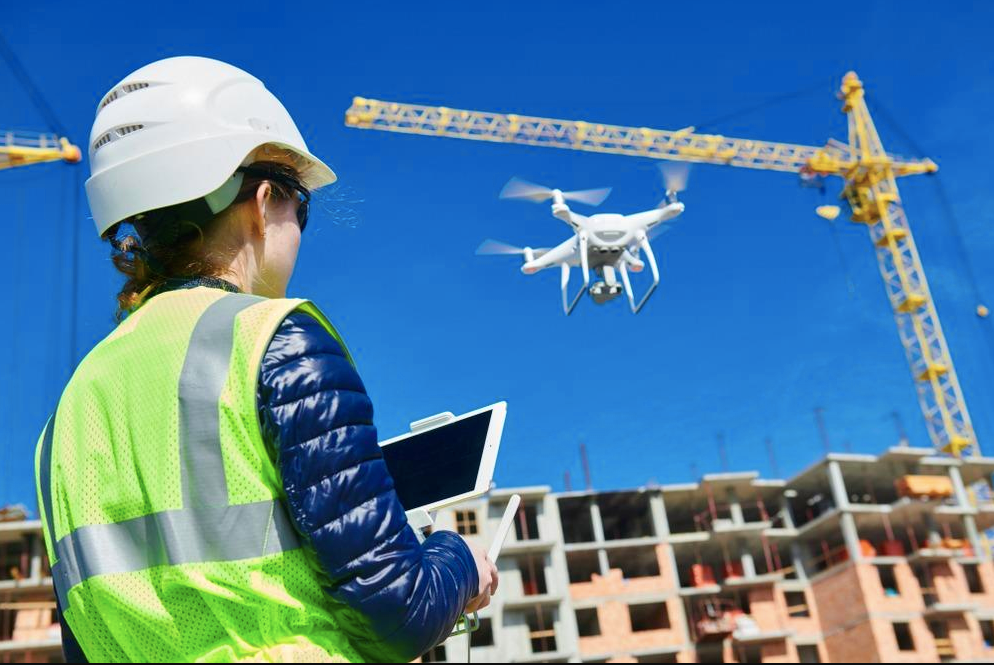
Uses:
*Site surveying
*Progress monitoring
*Roof inspections
*Safety assessments
*Mapping and measurements
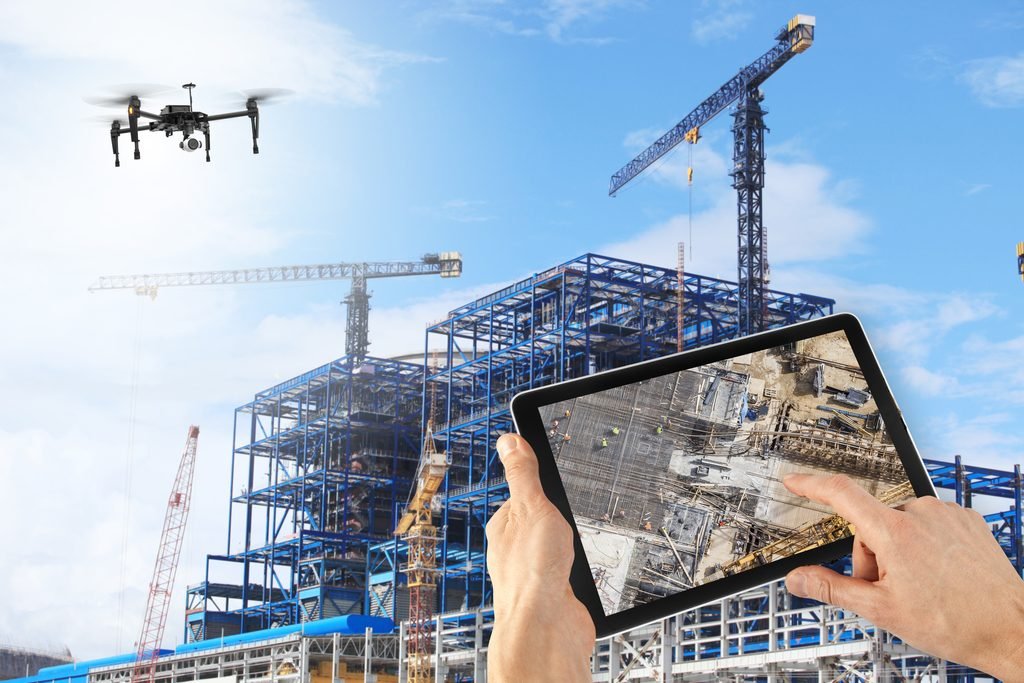
Benefits:
-Faster inspections
-Lower inspection costs
-Enhanced worker safety
-High-resolution aerial imagery
Barriers to Adoption
Despite these advantages, contractors say adopting construction robotics is not straightforward, with barriers such as costs and the nascency of technology standing in their way.
Andy Lu, assistant secretary-general of The Singapore Contractors Association Limited (SCAL) and chairman of its productivity and technology committee, said many firms would like the benefits that robots bring, but they are expensive experiments.
“Even though we may be curious – to buy a $100,000 robot and try, there is a lot of hesitation, because some robots are not proven,” said Lu, who is also chief executive of Wee Hur Construction.
Tan Kee Chuan, head of corporate planning at Kajima Overseas Asia (Singapore), said workers currently cannot be fully replaced by robots at the worksite.
Workers are still required on the ground to do touch-up work, such as plastering corners and edges of rooms, while trained operators oversee, make decisions, service and maintain robots, he said.
Robotics is no longer a futuristic concept in construction, it is a practical solution that is already transforming the industry. From bricklaying and excavation to inspections and finishing work, robots are helping companies build faster, safer, and more efficiently than ever before.
As automation continues to evolve, construction firms that embrace robotic technologies will gain a competitive advantage through improved productivity, reduced costs, and enhanced project quality. Whether you’re a contractor, engineer, or technology enthusiast, understanding these top 7 construction robots offers valuable insight into the future of the built environment.
SUBSCRIBE TO SEEDUFY TECH NEWSLETTER
[sureforms id=’2360′]
An Autoclaved Lightweight Concrete panel installation robot in action at the Changi East Depot construction site on May 20. ST PHOTO: CHONG JUN LIANG
A robot carrying out painting works at the Changi East Depot construction site on May 20. ST PHOTO: CHONG JUN LIANG