Few entrepreneurs in modern history have captured global attention quite like Elon Musk. As the CEO of Tesla, SpaceX, xAI, and several other groundbreaking ventures, Musk has become one of the wealthiest and most influential figures in the world. His innovations have transformed industries ranging from electric vehicles and space exploration to artificial intelligence and satellite communications.
Yet one aspect of Musk’s story continues to spark debate, particularly among Africans: despite being born in South Africa, has Elon Musk done enough to contribute to the continent that shaped his early years?
The question is not simply about money. It is about responsibility, legacy, and the expectations people place on successful individuals who originate from regions facing significant economic and social challenges.
From Pretoria South Africa to Global Fame
Elon Musk was born in Pretoria, South Africa, in 1971. During his youth, South Africa was still under apartheid, a system that created deep political, economic, and social divisions. Musk showed his talents for entrepreneurship early, going door-to-door with his brother selling homemade chocolate Easter eggs and developing his first computer game at the age of 12.
He has described his childhood as difficult, affected by his parents’ divorce, bullying at school and his own difficulty picking up on social cues because of Asperger’s Syndrome.
At the earliest opportunity, he left home for college, moving to Canada and then the US, where he studied economics and physics at the University of Pennsylvania, an Ivy League college.
His journey is often celebrated as one of extraordinary ambition. After studying in North America, he co-founded several companies that paved the way for his future success. From PayPal to Tesla and SpaceX, Musk repeatedly positioned himself at the forefront of technological innovation.
Today, his net worth of over a Trillionaire US Dollars has fluctuated dramatically depending on market conditions, but he remains among the richest individuals on the planet. Some financial analysts have even speculated that he could become the world’s first trillionaire if the value of his companies continues to rise.
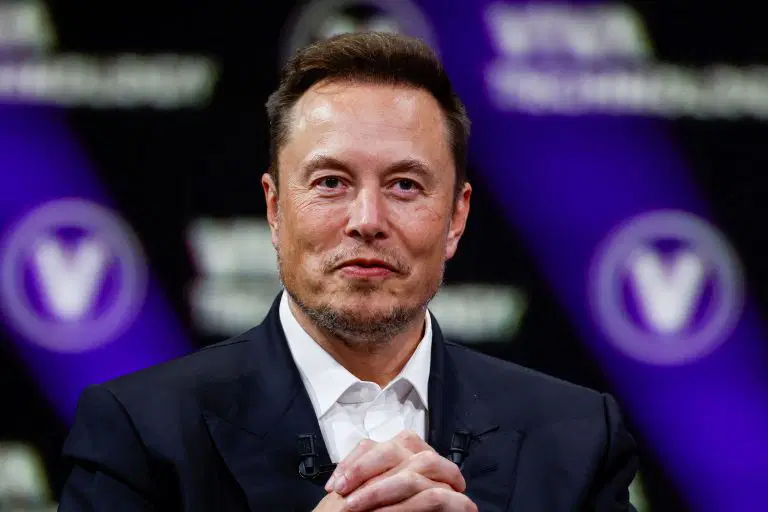
For many Africans, this raises an obvious question: what has one of the world’s richest people done for the continent where he was born?
Born in a Family Line that Never Knew the Ugly face of Poverty
While most Africans are born into poverty, live in poverty and ultimately die prematurely in poverty, the case coincidentally goes different for the World’s first Trillionaire Elon Musk.
This comes as Elon Musk’s father Errol Musk, is a South African Electromechanical Engineer, Property developer, and former Emerald Dealer. Historically, the family was comfortably upper-middle class in apartheid-era South Africa. However, Elon and his siblings have gone on to build massive, self-made fortunes.
Aside from Elon, the rest of the Musk family’s wealth varies:
Errol Musk (Father): Has an estimated net worth in the Low tens of Million dollars, largely from his engineering career, property development, and investments.
Kimbal Musk (Brother): A successful restaurateur and early investor in Tesla, his net worth is estimated around $700 million.
Tosca Musk (Sister): A prominent Hollywood filmmaker and producer, with an estimated net worth of several million dollars.
Elon Musk’s History of not Giving
On Oct. 26, David Beasley, the director of the UN’s World Food Programme told CNN that it was time for the ultra-wealthy to “step up now, on a one-time basis.”
“Six billion dollars to help 42 million people that are literally going to die if we don’t reach them. It’s not complicated,” he said, specifically mentioning Musk and Amazon CEO Jeff Bezos, the two richest men in the world.
On Sunday, Musk tweeted, “If WFP can describe on this Twitter thread exactly how $6B will solve world hunger, I will sell Tesla stock right now,” he said about Beasley’s assertion.
In a follow-up tweet, Musk added that the UN’s plan must include “open source accounting, so the public sees precisely how the money is spent.”
Beasley responded to Musk’s tweet a few hours later, offering to “be on the next flight to you” and saying that the executive can “throw me out if you don’t like what you hear.”
Beasley also said that while the $6 billion figure wouldn’t solve world hunger, it “WILL prevent global political instability, mass migration and save 42 million people on the brink of starvation.” (CNN had erroneously reported that the money would “solve” world hunger, but later corrected its headline to say 2% of Musk’s fortune could “help solve” world hunger.)
How $6.6 Billion could Prevent World Hunger
The World Food Programme plan would spend $3.5 billion on food and deliver it to those most in need. This includes the cost of shipping, storage and transport by air, road and river, and security escorts to safeguard food distribution in conflict-affected zones. The money could provide one meal per person, per day for a year, keeping tens of millions of people from starvation.
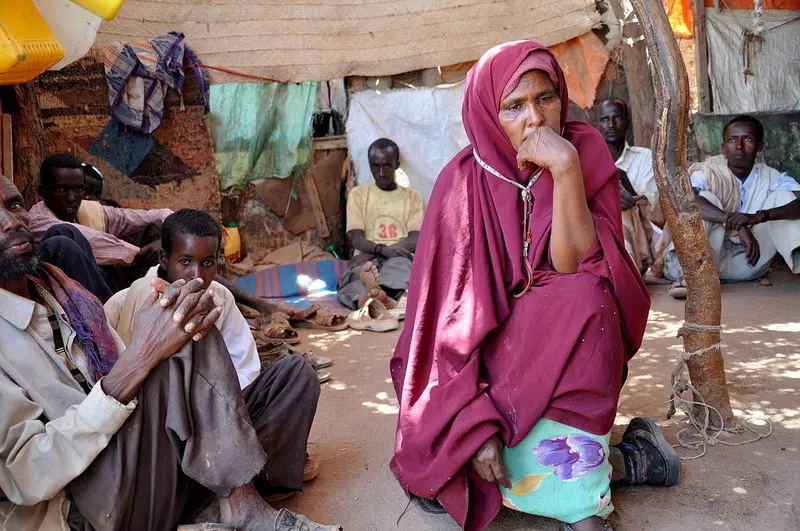
A further $2 billion could fund cash and voucher programmes in places with functioning markets, allowing people to choose the food they eat while supporting local economies.
Elon Musk has publicly expressed skepticism toward traditional foreign aid to Africa, characterizing it as “patronizing nonsense”. He has argued that the West should stop treating the continent as if it desperately needs pity, noting his observations that everyday happiness and community spirit in rural African villages can often exceed that of wealthy Western cities like Beverly Hills.
Previously uncovered financial documents reveal that as Elon Musk was taunting the United Nations over his choice to withhold $6 billion that he said he would donate to solve world hunger, the right-wing billionaire gave the money to a different source: his own foundation.
This comes as Musk donated roughly $5.7 billion worth of Tesla shares, as many wealthy people do through donor-advised funds to avoid paying capital gains and income taxes. The recipient of that donation was unknown until this week, when Bloomberg revealed that a tax filing shows that the donation went to the Musk Foundation, “instantly making it one of the largest foundations in the U.S.,” as Bloomberg reported.
The donation came as Musk was stirring up controversy online, arguing with Senators Bernie Sanders (I-Vermont) and Elizabeth Warren (D-Massachusetts) over the fact that billionaires are severely under-taxed in comparison to the general public.
The Huge Expectations Placed on Successful Africans
When an individual achieves extraordinary success, especially after leaving their country of birth, people often expect them to give back.
This expectation is not unique to World’s first Trillionaire Elon Musk.
Around the world, successful entrepreneurs, athletes, entertainers, and business leaders are frequently judged not only by their achievements but also by their contributions to their communities.
In Africa, where challenges such as unemployment, inadequate infrastructure, limited access to quality education, and healthcare gaps remain significant, the expectation can be even stronger.
Many Africans look at Musk’s immense wealth and wonder whether more direct investments, philanthropic programs, or development initiatives could have a transformative impact on the continent.
The argument is simple: if one person possesses resources measured in hundreds of billions of dollars, surely some of that wealth could be directed toward solving pressing problems in Africa.
The Scale of Growing Poverty in Africa
Africa accounts for more than 75% of the world’s extreme poor today. Approximately 439 million people live below the extreme poverty line, with about 47% of the continent’s population—around 593 million people—classified as multi-dimensionally poor. Addressing the poverty gap in Africa requires varying estimates, with World Bank economic models indicating that closing the monetary poverty gap requires targeted investments in the billions. For example, tackling the poverty gap in Nigeria alone is estimated to cost nearly $18.7 billion annually.
The Scale of Poverty in Africa Poverty measurement relies on both income thresholds and the Multidimensional Poverty Index (MPI), which measures access to clean water, reliable electricity, basic schooling, and healthcare.
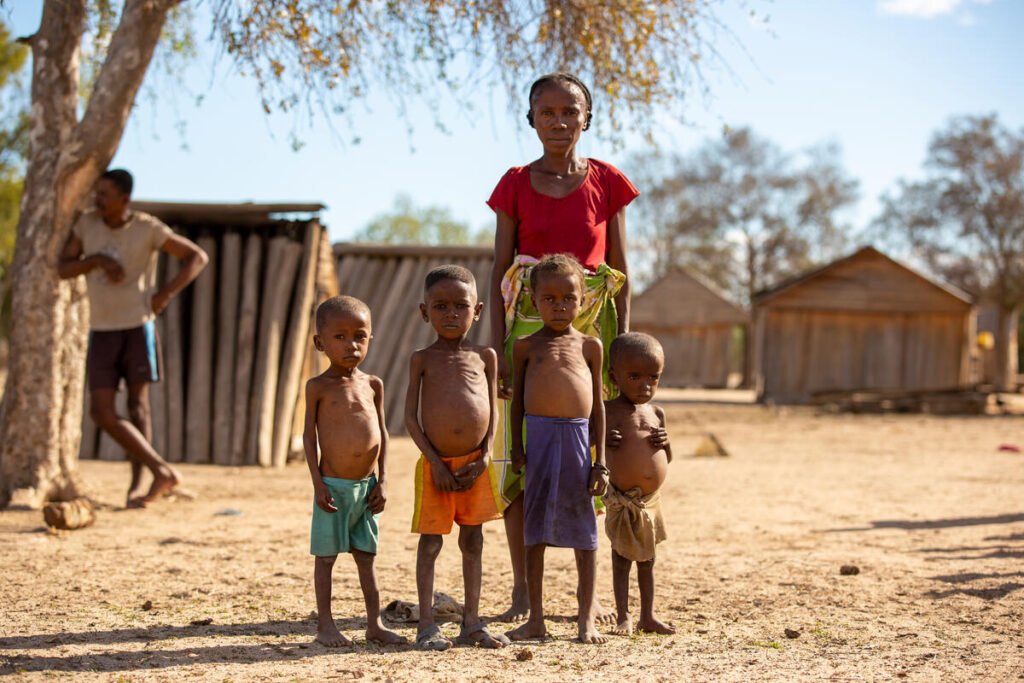
In countries like Nigeria, the poverty rate in Nigeria is projected to hover around 62% throughout 2026. This means nearly 141 million people in a single nation are struggling to meet their basic needs. In a 2026 research by Mohacafrica, the researchers observed that rising poverty in Africa is not due to a lack of effort from the African people. Rather, it is the result of a “youth bulge” where the labor market cannot keep pace with the population. This comes as Every year, 12 million young Africans enter a job market that offers only 3 million formal positions.
The current median poverty rate in Africa reflects a continent struggling with “low-growth elasticity.” This is a researcher’s way of saying that even when the GDP grows, it does not always reach the poorest households. For every 1% increase in GDP, the poverty rate in Africa only drops by about 1%, compared to a 2.2% drop in the rest of the world. This inefficiency is largely due to high income inequality, as measured by the Gini coefficient, which remains above 40 in over half of African countries.
Today, Sub–Saharan Africa now accounts for more than 75% of the world’s extreme poor. As of 2019, 424 million people in sub-Saharan Africa were reportedly living in severe poverty. In 2022, that number increased to 460 million people—an increase of 36 million in only three years living in extreme poverty as a result of the COVID-19 pandemic and the Russo-Ukrainian war.
Could Elon Musk have a Disability with Wealth Transfer?
Trillionaire Elon Musk might have been greatly blessed with outstanding entrepreneurship skills and Tech coding Talents, but the African Born American Tech Mogul, seems to have a huge challenge with wealth transfer and lavish Living even to his own personal detriment.
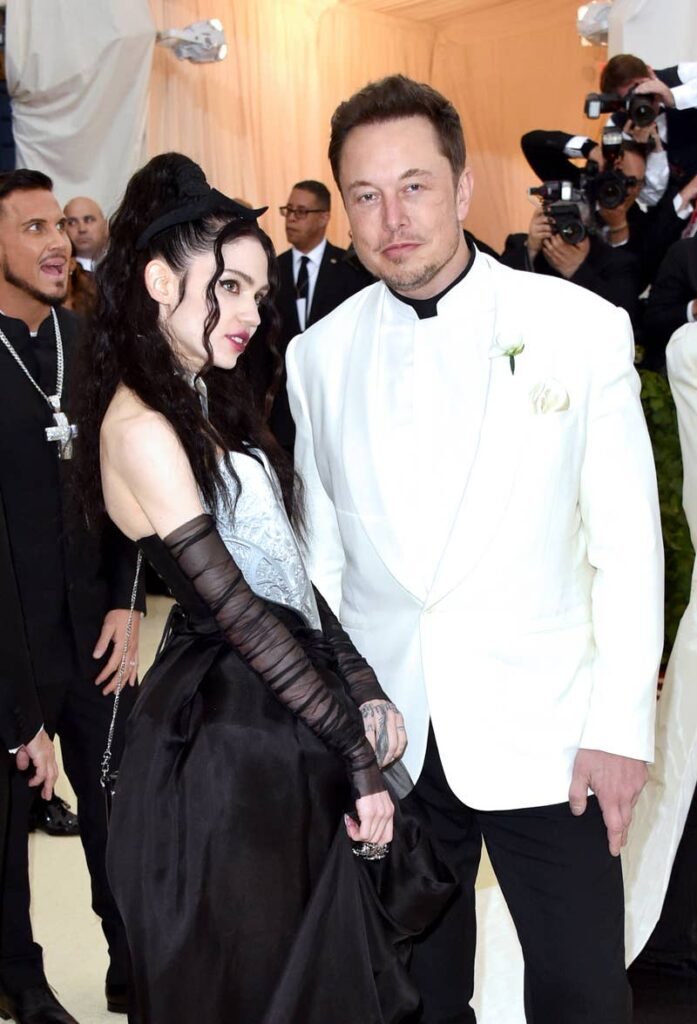
Dimitrios Kambouris / Getty Images for The Met Museum/Vogue
Speaking with Vanity Fair, Elon’s former partner Grimes who shares two children with him, addressed assumptions that the business and tech mogul lives a lavish lifestyle as a billionaire.
The musical artist went on to detail Elon’s spending habits more closely, she argued that he “lives at times below the poverty line” — a comment that was met with fierce criticism online.
“But at the same time… Like, bro wouldn’t even get a new mattress,” she said, detailing a time that Elon had suggested they replace his mattress with one of hers when there was a hole in it.
She said, “Bro does not live like a Billionaire. Bro lives at times below the poverty line. To the point where I was like, can we not live in a very insecure $40,000 house? Where the neighbors, like, film us, and there’s no security, and I’m eating peanut butter for eight days in a row?”
How then can someone built in this manner see the need to Chanel a portion of his Wealth to addressing dire poverty, hunger, starvation and food insecurity in Africa ? The answer remains rhetorical for anyone who cares to answer.
The Case Against Elon Musk
Critics argue that Musk has not done enough to maintain a meaningful connection with Africa.
Unlike some high-profile billionaires who establish major foundations, launch education programs, fund hospitals, or create large-scale development projects in their countries of origin, Musk is not widely associated with African philanthropy.
There are no globally recognized Musk-funded initiatives focused exclusively on transforming African education, healthcare, agriculture, or poverty reduction.
For critics, this absence is striking.
Many compare Musk to wealthy individuals who have invested heavily in their home regions. They argue that Africa’s brightest success stories should play a more active role in helping the continent address its challenges.
Some also point out that Musk rarely discusses Africa in public interviews. His public persona is largely centered on the United States, technology, space exploration, and global innovation rather than African development.
As a result, some Africans feel disconnected from a man who was born on the continent but whose public identity appears almost entirely detached from it.
The Other Side of the Debate
Supporters of Musk reject the notion that he owes Africa special treatment simply because he was born there.
They argue that individuals should be free to choose how they spend their money and direct their efforts.
From this perspective, Musk’s primary contribution to humanity comes through innovation rather than philanthropy. Tesla accelerated the transition toward sustainable energy. SpaceX dramatically reduced the cost of space launches. Starlink has expanded internet access in remote regions around the world.
Supporters contend that these achievements benefit people globally, including Africans.
For example, Starlink’s satellite internet services have become available in several African countries, offering connectivity to communities where traditional broadband infrastructure is limited or unavailable.
While Starlink is a commercial service rather than a charitable project, supporters argue that improved internet access can create educational and economic opportunities across the continent.
They also note that Musk’s companies employ thousands of people, stimulate technological advancement, and contribute to innovations that could have long-term global benefits.
In this view, Musk’s responsibility is not to any single country or continent but to humanity as a whole.
Should Billionaires Have a Duty to Give Back?
The debate surrounding Musk touches on a larger philosophical question: do billionaires have a moral obligation to give back to their communities of origin?
There is no universal answer.
Some believe immense wealth carries immense responsibility. According to this perspective, those who achieve extraordinary success should actively invest in addressing social inequalities and supporting vulnerable populations.
Others argue that wealth creators already contribute through innovation, job creation, taxes, and economic activity. They believe philanthropy should remain a personal choice rather than a public expectation.
This tension lies at the heart of many discussions about billionaire responsibility.
When people criticize Musk for not doing enough for Africa, they are often expressing a broader concern about global inequality and the role of wealth in society.
What Africa Needs Most
While debates about individual billionaires attract attention, Africa’s future will not depend on a single person.
The continent’s development will ultimately be driven by a combination of factors, including effective governance, strong institutions, criminalizing corruption, quality education, infrastructure investment, entrepreneurship, and technological innovation.
External support can help, but sustainable progress requires local leadership and long-term strategies.
Rather than focusing solely on whether Elon Musk has contributed enough, some analysts suggest a more productive question: how can Africa create environments that nurture thousands of future innovators and entrepreneurs?
The goal should not be to wait for a wealthy individual to solve the continent’s challenges but to build systems that enable widespread opportunity.
The Symbolism of Elon Musk’s Trillion Dollar Wealth
Despite the controversy, Elon Musk remains a powerful symbol.
To many Africans, he represents what is possible when talent, ambition, and opportunity converge. His rise from a young boy in Pretoria to one of the world’s most influential entrepreneurs demonstrates the extraordinary potential that can emerge from the continent.
At the same time, he symbolizes the complexities of globalization. Success stories often transcend national borders, making questions of identity and obligation more complicated than they appear.
Elon Musk’s relationship with Africa remains a topic of debate. Critics argue that a man born on the continent and blessed with extraordinary wealth could do far more to support African development. Supporters counter that his innovations already benefit millions of people worldwide and that philanthropy should never be an obligation.
What is undeniable is that Musk’s story continues to provoke important conversations about wealth, responsibility, identity, and legacy.
Whether one believes he has done enough for Africa or not, the discussion reflects broader questions facing the modern world: What do successful individuals owe their communities? How should immense wealth be used? And what kind of legacy should the world’s richest people strive to leave behind?
As Musk’s influence continues to grow, these questions are unlikely to disappear anytime soon.
SUBSCRIBE TO SEEDUFYTECH NEWSLETTER
[sureforms id=’2360′]