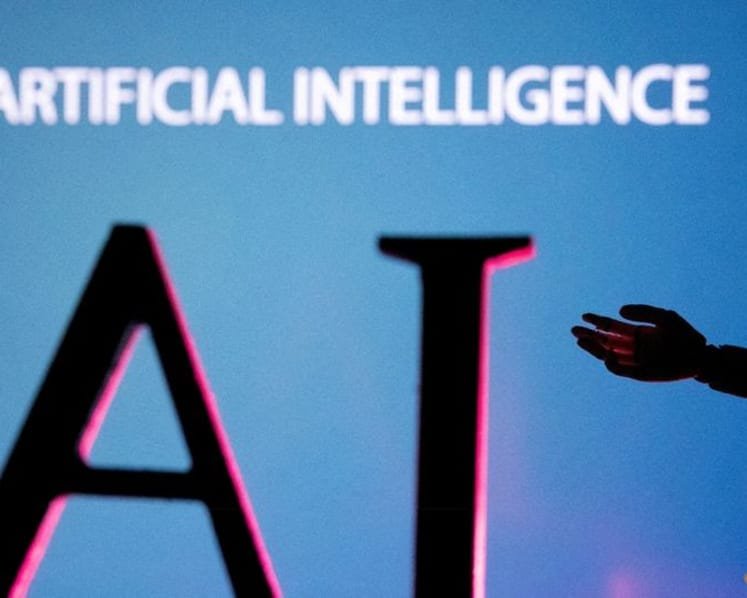
US school districts are tightening restrictions on generative AI for younger students even as Google expands free premium AI access to University students across Africa.
The contrast highlights differing priorities around developmental risks, educational readiness, and opportunity in unequal global contexts.
Recent US restrictions on AI Usage in schools
The most prominent recent moves restricting AI use in school came from two of the largest US districts. In early September 2026, New York City Public Schools announced a one-year moratorium on student-facing generative AI for roughly 600,000 students from 2-K/pre-K through eighth grade which makes up about two-thirds of the total student enrollment.
This includes restrictions on chatbots, AI tutors, and AI-powered instructional programs for New York Students. Companion-style chatbots were also barred across all grades. High school students face tighter limits, receive AI literacy modules, and may access only limited vetted pilots. The district is also discontinuing or disabling AI components in dozens of previously allowed programs and pairing the rules with grade-based screen-time caps. Officials framed the policy around protecting human connection, critical thinking, and developmental needs while citing safety and oversight standards.
Los Angeles Unified followed with its own one-year generative AI moratorium on district devices. These steps reverse earlier post-2023 openness and reflect ongoing worries about cognitive offloading, dependency, privacy, academic integrity, mental-health companion bots, and excessive screen time. Teacher unions and researchers have voiced similar concerns that frequent reliance on large language models can weaken independent problem-solving and deep learning, especially for younger children.
Google’s free AI offer for African University Students
In parallel, Google has been expanding free access to its advanced Gemini tools for higher-education students in Africa. In 2025, Google offered eligible university students in six countries (Ghana, Kenya, Nigeria, Rwanda, South Africa, Zimbabwe) a year of Google AI Pro at no cost. In August 2026 the company broadened the program to 27 African countries, providing one year of Google AI Plus free of charge.
Eligible college and university students typically verified via SheerID; age thresholds around 16+ or 18+ receive expanded Gemini access including higher usage limits and Gemini Omni in the later offer, study-oriented features such as notebooks that turn lecture materials into lessons and quizzes, Deep Research, guided learning modes and hundreds of gigabytes of cloud storage.
Why the Approaches Diverge
New York and Los Angeles policies target primarily K–8 students during formative years of cognitive and social development while Google’s offer is aimed at African tertiary students including young adults already in higher education who face different expectations around independent research, skill-building, and workforce preparation.
U.S. restrictions emphasize risk mitigation: shielding children from unvetted tools, preserving human teaching relationships, and avoiding premature cognitive outsourcing. Google’s African initiative emphasizes opportunity: closing access gaps, accelerating AI literacy, supporting research and study productivity, and preparing students for an AI-shaped economy.
In many African contexts, advanced digital tools can meaningfully expand limited library, tutoring, or research resources. At the same time, unregulated access to Advanced AI tools by African students can greatly harm African University Students by increasing dependency on AI for learning, homeworks, writing and research work.
Broader implications
Today, Africa’s higher-education systems operate under constraints of resource access, infrastructure, and teacher capacity that differ sharply from well-resourced U.S. urban districts.
Educational learning standards in New York City and Los Angeles Public Schools for students from 2-K/pre-K through eighth grade are way higher than most African Tertiary Schools including most universities in the African continent.
This comes as African Tertiary Universities are largely under-funded thereby leaving them lacking greatly in necessary Teaching, and Learning infrastructures.
Google expanding free access to its advanced Gemini tools for higher-education students in Africa is a good gesture that arrives pre-maturely for African University Students.
Presently, African tertiary schools and institutions need more physical learning infrastructures and learning tools ahead of Non-physical learning tools such as Google’s Gemini AI models.
Google as a global Tech figure worth over 1 Trillion Dollars in valuation, can add to Africa’s Educational growth by investing in the creation of more physical learning infrastructures for Africa’s largely under funded Tertiary Universities and institutions to complement its Advanced AI learning models such as Gemini for African student learning purposes.
The contrast between AI Students restriction in the US and Google’s free AI Offer to African Tertiary school students illustrates how local conditions shape AI education policy and huge role of proper regulation in this today’s AI era.
Wealthier systems with strong existing teaching capacity can afford to prioritize caution and developmental protection for learners while Systems seeking to leapfrog resource gaps, increase AI usage and profit turnover may prioritize rapid tool access for older ignorant students.
Neither path is automatically superior hence outcomes will depend on implementation quality, teacher preparation, assessment redesign, and whether students learn to use AI as a thinking partner rather than a substitute.
Globally, the pattern underscores an emerging digital divide in AI readiness. Students who gain supervised, literacy-rich experience with these tools are likely to enter higher education and the workforce better equipped than those whose only exposure is unregulated or none at all. At the same time, unchecked reliance carries measurable risks to foundational skills by increasing Dependance on AI for Learning, eroding creativity, researching and ultimately plunging into Brain drain.