
Researchers have achieved a world first by successfully using teleoperated humanoid robots to perform two surgeries during a preclinical trial.
The procedures included a gallbladder removal completed by a human-robot team, with a surgeon assisting a humanoid robot, and a second operation carried out by two humanoid robots working together.
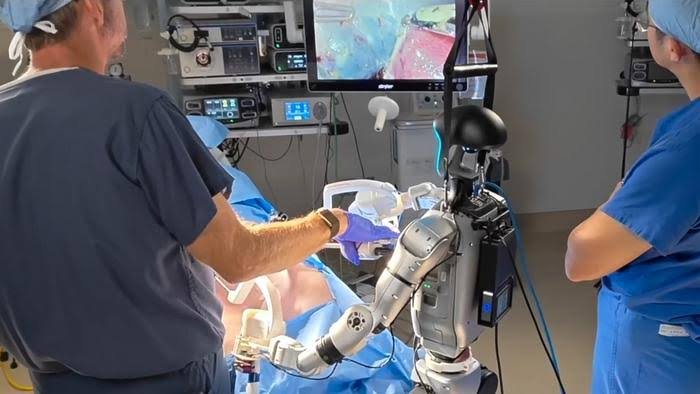
Both surgeries were performed on large nonprimate mammals by a team at the University of California San Diego (UCSD).
According to researchers, the milestone demonstrates the potential for teleoperated humanoid robots to support surgeons in operating rooms, with future applications ranging from surgical assistance to remotely performed procedures.
Teleoperated and autonomous humanoid robots could help address the global shortage of surgeons by expanding access to advanced surgical care, particularly in underserved regions where specialist medical services are limited. Their human-like form and versatility allow them to perform a broader range of clinical and support tasks than conventional robotic surgery platforms, making them suitable for hospitals, remote communities, disaster zones, and search-and-rescue operations.
According to the team, current robotic surgery systems are highly specialized, typically featuring three or four robotic arms, proprietary software, and dedicated surgical instruments. Weighing around 1,800 pounds (816 kg), these systems require purpose-built operating rooms, extensive setup, and trained support staff, making them costly and difficult to deploy outside major medical centers.
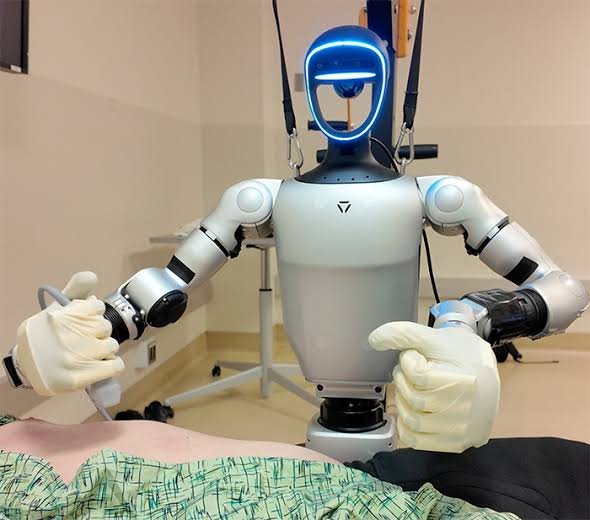
By contrast, the humanoid robots used in the study, called Surgie, stand about 5 feet (1.5 meters) tall and weigh only 60 pounds (27 kg). Their compact, mobile design allows them to operate within existing operating rooms without major infrastructure changes, making them more practical for resource-limited healthcare facilities.
To enable surgical procedures, researchers equipped the robots with adapters that allowed them to use standard surgical instruments. The robots integrated smoothly into existing clinical workflows, and operators reported that their human-like controls felt more intuitive than those of traditional robotic surgery systems.
UCSD team claims that in the preclinical trials, the teleoperated humanoid robots achieved surgical precision comparable to established robotic platforms, demonstrating that compact humanoid systems could deliver high-quality surgical performance while making advanced care more accessible in challenging environments.