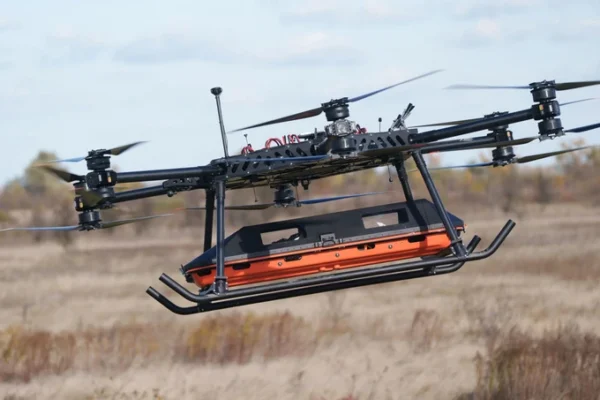
Ukrainian company SkyFall has unveiled StarGate, a heavy-lift aerial drone designed to evacuate wounded personnel from frontline positions.
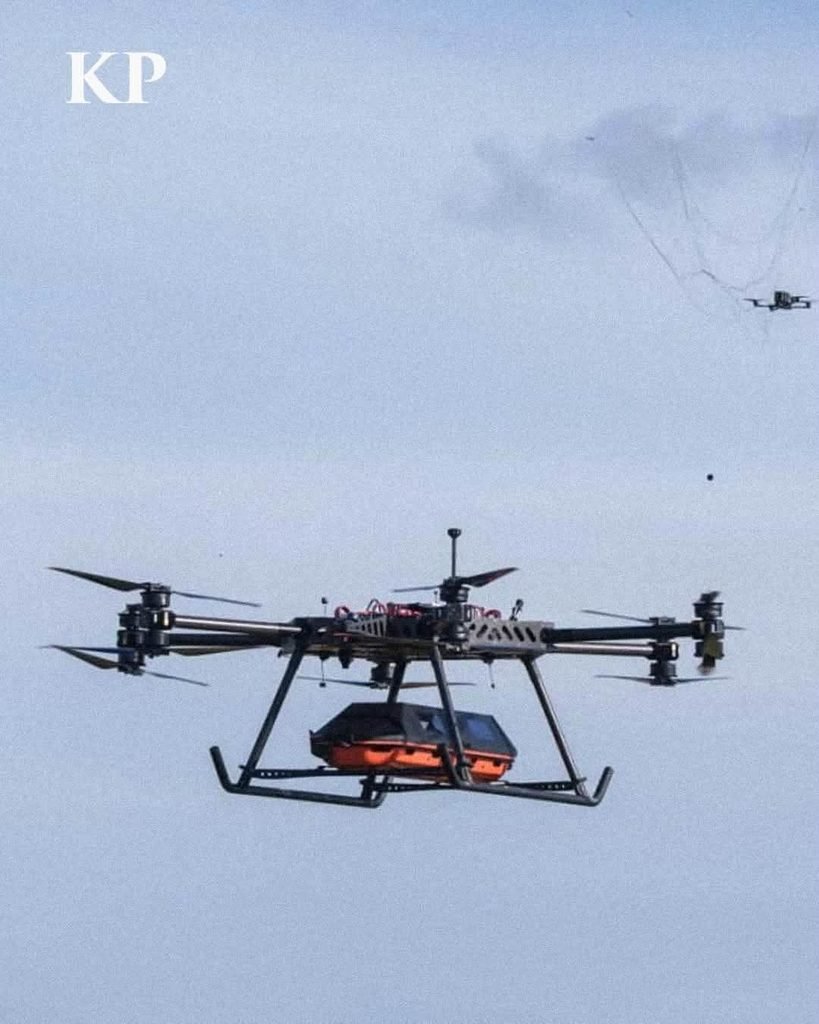
The six-propeller platform features a dedicated medical compartment with a stretcher and is designed to carry a payload of up to 150 kg over a one-way distance of up to 15 km.
StarGate uses multiple communication channels and AI-assisted functions to operate in environments where GPS signals are unavailable or electronic warfare disrupts communications.
The idea grew out of a military request, a spokesperson with the Ukrainian Army said. Last year, Flint, commander of the 475th Separate Assault Regiment, known as Code 9.2, approached SkyFall’s founder about developing a safer way to evacuate wounded soldiers from hard-to-reach positions.
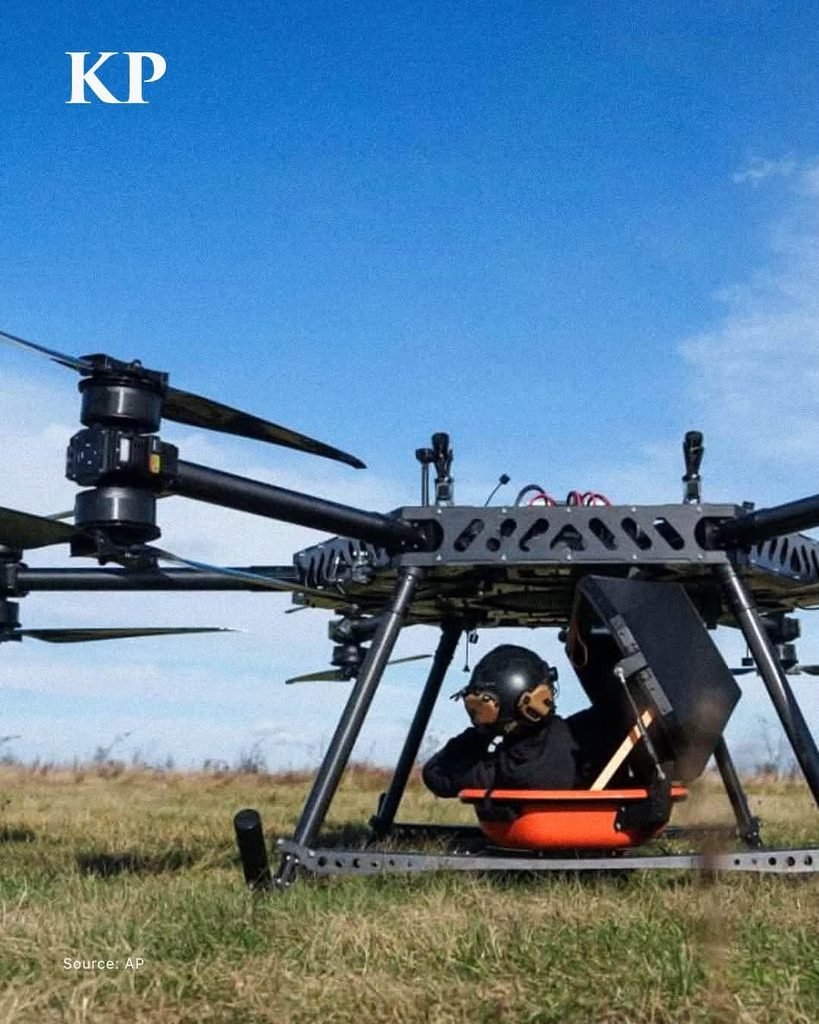
Ground robots typically take two to three hours to reach a position, depending on distance, road conditions and the threat from above, said a commander with Code 9.2.
“The idea came directly from the front line, from the trenches,” said SkyFall’s spokesperson, who asked not to be named because of the security risks facing Ukrainian military technology personnel. He spoke to AP wearing a balaclava. The AP was not permitted to disclose the testing location.
“Covering 10 kilometers in minutes would be a drastic change on the front line,” he said. The drone was recently handed over to a Ukrainian combat brigade for evaluation under frontline conditions.
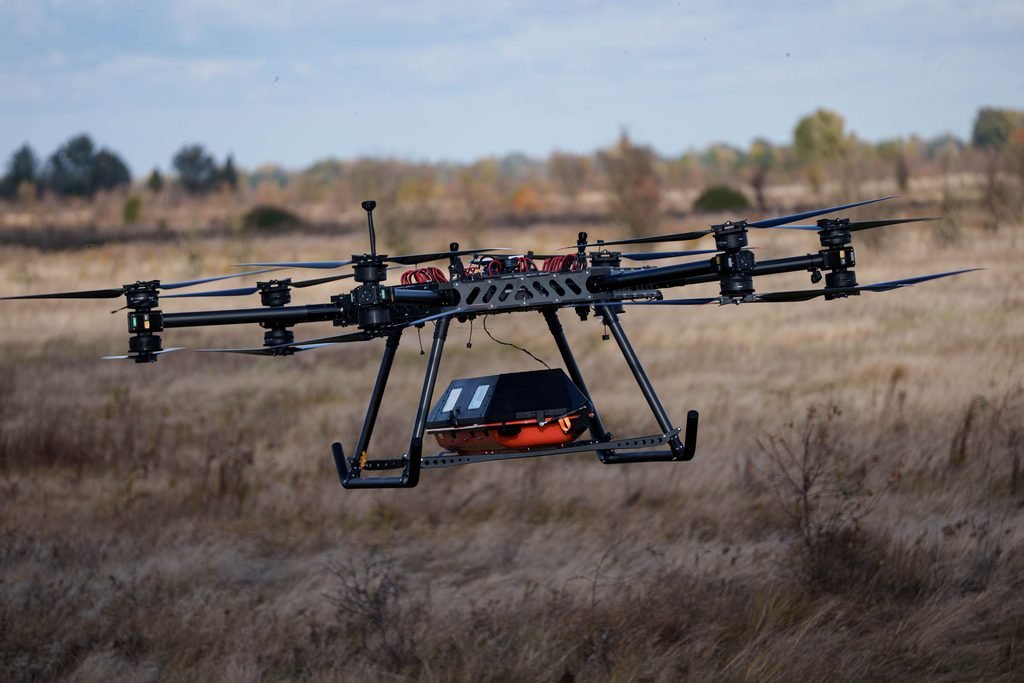
In some sectors, the so-called kill zone which is the area under constant threat from drones and artillery stretches 10 to 15 kilometers (6 to 9 miles) or farther. StarGate has a one-way range of 15 kilometers, potentially allowing it to reach critically wounded soldiers trapped deep inside the kill zone.
KEY SPECIFICATIONS & CAPABILITIES
• Developer & Purpose: Built by SkyFall at the request of frontline assault units (such as Code 9.2 / the 475th Separate Assault Regiment) to extract wounded soldiers from dangerous “kill zones” where traditional ground vehicles or helicopters are blocked by minefields, artillery, and enemy FPV drones.
• Payload & Speed: Can carry up to 150 kg accommodating a soldier in full combat gear on a certified medical stretcher and reach speeds of up to 105 km/h.
• Range: Has an operational one-way range of roughly 15 km to 30 km depending on the mission profile.
• Electronic Warfare (EW) & AI: Equipped with onboard artificial intelligence and specialized navigation/communication links such as L-Link and Starlink alternatives to maintain a pre-mapped route and continue flying even when GPS signals are jammed.
• Cost & Production: Each system costs around $50,000, with Skyfall scaling up output to meet high front-line demand.
DUELING DRONE TESTS
At the test field, StarGate lifts off as first-person-view drones buzz toward it, simulating the aerial threats that dominate Ukraine’s front line. Electronic jamming is activated. As one attacking drone closes in, a net shoots out, ensnaring it and sending it off course.
Video Showing Stargate Autonomous Soldier Evacuating Drone in Action – Video Credit: Associated Press
SkyFall emerged after Russia’s full-scale invasion in 2022, and has grown into a Ukrainian drone manufacturer. Its Vampire heavy-lift drone, known to Russian forces as “Baba Yaga,” is used by Ukrainian troops for battlefield missions. The company also makes Shrike first-person-view drones and has developed the P1-SUN aerial interceptor.
SkyFall plans to increase production capacity to up to 1,000 units per month by the end of 2026.
PEAK OF RESPONSIBILITY
KVN, who hunted Russian troops as a strike-drone pilot for his first two years of service, has completed just four missions.
But he said he already feels a higher sense of duty when he airlifts his wounded comrades, calling it “the peak of responsibility in the army”.
His most recent mission lasted an hour and a half.
StarGate manufacturer SkyFall is meanwhile scaling up production of its AI-assisted drone, which can hover and land autonomously even amid attempts to jam it through electronic warfare.
It is Ukraine’s first purpose-built evacuation drone.
The company expects to produce around 1,000 units per month by the end of 2026, a spokesperson told Reuters, adding that its drone is in high demand among various other units and brigades.