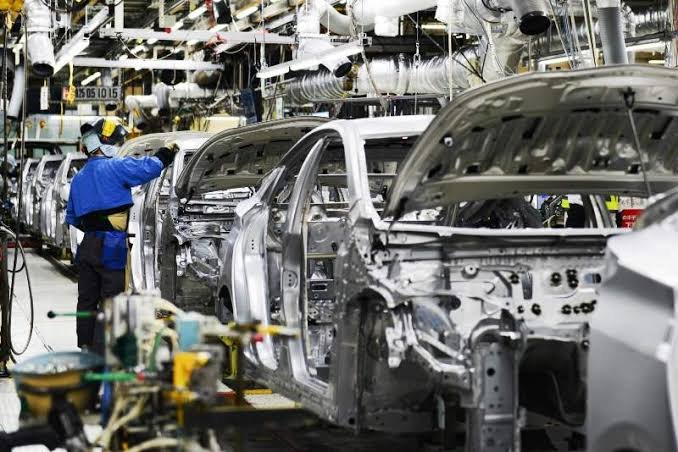
Picture Showing an electric vehicle manufacturing plant in Berlin Germany. Photo Credit: Frank Lynn/Getty Images
The federal government of Nigeria has announced plans to raise the share of Nigeria’s vehicle demand met by local assemblers from less than 8% to 70% in a push to boost domestic manufacturing, create jobs and cut reliance on imported vehicles and parts.
The director-general of the National Automotive Design and Development Council (NADDC), Joseph Osanipin, announced the target on Friday in Abuja at a press conference on implementing the Nigeria First Policy in the automotive sector.
He said the plan would be phased, with local production rising from under 8% to 20%, then 40%, and eventually 70% of domestic demand.
Osanipin said Nigeria’s assembly capacity is estimated at between 400,000 and 500,000 units a year, with plants operated by PAN Nigeria, Innoson Vehicle Manufacturing and CIG Motors. Some manufacturers can produce tens of thousands of vehicles annually, he said, but need higher patronage to expand and bring down costs.
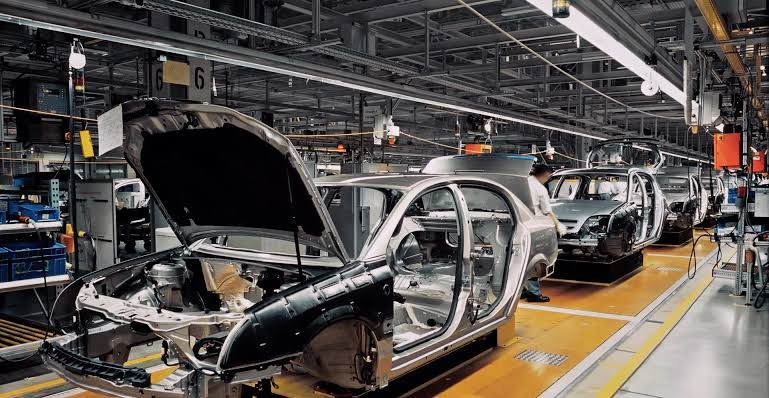
Picture Showing an electric vehicle manufacturing plant in Berlin Germany. Photo Credit: Frank Lynn/Getty Images
Assemblers will be expected to move from semi-knocked-down (SKD) assembly to completely knocked-down (CKD) production, which requires more local input and component manufacturing. He said NADDC will monitor manufacturers’ investments, employment, production growth and delivery standards to ensure government patronage benefits the wider industry.
He added that component makers could gain most, since vehicles need maintenance and replacement parts throughout their lifespan. He also said Nigeria must build local content to meet African Continental Free Trade Area (AfCFTA) rules of origin, which require 40 per cent local components for preferential access.
Osanipin said higher volumes would lower prices, and that assemblers must provide after-sales service, reinvest and employ more Nigerians.
The director-general of the Bureau of Public Procurement (BPP), Adebowale Adedokun, said all federal entities have been directed to prioritise Nigerian-assembled vehicles. He said the policy has already cut prices, citing a model listed at over N70 million that his office bought for about N35 million after negotiation, with further discounts offered for additional units.
Under the framework, federal ministries, departments and agencies must submit monthly and quarterly procurement reports to the BPP, which will report violations to the Presidency. Manufacturers that breach the guidelines could be sanctioned or barred from supplying federal institutions. Adedokun said the EFCC and ICPC are also seeking procurement information, and that payments for vehicle purchases will be checked against BPP no-objection approvals.
The chairman of the Nigerian Automotive Manufacturers Association, Bawo Omagbitse, said the policy reduces investment risk by giving manufacturers a more predictable market.
The national coordinator of the Automotive Local Component Manufacturers Association of Nigeria, Anslem Ilekuba, said a technology transfer programme has drawn interest from about 3,500 Chinese manufacturers. He said the association is also building a digital platform to link buyers with local component makers and improve parts traceability.