
Imagine waking up one day not in your familiar human body, but inside a sleek, tireless humanoid robot. Your memories, personality, thoughts, and even your sense of self—intact. No more aging, no more physical limitations. Just pure consciousness, walking, talking, and interacting with the world in a machine that never tires.
Key Takeaways:
•Elon Musk insists on Two (2) Decades humans could upload an “approximate snapshot” of their minds into Tesla’s Optimus humanoid robots using Neuralink’s brain-computer interface technology
•Neuralink records its first Human Implant in January 2024 with Noland Arbaugh, a 29-year-old man paralyzed from the shoulders down
• Elon Musk announces plans for high-volume production of the brain-computer interface devices, coupled with a shift to a streamlined, almost entirely automated surgical procedure
This isn’t the plot of a Black Mirror episode or a scene from The Matrix. It’s a prediction from Elon Musk himself. Made during Tesla’s annual shareholder meeting, Musk stated that within the next two decades, humans could upload an “approximate snapshot” of their minds into Tesla’s Optimus humanoid robots using Neuralink’s brain-computer interface technology.
Elon Musk has long been a visionary pushing the boundaries of technology from electric vehicles and reusable rockets to artificial intelligence.
One of his most ambitious ventures is Neuralink, a neurotechnology company founded in 2016 with the mission to create a generalized brain-computer interface (BCI). The goal? Restore autonomy to people with unmet medical needs today and unlock human potential tomorrow. As of 2026, Neuralink is no longer just a futuristic concept—it’s actively changing lives through human trials and gearing up for broader impact.
He described a future where Neuralink captures your neural data, and that digital essence is transferred into an Optimus body allowing your identity to persist long after your biological form expires.
What Is Neuralink and How Does It Work?
Neuralink’s flagship device, often called the Link or Telepathy, is a small, coin-sized implant designed to be fully wireless and cosmetically invisible. It features ultra-thin, flexible threads (each with multiple electrodes) that are surgically inserted into the brain’s motor cortex or other targeted areas. These threads record neural activity—the electrical signals from neurons and transmit them wirelessly via Bluetooth to external devices like computers, phones, or even robotic arms.
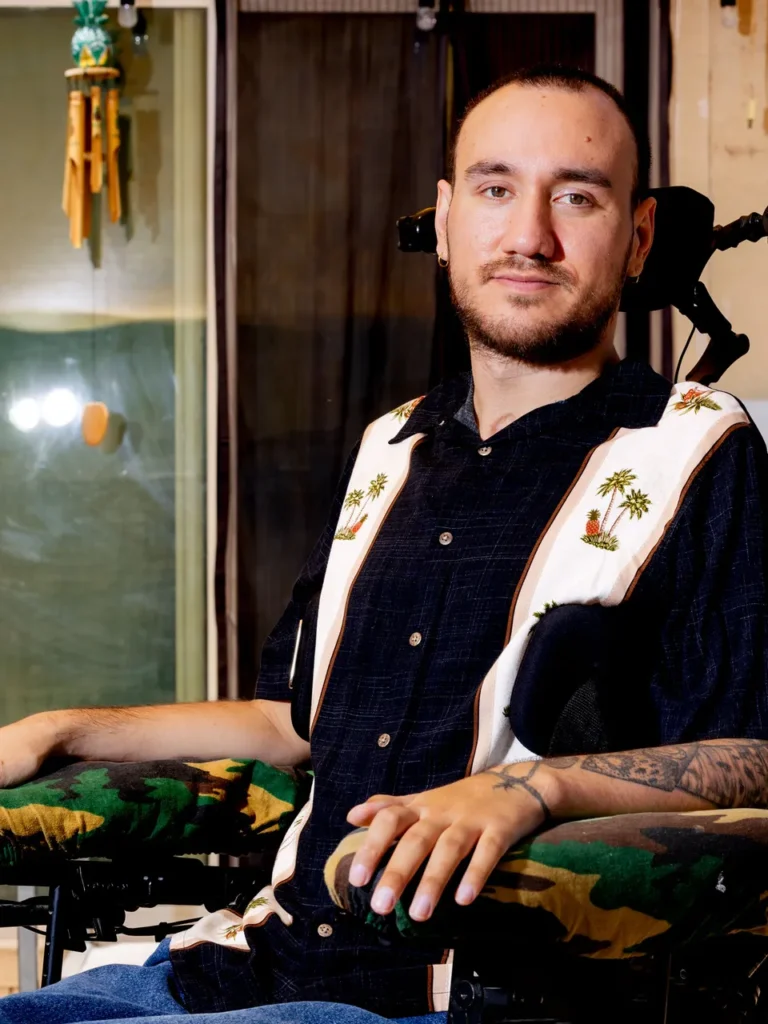
Neuralink’s First User Noland Arbaugh is constantly multitasking with his new brain implant. Photograph: Cassidy Araiza
The implantation is performed by a custom robotic surgeon for precision and minimal invasiveness. Early versions involved over 1,000 electrodes, allowing high-bandwidth data collection far surpassing many previous BCIs. The device processes signals in real-time, translating thoughts (intended movements or speech) into actions. It requires periodic charging (around every 5 hours in initial reports), but the system has evolved rapidly. In essence, Neuralink aims to create a high-bandwidth link between the human brain and digital systems, bypassing damaged nerves or lost functions.
From Sci-Fi Dream to Elon’s Roadmap for Human Evolution
Neuralink’s journey began with extensive animal testing before receiving FDA approval for human trials. The first human implant occurred in January 2024 with Noland Arbaugh, a 29-year-old man paralyzed from the shoulders down after a diving accident. Noland quickly demonstrated the device’s potential: on his first day, he broke a world record for BCI cursor control speed and precision. He has since used it to play video games like Mario Kart and Civilization VI, browse the web, control his smart home, and even study neuroscience—all with his mind alone.
By early 2026, Neuralink has implanted the device in 21 participants (often called “Neuralnauts”) worldwide, spanning the U.S., Canada, UK, and other locations. Participants primarily include those with quadriplegia from spinal cord injuries or amyotrophic lateral sclerosis (ALS). Combined trial data shows thousands of hours of use, with ongoing improvements in control and reliability.
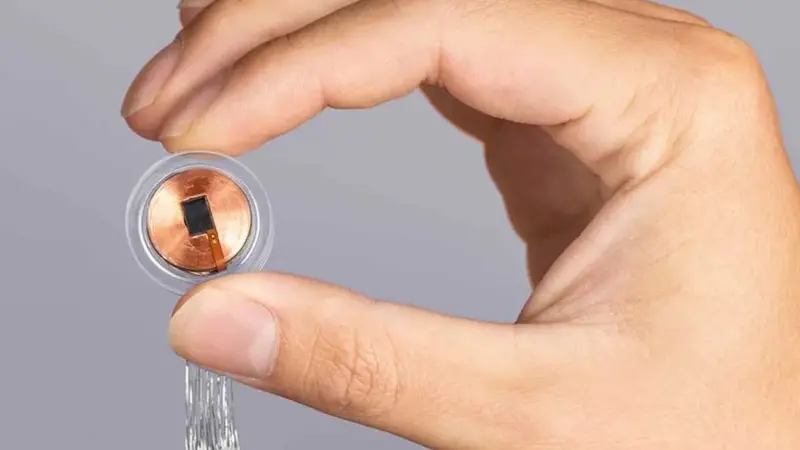
Neuralink’s first neural implant – the N1 – is designed to decode ‘movement intention
Musk has long framed humanity’s future as a race against obsolescence especially in an age of rapidly advancing artificial intelligence. He sees brain-computer interfaces not just as medical tools, but as the next evolutionary leap. By merging Neuralink with Optimus, we could achieve what he calls a form of digital immortality: preserving memories, personality, and consciousness in a functional, walking machine.
“Upload your memories, so you wouldn’t lose memories,” Musk explained, adding that this could come with “superhuman abilities.” The goal? To keep human consciousness alive and active in the physical world, even after the body fails.
Notable achievements include:
– Restoring computer and phone control for daily independence.
– Early work on controlling assistive robotic arms (via the CONVOY study).
– A dedicated VOICE trial for speech restoration, where thoughts are decoded into spoken words or text, giving back communication to those who have lost speech due to ALS or similar conditions.
Patients like Brad Smith (first with ALS) and Kenneth have shared stories of regaining their voice—literally making dad jokes again after years of silence. One participant noted how the idea of speaking again was “mind-blowing.” Musk has highlighted these successes on X, emphasizing how Neuralink enables people who lost the ability to speak to do so once more.
It sounds radical because it “is” radical. Philosophers have debated mind uploading for decades but Musk is betting on two of his own companies to make it real:
- Neuralink: Currently in early human trials, the technology involves implanting ultra-thin threads into the brain to read and potentially write neural signals. It’s already helping patients with paralysis control devices with their thoughts. Musk envisions it scaling to capture a high-fidelity “snapshot” of your entire mind.
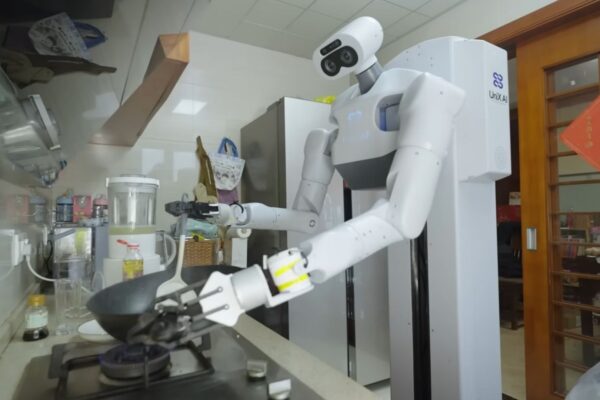
- Tesla Optimus: This humanoid robot is designed for practical labor today—folding laundry, factory work but Musk sees its potential as a vessel for consciousness tomorrow. With advanced actuators, AI-driven movement, and a durable frame, Optimus could provide the perfect hardware host for a transferred mind.
How It Could Work: Neuralink + Optimus = Your Digital Afterlife
The process Musk outlines is straightforward in concept (though enormously complex in execution):
- Neuralink’s advanced BCI records a detailed map of your brain’s activity—thought patterns, memories, emotions, and personality traits.
- That data is processed into an “approximate snapshot” of your consciousness.
- The snapshot is uploaded into an Optimus robot’s computational core, where it interfaces with the robot’s sensors, motors, and AI systems.
- Your digital self wakes up in a body that can run 24/7, lift heavy objects, travel anywhere, and even upgrade its hardware over time.
Musk acknowledges it’s “not immediate” but insists the timeline is likely under 20 years if progress continues.
Neuralink is still in its early phases and focused on restoring function for people with neurological conditions but the trajectory is accelerating.
Each successful implant brings us closer to the high-bandwidth brain reading required for full mind transfer. Optimus, meanwhile, is evolving rapidly, with demonstrations showing increasingly natural movement and dexterity.
2026: The Year of Scaling UpNeuralink is entering a pivotal phase
In January 2026, Elon Musk announced plans for high-volume production of the brain-computer interface devices, coupled with a shift to a streamlined, almost entirely automated surgical procedure.
Threads will eventually go through the dura (brain’s protective layer) without removal, simplifying the process significantly. This automation, potentially leveraging Tesla’s robotics expertise, aims to make implantation safer, faster, and more accessible.
With 21 participants already enrolled and momentum building (multiple implants per month in 2025), 2026 could see hundreds or even over 1,000 devices in trials. Expansion includes more countries and conditions, moving beyond initial paralysis/ALS focus toward broader therapeutic uses.
Challenges remain: early issues like thread retraction in the first patient were addressed through design improvements, and long-term safety, battery life, and regulatory approvals are ongoing priorities.
Critics note the tension between Neuralink’s medical focus and Musk’s bolder visions of human-AI symbiosis, but trial progress shows tangible benefits for patients.
The Bigger Vision: Beyond Medicine While current efforts prioritize restoring lost functions (mobility, speech, sight), Musk’s long-term ambition is more profound. He envisions Neuralink as a pathway to symbiosis with AI, dramatically increasing human cognitive bandwidth.
In a world where AI advances rapidly, a direct brain interface could help humans keep pace potentially allowing thought-based communication, enhanced memory, or even controlling devices like Tesla’s Optimus robots mentally.
Musk has speculated that Neuralink could one day make smartphones obsolete, with users “thinking” messages, summoning cars, or experiencing media directly. He has also discussed applications for treating epilepsy, curing paralysis fully, and unlocking “cybernetic superpowers.” These ideas spark both excitement and debate about ethics, privacy, and the future of humanity.
The Bigger Picture: Redefining Life, Death, and What It Means to Be Human
Musk views this not as escaping death, but as extending human potential. In a world where AI might soon surpass us in raw intelligence, merging with machines could be our way of staying relevant—or even thriving.
Benefits could be profound:
- Preserving loved ones: No more permanent goodbyes; a digital continuation of someone’s essence.
- Exploration without limits: Robots could venture into space, deep oceans, or hazardous environments while carrying human consciousness.
- Equality in capability: Superhuman strength, speed, and endurance available to anyone who chooses the upload.
But the implications raise deep questions. Is a perfect copy of your mind really you? or just a sophisticated simulation? What about identity, free will, and the soul? Ethical dilemmas around consent, access (who gets to upload first?), and potential misuse loom large. Society would need to grapple with entirely new definitions of life, rights for digital beings, and the risks of hacking a mind.
From Futuristic Fantasy to Tomorrow’s Reality?
Musk’s track record with ambitious timelines is mixed. SpaceX rockets and Tesla vehicles have revolutionized industries, but some predictions have slipped. Still, the building blocks are already here. Neuralink implants are happening. Optimus prototypes are walking and working. The pace of AI and robotics is exponential.
If development continues, the line between human and machine may blur faster than we think. What Musk is proposing isn’t just technological—it’s philosophical. A genuine step in human evolution toward a future where consciousness isn’t bound by fragile biology.
Whether you find this exhilarating or terrifying, one thing is clear: the conversation about digital immortality has officially moved from science fiction novels to corporate shareholder meetings. The question isn’t “if” we’ll have the technology someday—it’s whether we’re ready for what it means when we do.
What do you think? Would you upload your mind to an Optimus robot for a shot at digital eternity? Let us know what you think in the comments section below. 👇



Leave a Reply