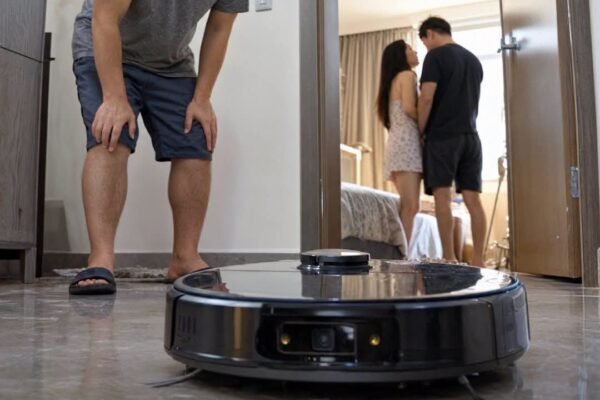
In a bizarre and cautionary tale that has sparked widespread discussion across Taiwan and beyond, a man who cleverly used a camera-equipped robot vacuum cleaner to gather evidence of his wife’s extramarital affair found himself both victorious and defeated in the eyes of the law.
He successfully sued for compensation and was awarded NT$500,000 (approximately US$16,000). Yet the very same footage that helped him win his civil case led to a criminal conviction and a five-month prison sentence for violating his wife’s privacy. The case, decided by the Taoyuan District Court, highlights the complex intersection of marital rights, technological surveillance, and personal privacy in the digital age.
The Discovery That Sparked Suspicion
The couple married in 2021. They lived with the husband’s parents and only occasionally stayed at their holiday home in Guishan, Taoyuan. In September 2023, the husband began to notice unusual items at the property. Among them was a toothbrush and other personal belongings that clearly did not belong to him or his wife. These small discoveries planted the seeds of doubt.

He reviewed security footage from the parking garage and identified an unfamiliar man who had previously driven his wife to the property and stayed overnight. The evidence was circumstantial but enough to deepen his suspicions that something was wrong in their marriage.
Christmas Eve and the Robot Vacuum
On December 24, 2023, the husband decided to investigate further using an unexpected tool: the household robot vacuum cleaner. Many modern robot vacuums come equipped with cameras and can be controlled remotely through a smartphone app. The husband accessed the device remotely. According to court records, he initially intended to use the vacuum’s communication feature to speak with his wife.
Instead, the live camera feed revealed another man inside the home with his wife. Realizing he had caught them, the husband activated the recording function and saved the footage. The video reportedly showed his wife embracing the other man, changing clothes in his presence, and walking around the house unclothed while the man lay on the sofa. The intimate nature of the images left little room for innocent explanations.
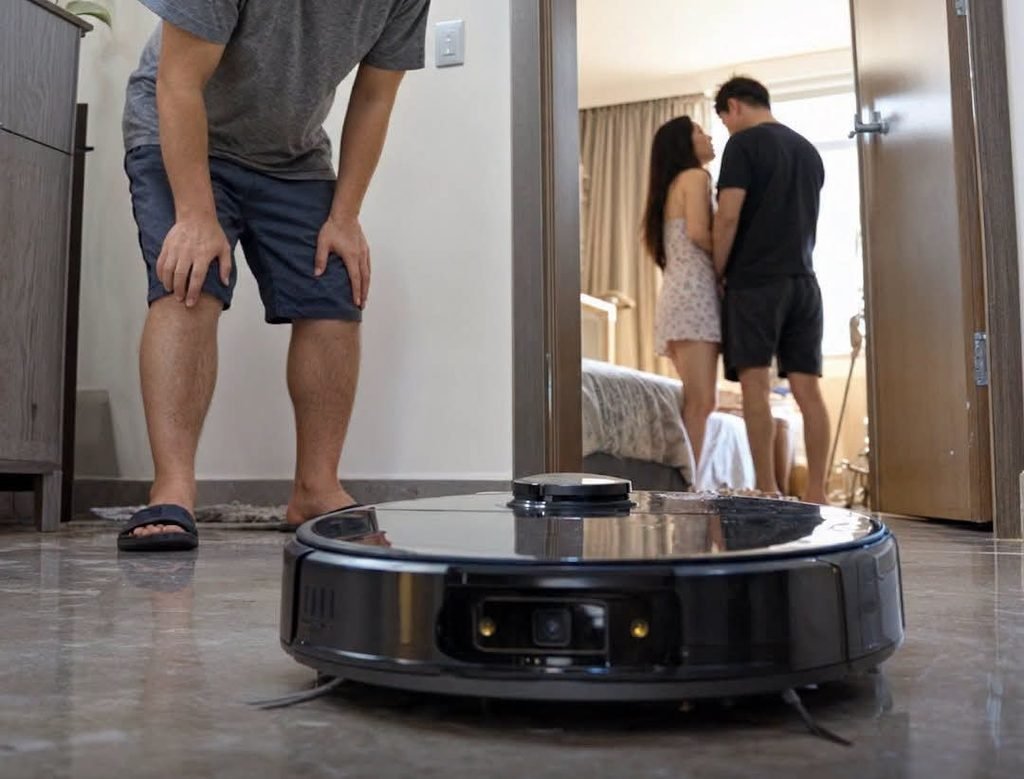
Armed with this visual evidence, the husband filed a civil lawsuit against his wife and the other man. He sought NT$2 million in damages, arguing that their relationship had infringed on his spousal rights under Taiwanese civil law. Although adultery itself is no longer a criminal offense in Taiwan, a spouse can still seek compensation when an affair is deemed to have violated marital obligations.
Civil Victory, Criminal Downfall
A civil court agreed that the relationship between the wife and the other man had gone beyond ordinary friendship. The court ordered the pair to jointly pay the husband NT$500,000 ($16,000) in compensation. On paper, it appeared to be a clear win for the betrayed spouse. The robot vacuum footage had served its purpose as powerful evidence.
However, the wife fought back. She filed a criminal complaint against her husband for secretly recording private images without her consent. Taiwan’s Criminal Code strictly prohibits the unauthorized recording or photographing of another person’s private activities, intimate spaces, or bodily privacy. Penalties can include up to three years in prison and substantial fines.
The Taoyuan District Court carefully examined the case. The husband argued that his actions were justified because he needed evidence of the affair and that the civil court had already accepted the footage. He also claimed the robot vacuum produced lights or voice notifications while operating, which should have alerted his wife that she was being recorded.

The court rejected these defenses. Judges ruled that marriage does not extinguish an individual’s fundamental right to privacy, even within the marital home. There was insufficient evidence that the wife knew she was being filmed or had consented to the recording. The intentional activation of the recording function, particularly to capture intimate scenes, crossed a legal line. On August 18, 2026, the court sentenced the husband to five months in prison for unlawfully recording private images. The sentence can be converted into a NT$150,000 fine (roughly US$4,700), and the ruling remains open to appeal.
He actually avoided the worst-case scenario of an NT$300,000 (around $9,500) fine and three years behind bars.
With the fine deducted from his award, the man has been left with just over $11,000 and is facing nearly half a year in jail. Some on social media are angry with the court’s decision, while others say there are no excuses for breaking the law.
The case has ignited public debate in Taiwan and internationally. On one side, many people expressed sympathy for the husband, arguing that he was twice victimized — first by the betrayal and then by the legal system for trying to prove it. Online commenters questioned how a spouse is supposed to gather evidence of infidelity without risking criminal charges, especially when traditional surveillance methods may also be restricted.
On the other side, privacy advocates and legal experts praised the court’s decision. They emphasized that the right to privacy is fundamental and does not disappear simply because two people are married. Allowing spouses to secretly record intimate moments under the guise of gathering evidence could open the door to widespread abuse and further erode personal boundaries within relationships.
The case also raises important questions about the growing presence of smart home devices. Robot vacuums, security cameras, smart speakers, and other internet-connected gadgets increasingly include cameras and microphones. While these features offer convenience and security, they also create new opportunities for surveillance — both legitimate and illicit. Manufacturers and users alike must navigate the legal and ethical boundaries of remote monitoring, especially in shared living spaces.
In Taiwan, secretly recording private acts without consent is taken seriously. Courts have consistently held that even in the context of marital disputes, individuals retain a reasonable expectation of privacy inside the home. Evidence obtained through illegal means may still be considered in civil proceedings in some circumstances, but the act of obtaining it can independently trigger criminal liability. This dual outcome — winning compensation while facing imprisonment — illustrates the careful balance courts try to strike between protecting marital interests and safeguarding personal dignity.