Solayo Africa, a Lagos-based health-tech startup, is harnessing the power of artificial intelligence and the ubiquitous WhatsApp messaging platform to create a comprehensive, scalable maternal healthcare ecosystem. The company aims to tackle longstanding challenges in access, affordability, and quality of care that continue to plague millions of women and families throughout sub-Saharan Africa.
At the heart of its solution is ‘Moma’ an intelligent AI-powered chatbot designed to deliver personalized, round-the-clock maternal support. Starting from early pregnancy and extending through the postpartum period and a child’s first year, Moma integrates clinical advice, interactive digital tools, symptom monitoring, and even an e-commerce marketplace—all within a single, familiar WhatsApp chat.
Founded by Oladiipo Damilola (CEO), Theresa Oyewole (COO), and George Odiana (CTO/CPO), Solayo Africa was created with a clear purpose: to provide instant, reliable maternal health guidance to women who often lack easy access to physical clinics or specialists. The platform is particularly impactful in rural and underserved communities where transportation, cost, and time barriers frequently prevent timely care.
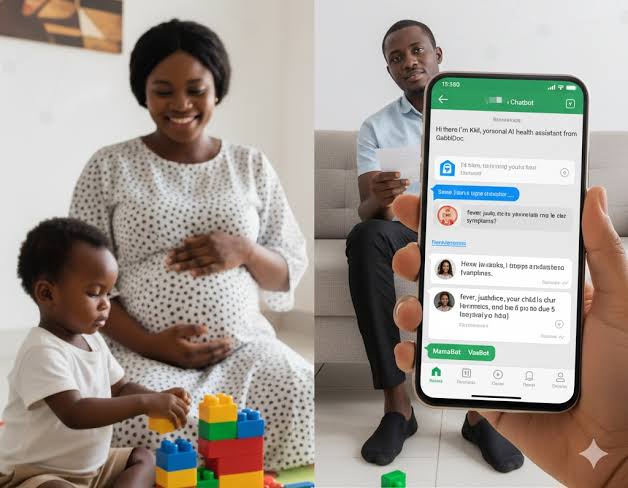
Picture Showing a Collage Photo for MOMA Maternal Health Care Revolutionised using Chatbots: Photo Credit MOMA
Imagine a pregnant woman in rural Lagos simply opening WhatsApp and typing “Hi Moma.” Within seconds, she receives a tailored response based on her specific trimester, any symptoms she reports (such as unexpected pain from the night before), nutritional needs, or questions about fetal development. The AI has been tracking her pregnancy journey since as early as week six, offering weekly updates on her baby’s growth, breastfeeding tips, vaccination reminders, and red-flag warnings—without her needing to leave home or wait for an appointment.
This approach directly addresses a critical reality: across Africa, timely maternal health information and services remain scarce for far too many women. In Nigeria alone, the situation is especially urgent. Recent UN and WHO estimates (based on 2023 data) indicate that Nigeria accounts for nearly 29% of all global maternal deaths—approximately 75,000 women each year, or one death every seven minutes. The lifetime risk of a Nigerian woman dying from pregnancy-related causes stands at roughly one in 19, a stark contrast to one in 4,900 in high-income countries. Only about 43% of births are attended by skilled health professionals, and in areas like rural Epe in Lagos State, historical data from 2015–2019 recorded a maternal mortality ratio of 1,645 per 100,000 live births. Alarmingly, 72% of those deaths involved unregistered pregnancies, and nearly 80% occurred outside formal health facilities.
Many of the leading causes include: eclampsia, postpartum haemorrhage, and sepsis are highly preventable when detected and managed early. Solayo’s model is built precisely to close that dangerous window between noticing a symptom and getting expert help. By enabling users to check symptoms in real time, log their progress, and escalate complex cases to human clinicians or partnered hospitals and health maintenance organizations (HMOs), Moma turns WhatsApp into a proactive lifeline.
In an era where healthcare systems face growing demands from aging populations, workforce shortages, and rising costs, AI-powered chatbots are emerging as powerful allies. These conversational agents, driven by natural language processing (NLP), machine learning, and vast medical datasets, provide 24/7 support, streamline administrative tasks, and enhance patient engagement without replacing human clinicians.
From symptom checking to mental health support, healthcare chatbots are transforming how patients interact with medical services. As of 2025–2026, the global healthcare chatbots market is experiencing explosive growth, with projections ranging from around USD 1.5–2 billion in 2025 to over USD 10 billion by 2034, fueled by a compound annual growth rate (CAGR) exceeding 23%.
The choice of WhatsApp as the delivery channel is deliberate and strategic. In sub-Saharan Africa—and especially Nigeria, home to an estimated 90–100 million WhatsApp users representing over 95% of internet users—the platform is already a daily essential for communication, business, and information sharing. It requires no new app downloads, works on basic smartphones, and functions reliably even with limited data or connectivity.
Physician surveys indicate strong support for chatbots in routine tasks like scheduling (78% positive) and medication info (71%), though concerns persist about full patient needs.
Key Use Cases of Chatbots in Healthcare
Healthcare chatbots serve multiple roles across the patient journey:
– Symptom Checking and Triage: Users describe symptoms, and the chatbot asks follow-up questions to suggest possible causes or recommend next steps (e.g., self-care vs. seeking urgent care). This helps reduce unnecessary visits and prioritizes cases.
– Appointment Scheduling and Administrative Support: Chatbots handle booking, rescheduling, reminders, and basic queries about facilities or insurance, freeing staff for complex tasks.
– Medication Reminders and Chronic Disease Management: Bots send personalized nudges for prescriptions, track adherence, and provide lifestyle advice for conditions like diabetes or hypertension, helping lower readmission rates.
– Mental Health Support: Specialized chatbots deliver cognitive behavioral therapy (CBT) techniques, mood tracking, and coping strategies for anxiety, depression, or stress. They offer anonymous, on-demand help, especially useful during off-hours or for those facing stigma or waitlists.
– Post-Discharge Follow-Up and Patient Education: Automated check-ins monitor recovery, answer questions about recovery plans, and improve health literacy.
-Telemedicine Integration: Chatbots act as front-end triage for virtual consultations, collecting preliminary information to make doctor visits more efficient.

Picture Showing a Pregnant Woman and AI to monitor Pregnancy: Photo Credit i-Stock
Several Chatbots have gained prominence in the Medical industry examples include:
– Ada Health: A leading symptom checker with millions of users. It uses adaptive questioning and a comprehensive medical knowledge base to provide likely diagnoses and shares reports with doctors. It has shown high safety alignment with physicians in studies.
– Buoy Health: Trained on extensive clinical data, it offers symptom assessment and educational resources to guide users toward appropriate care.
– Woebot Health: Focused on mental health, it employs CBT to support users with anxiety, depression, or burnout. Users report reduced work impairment, with many interactions occurring outside regular hours.
– Babylon Health (now evolved under different ownership): Pioneered AI triage combined with video consultations, though its journey highlighted scaling challenges in real-world healthcare systems.
Other notable tools include Wysa for emotional support and various hospital-specific bots for reminders and navigation.
Beyond education and medical guidance, Solayo has thoughtfully integrated a curated e-commerce marketplace directly into the chat experience. Expectant and new mothers can browse and purchase essential maternity and delivery packs containing items for safe childbirth, newborn care, and postpartum recovery without ever leaving the conversation. This seamless blend of health support, shopping, and logistics recognizes the full reality of pregnancy where women juggle medical needs with practical planning, budgeting, and supply sourcing.
“Moma handles thousands of routine daily queries on topics like nutrition, infant milestones, and common discomforts, while automatically routing cases that need professional clinical judgment to our network of human experts,” the founders explain. The integrated platform reflects the holistic demands of motherhood and aims to bridge the persistent gap between the knowledge women need and the moment they need it most.
Benefits for Patients and Providers
The advantages are substantial:
– Improved Access and Convenience: 24/7 availability reduces wait times and barriers, especially in underserved or rural areas. Multilingual support broadens reach.
– Cost Savings: Projections suggest chatbots could save the industry billions by cutting administrative burdens, unnecessary visits, and readmissions. Early estimates pointed to $3.6 billion in global savings, with ongoing efficiencies in staffing and operations.
– Enhanced Patient Engagement and Outcomes: Personalized reminders boost medication adherence, while mental health bots provide continuous support. Hybrid models (chatbot + human oversight) show promise in reducing impairment and improving satisfaction.
– Relief for Healthcare Workers: By handling repetitive queries, chatbots allow clinicians to focus on high-value care, potentially alleviating burnout amid workforce shortages.
Adoption is growing, though uneven—around 19% of medical group practices used chatbots or virtual assistants for patient communication as of early 2025.
Looking ahead, Solayo Africa’s vision extends far beyond Nigeria. The startup is preparing to expand into other African markets with high WhatsApp adoption and fragile maternal health infrastructure, scaling its AI-driven model to support millions more pregnancies continent-wide. By combining cutting-edge technology with culturally familiar tools and compassionate human oversight, Solayo is not just filling healthcare gaps—it is building a more equitable, accessible future for mothers and babies across Africa.
Disclaimer!
This publication is made for Educational and awareness purposes. The information provided here are based on verified human aided research and studies.




Leave a Reply