In a huge milestone for African innovation and inclusive design, the Ubokobong Bionic Arm developed by the Nigerian company Immortal Cosmetic Art has been named one of TIME magazine’s Best Inventions of 2026.
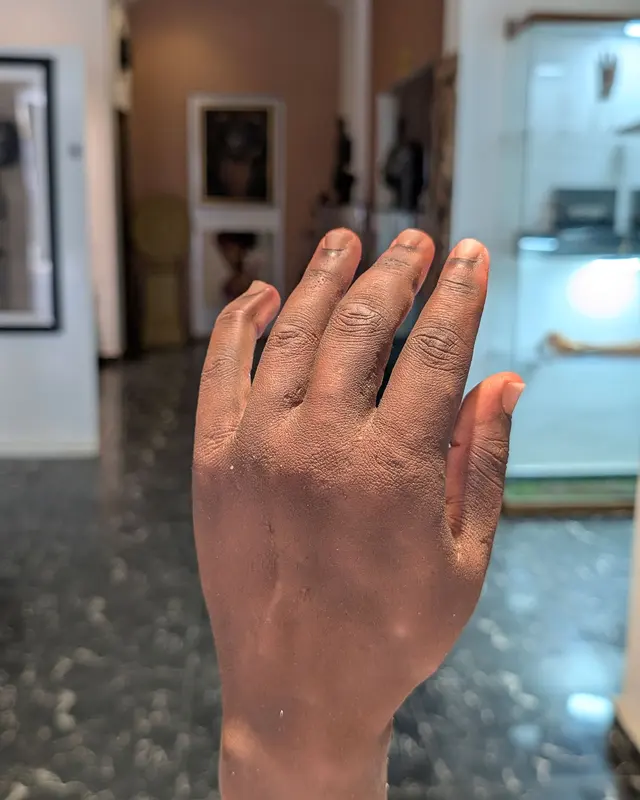
Listed in TIME Magazine’s accessibility category, the myoelectric prosthetic stands out for combining hyper-realistic aesthetics tailored to darker skin tones with functional control through muscle signals. It is already in use by clients across 56 countries.
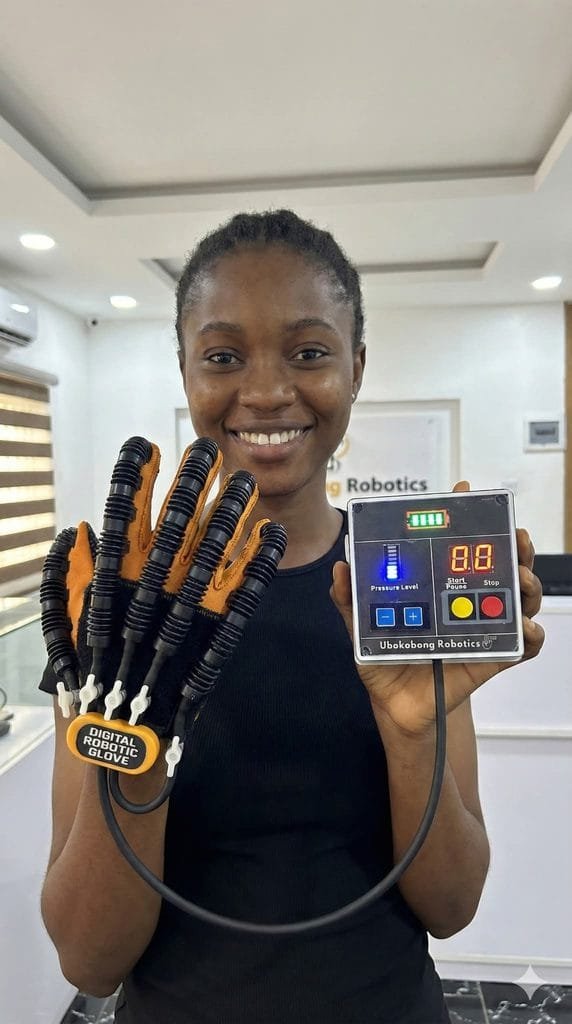
Ubokobong Amanam who is one of our highly celebrated African STAR⭐ Inventors, recently invented and Launched his bionic hand gloves designed to help Stroke Patients regain hand Mobility.

This recognition, announced on October 15, 2026 by TIME Magazine, highlights more than a technical achievement. It underscores a response to a longstanding gap: prosthetics that are both functional and culturally appropriate for African users and other people of color.
From Personal Tragedy to Innovation
Ubokobong Amanam’s story began on New Year’s Day 2019 when the STAR ⭐ Inventor lost his fingers in a fireworks accident in Nigeria. When he sought a prosthetic, he discovered that available options rarely matched his dark skin tone. The mismatch was not merely cosmetic, it deepened the emotional impact of the injury.
His brother John, a special-effects artist experienced in creating realistic human forms for film and theatre, stepped in. He crafted a hyperrealistic hand for Ubokobong. That collaboration grew into Immortal Cosmetic Art, based in Uyo, Akwa Ibom State. The company’s early focus was on lifelike, skin-tone-matched prosthetics designed specifically for Black amputees. “We try to restore comfort and confidence to the amputee,” Ubokobong has said.
John, drawing on a background in technology and electronics, pushed further. After roughly three years of research, the brothers developed a functional bionic version.
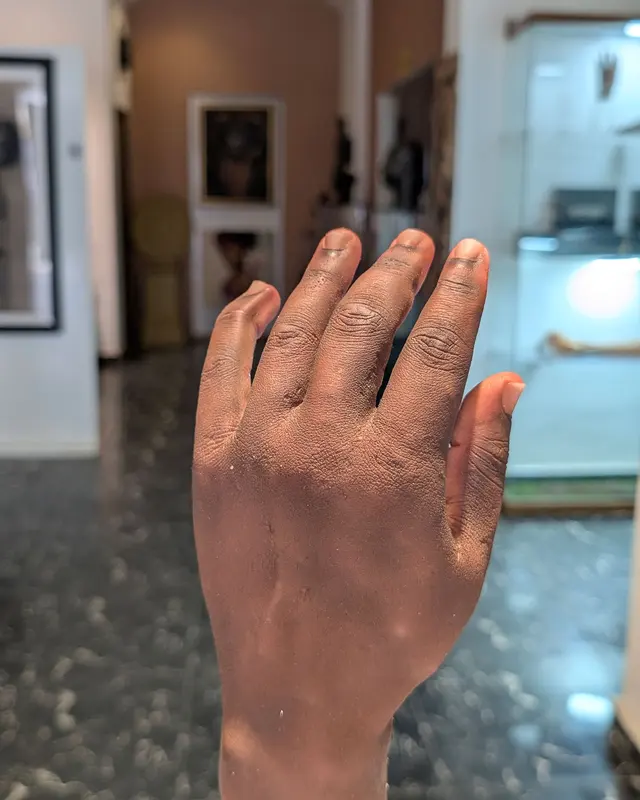
The result is the Ubokobong Bionic Arm: a myoelectric device controlled by electrical signals from the user’s residual muscles. When the wearer intends to move, sensors detect the signals and translate them into corresponding hand and finger movements.
The arm is designed to look human-like complete with details such as wrinkles, veins, fingernails, and fingerprints created from silicone moulds while remaining functional.
Addressing a Critical Access Gap
Prosthetics have long been inaccessible or unaffordable for many Nigerians and other Africans. Official data is limited, but estimates suggest hundreds of thousands to as many as two million people in Nigeria alone may need prosthetic limbs. Imported devices often cost thousands of dollars, are designed primarily for Western body types and lighter skin tones, and can be difficult to maintain or repair locally. High temperatures, physical labor, and terrain common across parts of Africa can further challenge devices not built with those conditions in mind.
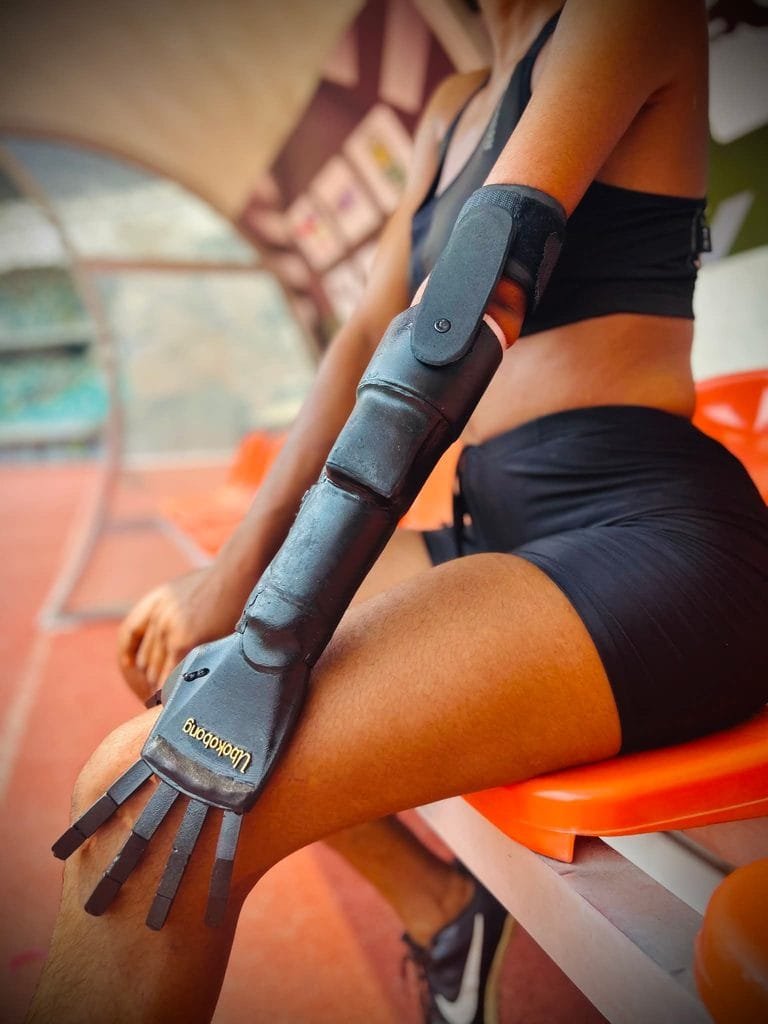
Globally, the World Health Organization has noted that the vast majority of people who need assistive technologies such as prosthetics lack access. The Ubokobong Bionic Arm aims to help close that gap by being “built for Africans by Africans,” as John Amanam, the company’s chief executive, has described it. Each bionic limb has been reported to cost around $7,000—substantially less than many advanced Western myoelectric systems, which can run into the tens of thousands of dollars—though it remains expensive for average households without subsidies. The company has sought government and NGO support to improve affordability and has already provided free devices to some clients.
Even before its wider launch, the firm received advance interest and orders from the United States, Britain, Australia, and Ghana, among other places. By the time of the TIME recognition, the arm had reached users in 56 countries.

Why Ubokobong’s Bionic Arm Invention Recognition Matters
TIME’s Best Inventions list celebrates solutions that address real human needs with ingenuity. The Ubokobong Bionic Arm earned its place by tackling both function and representation. Hyper-realistic, dark-skin-matched prosthetics have been scarce; combining that realism with myoelectric control in a locally developed product is rarer still.
The innovation also reflects a broader shift. Instead of relying solely on technology transferred from high-income countries, African innovators are designing solutions grounded in local realities such as climate, lifestyle, cultural preferences, and economic constraints.
Experts note that such community-driven approaches can produce devices that are more sustainable, maintainable, and relevant. Local manufacturing reduces dependence on imported spare parts and allows better customization.
Users have described the difference in dignity and confidence that a well-matched, functional prosthetic can bring. One early recipient of the company’s work noted that the limb felt like her own and that strangers often did not realize it was prosthetic. For many amputees, restoring a natural appearance alongside usable function is transformative for daily life, work, and social interaction.
Immortal Cosmetic Art’s work continues beyond the bionic arm. The company has produced thousands of prosthetic products and has explored related technologies. Challenges remain: scaling production, securing sustained funding or subsidies to lower prices further, and expanding clinical and distribution networks across Africa and the diaspora.
The TIME recognition arrives as validation of persistence and problem-solving rooted in lived experience. What began as one brother’s effort to help another has grown into a company whose technology is used internationally and whose approach challenges the assumption that cutting-edge assistive devices must originate elsewhere.
STAR ⭐ Inventor Ubokobong’s Bionic Arm demonstrates that innovation in prosthetics can and should be inclusive by design. For amputees who have long struggled to find devices that fit both their bodies and their sense of self, it represents meaningful progress. For Nigerian and African technology more broadly, it is a high-profile example of local talent solving global problems on its own terms.