
Robotics is one of the fastest-growing fields in technology, with applications ranging from space exploration and medical surgery to education and industrial automation.
Key Takeaways:
• Top 10 Robotics Engineers from Africa Driving Immense Technology Inventions across the globe
• Their Innovative Robotic Technology Inventions range from Med-Tech, Ed-Tech to Agric-Tech and more!
• These African Robotic Inventors are leading the pack In African Robotics in the face of Local Challenges
In Africa where talent often overcomes limited resources, a new generation of engineers are making global waves. These innovators are not just building machines—they’re creating jobs, inspiring youth, and solving local problems while commanding some of the highest earnings in the industry.
Exact salary and net worth figures for these innovative engineers remain largely private. Unlike tech CEOs in Silicon Valley, most African robotics experts do not publicly disclose earnings. Viral claims (such as one Nigerian Engineer named Silas Adekunle being the “world’s highest paid”) stem from 2018 media hype around major deals but lacks verified numbers.
Industry benchmarks show senior robotics roles at NASA or European medical-tech firms can exceed $150,000–$300,000+ annually, while successful startup founders with multi-million funding rounds often earn far more through equity and exits.
This list ranks the top 10 African Robotics Engineers
The list is based on prominence, impact, funding raised or institutional prestige, and inferred high earnings from leadership positions. It draws from verified achievements in robotics hardware, AI integration, education platforms, and planetary missions. These engineers prove that African brilliance is not only competitive globally but also redefining the field.
- Silas Adekunle (Nigeria/UK)
Silas Adekunle tops nearly every discussion of African robotics success. Born in Lagos, he moved to the UK at age 12, earned a first-class robotics degree, and co-founded Reach Robotics in 2013. His creation—MekaMon, the world’s first intelligent AR gaming robot—blended lifelike movement with smartphone control and sold hundreds of units at $300 each after an exclusive Apple distribution deal in 2017–2018.
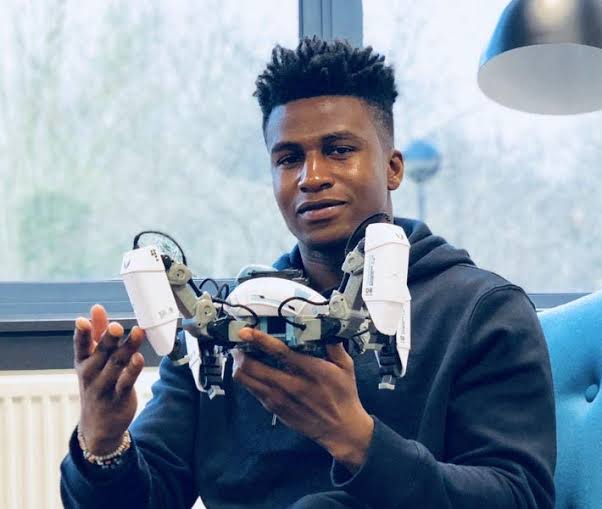
Simon Adekunle Reach Robotics “Mekamon”- Forbes
Reach Robotics raised approximately $12 million (including from London Venture Partners) and grew to 65 employees before closing in 2019. Adekunle pivoted to Awarri, focusing on multilingual AI assistants in African languages and robotics education across the continent. Media from Forbes 30 Under 30 Europe to Financial Times lists repeatedly called him the “highest-paid robotics engineer in the world” after the Apple partnership—likely due to CEO equity, royalties, and high-profile contracts. While exact figures remain undisclosed, his entrepreneurial track record places him firmly at the top of African earners in consumer robotics.
- Ashitey Trebi-Ollennu (Ghana/USA)
Dr. Ashitey Trebi-Ollennu is a Ghanian robotics legend at NASA’s Jet Propulsion Laboratory (JPL) since 1999. As technical group lead for robotic manipulation and sampling, he led key systems for Mars Exploration Rovers, Phoenix Lander, and the InSight mission (including the instrument deployment arm that touched Martian soil).
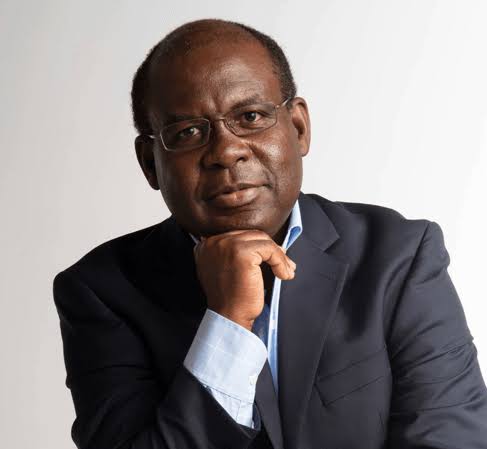
Picture Showing Ghanaian Robotics Legend Ashitey Trebi – Ollennu: Photo Credit: GhanaVoice
His honors include the NASA Exceptional Engineering Achievement Medal, Royal Aeronautical Society Silver Medal, and fellowship in multiple engineering academies. He also founded the Ghana Robotics Academy Foundation (GRAF), which won a Google RISE Award and trains young Africans in STEM. As a senior NASA engineer and division deputy chief, his compensation falls in the upper tier of U.S. federal and contractor scales—well above $180,000 annually plus benefits—making him one of the highest-earning African-origin robotics professionals globally.
- Bertin Nahum (Benin/France)
Bertin Nahum, of Beninese descent, co-founded and leads Quantum Surgical in Montpellier, France. The company specializes in AI-guided surgical robotics, with its flagship system improving precision in tumor ablation and brain procedures. Quantum Surgical has raised tens of millions in funding (including from European Investment Bank and Bpifrance) and expanded through acquisitions like NeuWave Medical.
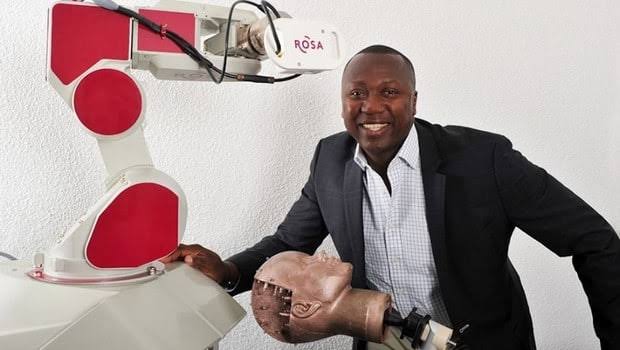
Picture Showing Surgical Robotics Inventor Bertin Nahum Photo Credit: Getty Images
Nahum’s background in medtech robotics dates back to earlier ventures like Medtech (Rosa™ Brain robot). As CEO of a scaling surgical robotics firm targeting global hospitals, his earnings combine high executive salary with significant equity. Medical robotics CEOs at this stage routinely command seven-figure compensation packages, positioning him among Africa’s top earners in applied robotics.
- Dr. Chuks Ekwueme (Nigeria)
Dr. Chuks Ekwueme founded Uniccon Group in 2020 and unveiled Omeife—Africa’s first indigenous humanoid robot—in 2022. Standing six feet tall and multilingual (including African languages like Igbo, Pidgin, and Swahili), Omeife incorporates cultural intelligence for healthcare, agriculture, education, and customer service applications.

Chuks Ekwueme founder Uniccon Group and Omeife: Photo Credit: Uniccon
Commissioned by Nigerian officials and showcased at global forums like ITU’s GSR-2024, Omeife represents a milestone in homegrown AI robotics. As founder and chairman of Uniccon, Ekwueme benefits from startup growth, government partnerships, and potential international licensing. While exact personal earnings are private, leadership of Africa’s pioneering humanoid robotics venture places him among the continent’s highest-earning innovators.
- Prof. Sidy Ndao (Senegal)
Prof. Sidy Ndao, a mechanical engineering PhD holder, serves as assistant professor and drives robotics education at Dakar American University of Science and Technology (DAUST). He founded the Pan-African Robotics Competition (PARC), an annual event drawing students from over 30 African countries to tackle real challenges like food security and transportation using STEM skills.
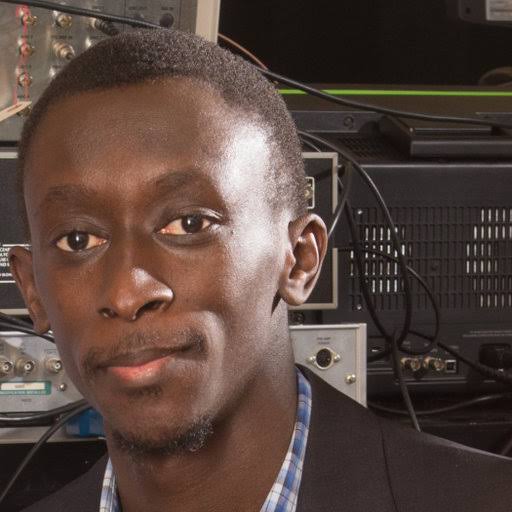
Prof. Sidy Ndao Driving Educational Robotics -Photo Credit: Senagal Today
Ndao also developed virtual learning platforms and integrated robotics into Senegal’s national curriculum. His work bridges academia and entrepreneurship through SenEcole. As a professor and founder of continent-wide initiatives, his earnings combine academic salary with grants, competition sponsorships, and consulting—elevated by international recognition and impact on thousands of young engineers.
- Prince Charles Oduk (Kenya)
Eng. Prince Charles Oduk is a mechatronics engineer and tech entrepreneur who graduated from Jomo Kenyatta University of Agriculture and Technology. He founded Beba-Beggie (and related ventures) to solve everyday African problems with robotics and automation, including security and logistics systems.
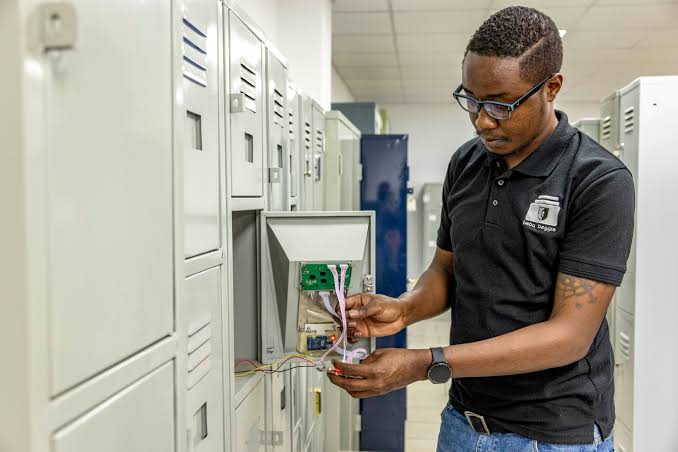
Picture Showing Mechatronics Engineer Prince Charles Oduk – Photo Credit: Alamy
Oduk has won awards like 40 Under 40 Africa and African Executive of the Year. His practical, locally relevant robotics solutions have attracted partnerships and recognition from the Royal Academy of Engineering’s Africa Prize. As a young founder blending engineering with business, his earnings reflect startup revenue, awards, and scaling potential in Kenya’s growing tech ecosystem.
- Joshua Olaiya (Nigeria)
Joshua Olaiya is a self-taught robotics engineer who began building at age 13. Featured by DW, BBC, and international outlets, he creates practical innovations—such as community-focused robots for agriculture, health monitoring, and education—that address Nigeria’s unique challenges without relying on imported tech.
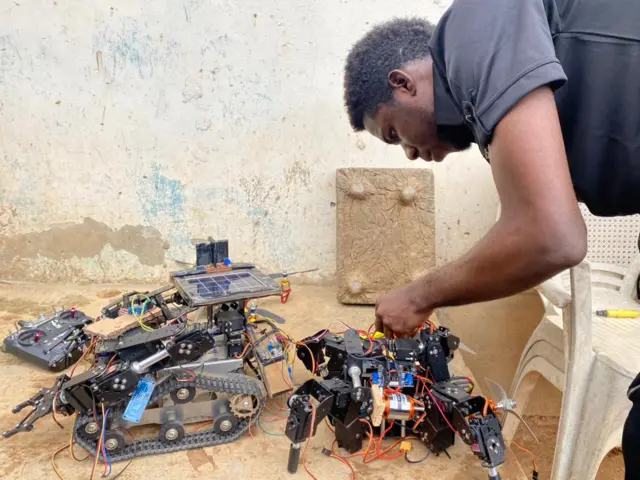
Self- Taught Robotics Engineer Joshua Olaiya building robots in his Backyard – Photo Credit: BBC pidgin
His story inspires countless youth programs. While operating as an independent innovator and potential startup lead, Olaiya’s earnings come from contracts, grants, and consulting. Self-taught success stories like his often lead to high-value opportunities in Africa’s expanding robotics education and industry sectors.
- Prof. Karim Djouani (Algeria/South Africa connections)
Prof. Karim Djouani is a full professor and technical group supervisor specializing in robotics, AI, pattern recognition, and networked systems. With affiliations at institutions like University Paris Est Créteil and strong ties to South African research, he has published extensively and supervised advanced robotics projects.
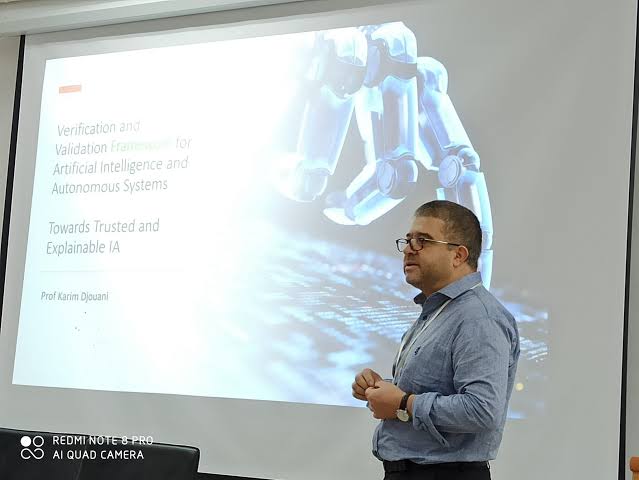
Picture Showing Prof. Karim Djouani – Photo Credit: USIU
His work in optimization, control systems, and next-generation wireless robotics earns him high academic and consulting income. Professors at his level with international citations and industry collaborations command top-tier salaries plus research grants across Europe and Africa.
- Engineer Bainomugisha (Uganda)
Prof. Engineer Bainomugisha at Makerere University focuses on accessible hardware for engineering education, including low-cost robotics platforms suited to sub-Saharan Africa’s infrastructure constraints. His research and teaching emphasize practical, resource-limited robotics that empower students despite power and connectivity challenges.
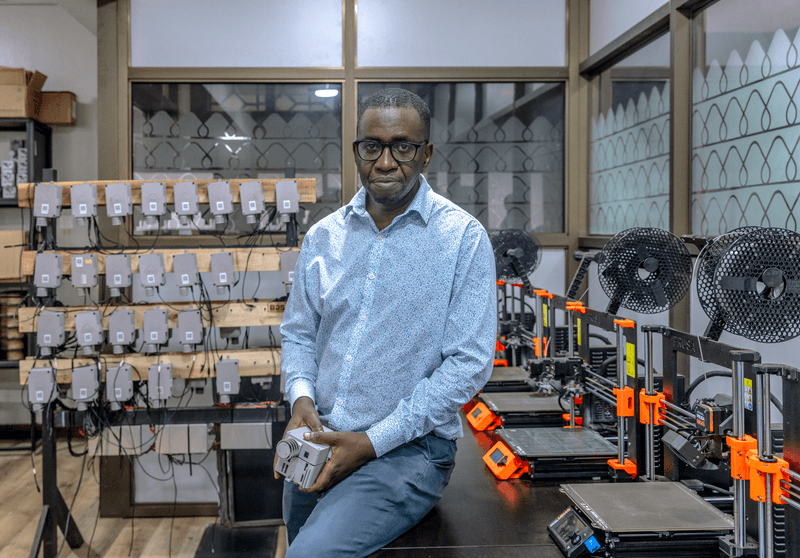
Prof. Engineer Bainomugisha at Makerere University – Photo Credit: Samson Modise/AFP
As a leading academic voice (featured in IEEE Spectrum), his earnings include university salary, international grants, and project funding—positioning him among East Africa’s highest-earning robotics educators and researchers.
- Kenechukwu Mbanisi (Nigeria/USA, with African outreach)
Dr. Kenechukwu Mbanisi, assistant professor of robotics engineering at Olin College, designs human-compatible AI and robotics systems. He coordinates the Pan-African Robotics Competition (PARC) Engineers League, mentoring youth across 30+ countries.
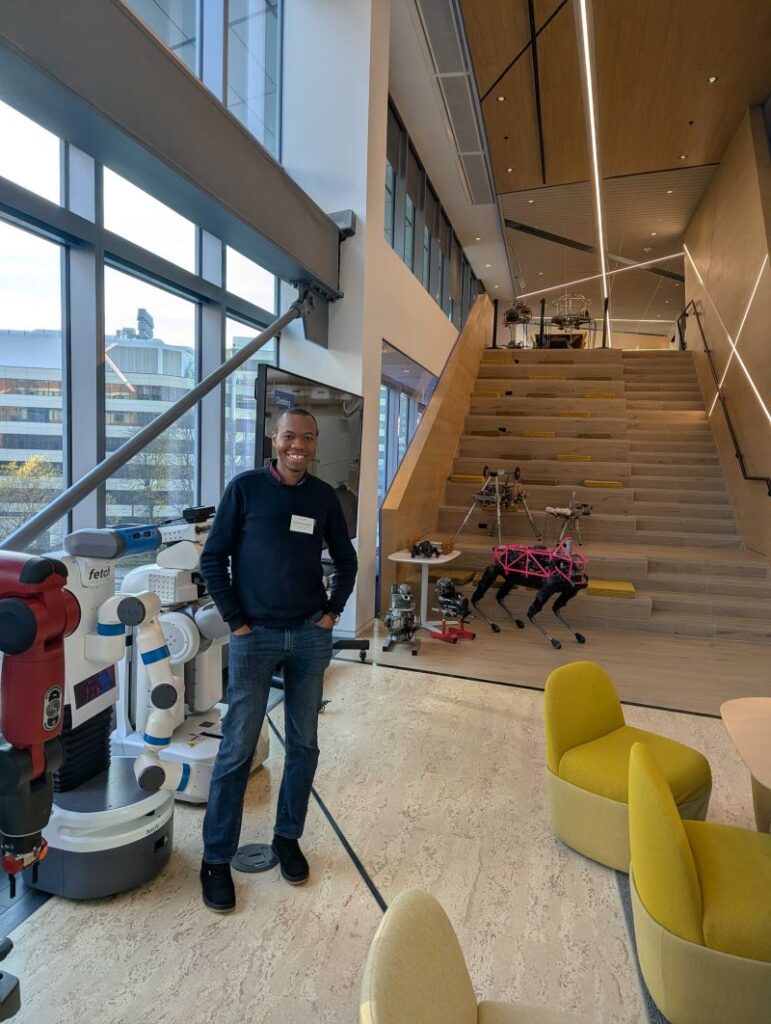
Kenechukwu Mbanisi Assistant Proffesor of Robotics – Photo Credit: Olin College
His dual focus on cutting-edge research and equity-driven outreach (emphasizing underrepresented backgrounds) yields high academic compensation plus program funding. Diaspora engineers like Mbanisi often earn premium U.S. salaries while channeling impact back to Africa.
The Future of Technology is Africa
These ten engineers represent a renaissance in African robotics. From NASA Mars missions to continent-wide competitions and the first homegrown humanoid, they are proving that talent, creativity, and determination can overcome resource gaps. Their high earnings reflect not just technical skill but entrepreneurial vision and leadership that attract global investment.
Challenges remain—limited funding, infrastructure, and brain drain—but initiatives like PARC, GRAF, and Awarri are building pipelines for the next generation. As robotics integrates with AI, agriculture, healthcare, and education, African engineers will continue rising in both impact and earnings.
The continent’s robotics story is just beginning. Who will be next on this list? Young innovators in Lagos, Nairobi, Dakar, and Kampala are already tinkering in garages and university labs. Support them through education, mentorship, and investment—and watch Africa lead the next robotics revolution.
Disclaimer.
All information drawn from public profiles, company records, NASA/JPL reports, and reputable media as of 31st March 2026.




Leave a Reply