The Bill & Melinda Gates Foundation have announced a landmark commitment of US$1 billion over the next two years to expand equitable access to artificial intelligence for Africa. The funding, detailed in the foundation’s annual Goalkeepers Report, targets tools that work in the languages people actually speak, particularly those long overlooked by commercial AI systems trained overwhelmingly on English and a handful of other dominant languages.
While the investment is global in scope and focuses on low-income African communities, African languages feature prominently because of the continent’s extraordinary linguistic diversity and the acute risk that AI could otherwise deepen existing inequalities in health, education, and agriculture.
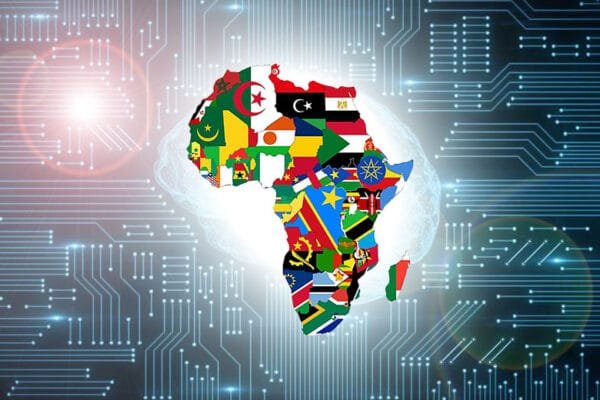
Africa is home to more than 2,000 languages. Yet the vast majority remain severely underrepresented in the datasets that power large language models, speech recognition systems, and generative AI tools.
The practical consequences are stark: leading speech-recognition systems achieve error rates below 6 percent in English but exceed 60 percent in Yoruba, a language spoken by tens of millions of people across West Africa. Similar gaps exist for Kikuyu, Dholuo, Hausa, isiZulu, Kiswahili, and hundreds of other African languages. When AI cannot reliably understand or generate these languages, patients cannot access accurate health advice, farmers miss timely agronomic recommendations, and students are shut out of personalized tutoring.
The $1 Billion Bill Gate Commitment is Structured to Address these Gaps directly.
Approximately 40% of the fund will support healthcare applications including: Disease diagnostics, clinical decision support for frontline workers, maternal and newborn care tools, and efforts to accelerate discovery of new drugs and vaccines. Another 40% is earmarked for education, including AI tutoring systems that adapt to individual learners and teaching aids usable in classrooms across the Global South and beyond. 10% will go to agriculture, helping smallholder farmers receive advice tailored to local soil, weather, and crop conditions. The remaining 10% targets the digital foundations of equitable AI, with a particular emphasis on building datasets in languages that current models struggle to handle.
This is not an abstract research exercise. In much of Africa, the majority of people still rely on feature phones rather than smartphones. Effective AI must therefore work primarily through voice interfaces. This requires large volumes of authentic speech data and recordings that capture local accents, everyday conversations in farming, health, and education settings, and the voices of children as well as adults.
Written text alone is insufficient in Africa for languages that are predominantly spoken rather than written.
The foundation’s new pledge builds on several years of targeted work already underway on the continent.
One of the most significant efforts is the African Next Voices project. Supported by a $2.2 million Gates Foundation grant with additional backing from Meta, researchers across Kenya, Nigeria, and South Africa have compiled what is widely regarded as the largest voice dataset of its kind for African languages.
In just two years the team collected more than 9,000 hours of everyday speech across 18 languages, including Kikuyu, Dholuo, Hausa, Yoruba, isiZulu, and Tshivenda. The data was gathered in real-world contexts such as farming discussions, health consultations, and classroom interactions so that models trained on it reflect authentic language use rather than formal or translated speech.
The acquired dataset is intended to power applications ranging from voice assistants for agriculture and health to captioning of local-language media and educational tools, while also contributing to African cultural preservation.
Complementing this is LINGUA Africa, an open-call initiative launched in 2026 by the Masakhane African Languages Hub in partnership with Microsoft’s AI for Good Lab, the Gates Foundation, and Google.org. The program funds African-led projects to strengthen the language foundations of inclusive AI.
LINGUA AFRICA Selected 26 projects in the first round, covering more than 50 African languages, dialects, and sign languages spoken by over 500 million people across 47 African countries. Funding tiers range from data-creation grants with up to $50,000 cash plus compute credits to larger sectoral-application awards of up to $250,000 in cash and $400,000 in compute credits.
Focus areas include health information systems, agricultural advisory tools, education, and public services. The overarching goal of the Masakhane Hub is to help empower one billion Africans with locally relevant AI tools and resources by 2029.
These efforts sit within a broader recognition that language is the gateway to AI’s benefits.
Without high-quality local data, even the most sophisticated AI models will continue to fail the people who stand to gain the most from them.
A network of African computer scientists, linguists and language specialists is already working to close that gap.
Under the Gates Foundation-backed African Next Voices project, researchers across Kenya, Nigeria and South Africa have assembled the largest voice dataset of its kind, capturing more than 9,000 hours of everyday speech in farming, health and education settings across 18 languages, including Kenya’s own Kikuyu and Dholuo.
The foundation has also supported earlier work through the AI for Development Funders Collaborative, including a $10 million commitment focused specifically on including African languages in AI models. Parallel initiatives with partners such as Google and Microsoft are expanding speech and text datasets across dozens of African languages and deploying practical tools for farmers and health workers.
The urgency is clear. One Billion people—mostly English speakers already benefit from improving AI systems, while roughly seven billion others remain largely left behind.
Bill Gates has framed the choice starkly: “AI can become a great equalizer or it can widen the gap between rich and poor”.
The foundation’s chair, reiterated this in a statement to NBC News. “Left to the market alone, the most capable tools will be built first for the people and institutions most able to pay for them, not necessarily for those who could benefit most.”
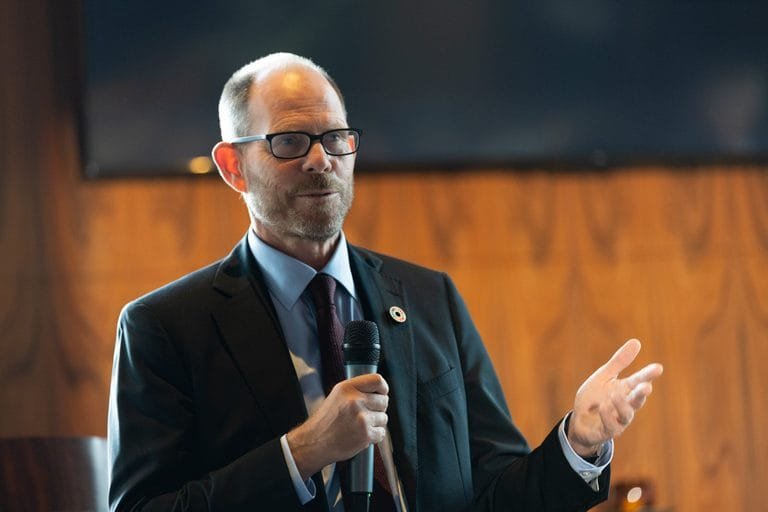
Mark Suzman CEO of the Gates Foundation. [Photo Credit: Moses Maweu, WHM]
The window to shape who benefits, and how soon, is short. Commercial markets will naturally prioritize high-income users and widely spoken languages. Public and philanthropic investment is therefore essential to ensure that tools are designed from the outset for communities the market would otherwise overlook.
In practical terms, success will look like a community health worker in rural Kenya receiving diagnostic support in Kikuyu or Dholuo rather than struggling with an English interface that misunderstands local terminology.
It will look like a smallholder farmer in Nigeria getting real-time advice on pest management in Yoruba or Hausa via a simple voice call on a basic phone.
It will look like a student in South Africa or Ethiopia accessing personalized tutoring that understands the linguistic and cultural context of their classroom. And it will look like African researchers, linguists, startups, and community organizations leading the development of these systems rather than remaining peripheral consumers of technology built elsewhere.
The $1 billion is described by foundation leadership as a “down payment,” with expectations that funding will grow significantly in subsequent years as successful approaches are scaled.
Critics of large-scale philanthropic involvement in technology sometimes question whether such investments sufficiently empower local ecosystems or risk creating new dependencies.
The true test will be whether the resulting tools are widely adopted, maintained, and iterated upon by African innovators long after the initial grants end.
The linguistic diversity of Africa is not a barrier to be overcome but a resource to be valued. When AI systems can speak and understand the languages of the continent’s people, they become instruments of inclusion rather than exclusion.
They can accelerate progress toward health, education, and food-security goals that have long been constrained by information gaps and infrastructure limitations. They can also help preserve and revitalize languages under pressure from globalization and digital monolingualism.
The Gates Foundation’s $1 Billion commitment is one of the largest single philanthropic bets yet on making AI work for the world’s majority rather than its minority of English-dominant users. Combined with the foundational work already accomplished through African Next Voices, LINGUA Africa, and related efforts, it signals a serious attempt to close a critical digital divide.
If the models begin to listen accurately in Yoruba, Kikuyu, Hausa, and the many other languages of the continent, the benefits will extend far beyond technology itself. They will touch the everyday lives of millions of people who have too often been told implicitly by the tools available to them—that their languages do not matter in the digital age. That message is finally beginning to change.
The coming two years will reveal how effectively this capital is translated into working systems.
Mark Suzman CEO of the Gates Foundation. [Photo: Moses Maweu, WHM]
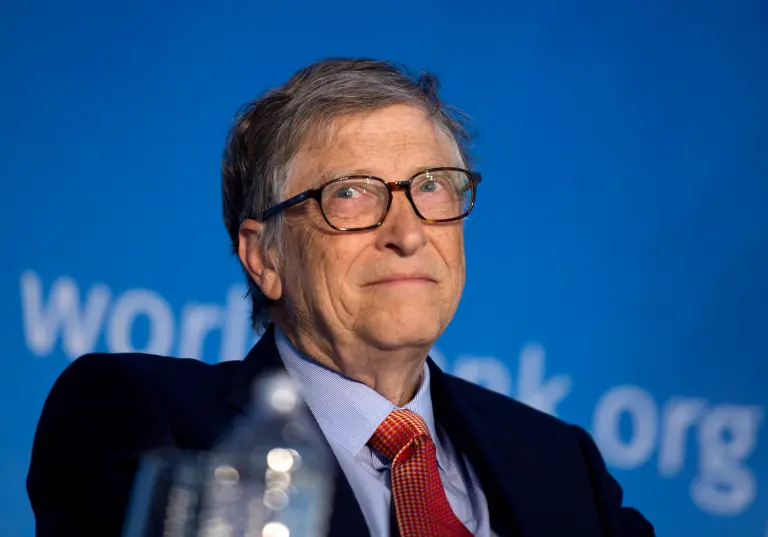
Bill Gates has warned that artificial intelligence could be either a “great equalizer” or a force that widens the world’s inequality gap. (Andrew Caballero-Reynolds / AFP / Getty Images)