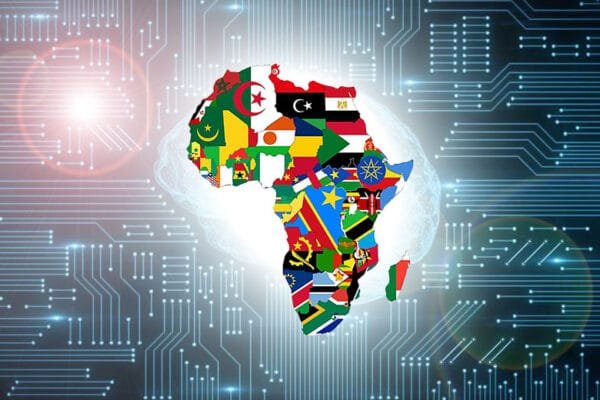
Africa is currently very far behind in terms of Technology development. Despite the Continents vast amount of Raw Minerals used for technology manufacturing such as Lithium, Steel, Zinc and many more. Today, the African Continent is a huge consumer of foreign Technology. This dependance is costs the continent over $100 Billion Dollars annually in lost revenue, strangulates development, job creation, and ultimately depicts the African Nation as a dumping ground for Low grade and sub-quality technology products.
Africa’s young population, raw minerals, rising smartphone penetration, and entrepreneurial energy should position the continent as a rising force in technology creation. Instead, it remains overwhelmingly a consumer that imports smartphones, software platforms, cloud services, AI models, medical devices, industrial equipment, and digital infrastructure designed and owned elsewhere.
One of the deepest structural reasons that makes Africa a big consumer of foreign Technology is weak law, particularly weak intellectual property (IP) protection, inconsistent contract enforcement, fragile property rights, and uneven rule of law. Without reliable legal systems that let creators capture returns and investors recover capital, local innovation stays under-funded, under-protected, under-scaled and perpetual resulting in huge foreign technological dependence.
The data are stark and pathetic to the eyes. Africa accounts for roughly 0.5–0.6% of global patent applications, and the majority of those filings come from non-residents rather than local inventors. Resident patent activity remains extremely low relative to population and economic size.
In the Global Innovation Index, the best-performing African economies Mauritius, Morocco, South Africa in recent years still rank well outside the global top 50, with most countries clustered far lower. Only a handful of African countries even appear in major international IP indexes; Morocco leads the continent but scores in the high 50s out of 100, while others lag further behind with persistent weaknesses in enforcement against piracy and counterfeiting.
These numbers reflect more than temporary lag. They signal an environment in which the expected returns to inventing, coding, designing, or commercializing technology are systematically lower than in jurisdictions with stronger legal protections.
How Weak Laws Suppress Local African Technology Creation
Globally, strong Intellectual property IP rights and reliable contract enforcement convert ideas into investable assets. Patents, copyrights, trademarks, and trade secrets give inventors temporary exclusivity so they can recoup Research & Design costs and attract capital. Clear, enforceable contracts let founders hire talent, raise equity or debt, license technology, and form partnerships without constant fear of appropriation. In Africa today, these foundations are weak, thereby leaving rational actors respond as follows:
- Incentives collapse: An Engineer or Entrepreneur who knows a competitor or a Larger firm can copy code, designs, or processes with little consequence has reduced reason to invest time and money in original work. This results in High rates of software and content piracy in many markets. Ultimately creators lose revenue that could have funded the next product cycle.
- Capital stays away or extracts value elsewhere: Venture investors, corporate Research & Development budgets, and even local angel money prefer environments where IP can be valued, pledged as collateral, or enforced in court. This comes as Weak enforcement raises the risk premium; capital either does not arrive or arrives only for distribution and consumption activities rather than deep local innovation.
- Talent and ideas migrate: Africa’s brain drain is partly a legal story. in Nigeria today, it is regarded as “Japa”. A case whereby large numbers of High-skilled Professionals move to jurisdictions where their work can be protected and better monetized. Even when they remain, many register companies or file patents abroad because domestic systems are slower, costlier, or less reliable.
- Fragmentation multiplies the cost: In Africa today, there are two regional IP systems named ARIPO and OAPI plus dozens of national regimes. Protecting an invention or brand across markets is expensive and administratively heavy. This means that African Startups already short on cash face high filing and maintenance costs plus uncertain enforcement, so many simply forgo formal protection or limit their operations to a single country.
The outcome is predictable: local firms focus on adaptation, distribution, services, and low-IP applications, while core platforms, semiconductors, advanced software, AI models, and sophisticated hardware remain foreign-owned leaving Africa as a large and growing market for other people’s technology.
However, “Weak laws” extend beyond IP statutes. Ineffective courts, corruption, unpredictable regulation, and weak protection of physical and contractual property rights.
Building a successful Technology company requires multi-year commitments including: hiring engineers, buying equipment, iterating products, and scaling. When contracts can be ignored, licenses revoked arbitrarily, or assets expropriated through bureaucratic delay, fewer people take the risk.
Rule-of-law indicators and ease-of-doing-business metrics that lag global peers reinforce the same pattern: capital prefers safer jurisdictions, and local savers often channel resources into real estate or trading rather than productive innovation.
Africa’s challenge is that many countries on the continent have neither the early-stage industrial policy capacity nor the later-stage institutional quality that allowed that transition.
Not every form of strong IP is optimal at every stage of development. Overly rigid patent regimes can raise the cost of access to medicines or essential technologies for developing countries.
Some African innovation particularly in informal sectors, traditional knowledge, and certain digital services, thrives through open collaboration and rapid iteration rather than formal patents.
For example, The Benue Tiv people once had a sacred tradition which brought a dead person back to life. This sacred traditional ritual called the “Kegher traditional ritual” has carried out on a fresh corpse which was believed to have died before its time.
The “Kegher ritual” was carried out by a traditional spiritualist after which the deceased person jumped back to life. However, this practice has been abandoned for decades due to modernisation, shift to western religion and beliefs.
These types of African innovation particularly in informal sectors, and traditional knowledge can only thrive through open collaboration and rapid iteration rather than formal patents
Furthermore, excessive focus on Western-style IP can also overlook local realities of high enforcement costs and low legal literacy. Yet the alternative—systematically weak protection, does not produce a golden age of indigenous technology. It produces dependence.
Abroad, Foreign firms continue to innovate because their home jurisdictions protect them; African consumers and businesses buy the results. Local talent still creates value, but much of that value is captured by platforms headquartered elsewhere or diluted by free-riding.
Other constraints like education quality, electricity reliability, broadband cost and coverage, access to risk capital, and political stability matter greatly.
Legal reforms alone will not create Silicon Valleys overnight. Without credible legal foundations, improvements in those other areas will still favor consumption and adaptation over original creation and ownership.
What Would Change the Trajectory?
Reversing the pattern requires deliberate institutional upgrading, not slogans:
- Enforce existing IP laws consistently and reduce the cost and time of registration and litigation.
- Harmonize and modernize frameworks under the African Continental Free Trade Area’s IP protocol so rights travel more easily across borders.
- Strengthen judicial capacity and reduce corruption so contracts and property rights are predictable.
- Educate innovators and investors about strategic use of patents, trade secrets, trademarks, and copyrights while designing balanced systems that do not choke access to essential knowledge.
- Create credible incentives such as tax treatment of Research & Development, public procurement that favors local IP, and support for technology transfer agreements that actually build domestic capability rather than pure dependency.
Countries that improve these fundamentals will not instantly become technology exporters. They will, however, begin retaining more of the value created by their own talent and attracting more of the capital needed to turn ideas into scalable products. Those that do not will continue to expand as markets for foreign technology while remaining secondary in the creation of that technology.
Africa’s demographic and digital opportunity is real. Turning consumers into creators requires treating the legal system as critical infrastructure which is just as important as power grids and fiber optic cables.
Weak laws do not merely slow progress; they lock in a structural role as technology taker. This means Stronger and more reliable laws are the prerequisite for anything Technologically Solid for Africa.