Tesla has announced plans to wind down Cybertruck production at its Gigafactory Texas facility around the middle of 2027. The move frees manufacturing capacity for increased output of the Cybercab, the company’s purpose-built two-seat robotaxi.
CEO Elon Musk announced the decision in an X post on November 6, 2026:
“Tesla will be winding down production of the Cybertruck at Gigafactory Texas around the middle of next year to make room for increased Cybercab production.”
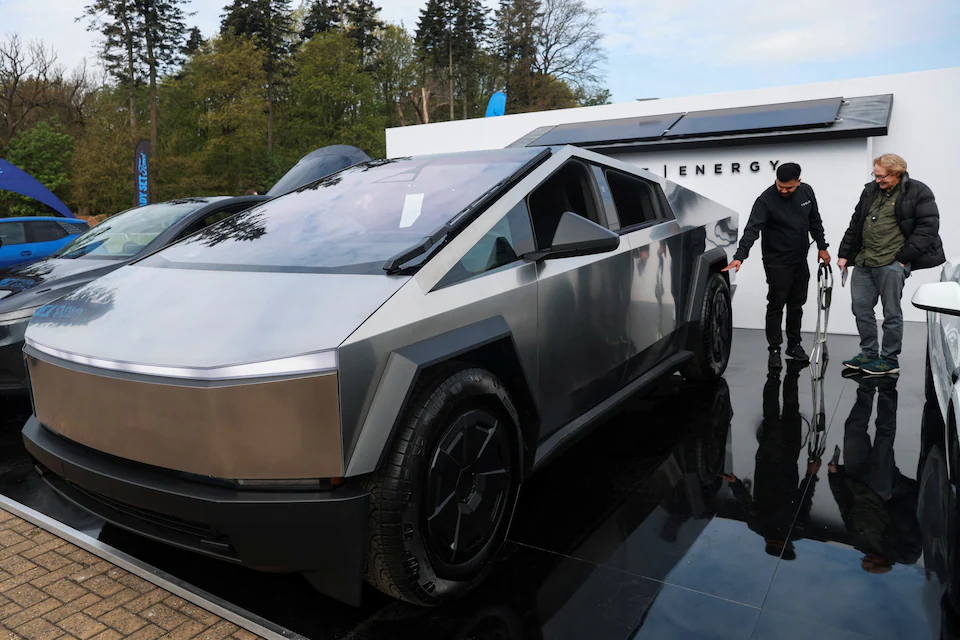
Visitors view a Tesla Cybertruck electric car on display at the Everything Electric North show in Harrogate, Britain May 8, 2026. REUTERS/Temilade Adelaja/ File Photo
The announcement comes less than four years after the first customer deliveries and marks a clear reallocation of factory resources toward Tesla’s autonomous-vehicle and robotaxi ambitions.
Gigafactory Texas is the only known facility equipped to assemble the Cybertruck and its specialized stainless-steel components. Musk has not confirmed whether production will move to another plant or end entirely.
Tesla first unveiled the angular, stainless-steel Cybertruck in November 2019. Delays stretched customer deliveries until November 2023. Early projections were ambitious as CEO Elon Musk once suggested the company could eventually sell around 250,000 units per year however Reality fell well short.
Kelley Blue Book estimates show U.S. sales of 38,965 Cybertrucks in 2024, followed by 20,237 in 2025 a decline of roughly 48%.
Cumulative volumes since launch remain modest with estimates putting total deliveries in the neighborhood of 70,000 or lower, far below the scale once envisioned.
The vehicle faced repeated recalls, quality challenges, pricing adjustments, and limited overseas appeal due in part to its distinctive design and regulatory hurdles in markets such as Europe.

Tesla Cybertruck electric car on display Photo Credit: Tesla
Despite the sales shortfall, Musk has continued to praise the truck. After the production announcement, he called the Cybertruck “the best vehicle Tesla has ever made.” When a user referred to the change as “the end of an era,” Musk replied: “True, but the Cybertruck fleet will be around for a long time.” Cybertruck lead engineer Wes Morrill echoed the sentiment, describing the vehicle as “an incredible technology development platform” whose lessons live on in the Cybercab.
In the days after the initial post, Musk indicated the company still had a substantial order backlog and planned to add an extra shift to try to fulfill remaining orders before the line is converted around June/July 2027.
Shifting Capacity to the Cybercab
The Cybercab, a compact, two-seat robotaxi designed without a traditional steering wheel or pedals is central to Tesla’s longer-term strategy of expanding beyond conventional vehicle sales into autonomous ride-hailing and AI-driven mobility.
Production of the Cybercab began earlier in 2026 at the same Texas factory. Tesla has already begun operating limited paid rides in areas such as Austin, though the program faces regulatory scrutiny from the National Highway Traffic Safety Administration.
By reallocating floor space, tooling, and engineering focus from the Cybertruck line which had installed capacity well above actual demand, Tesla aims to accelerate Cybercab volume.
The company has listed meaningful annual capacity figures for both programs at Giga Texas; the production shift prioritizes the robotaxi as a higher-strategic priority.
Implications for Owners, the Market, and Tesla’s Direction
Existing Cybertruck owners should see continued parts and service support. The fleet on the road will remain substantial for years, and Musk’s comments emphasize longevity rather than abrupt abandonment.
Prospective buyers, however, face a clearer timeline: production at the Texas plant is expected to taper through roughly the first half of 2027, with an extra shift intended to clear as many outstanding orders as possible.
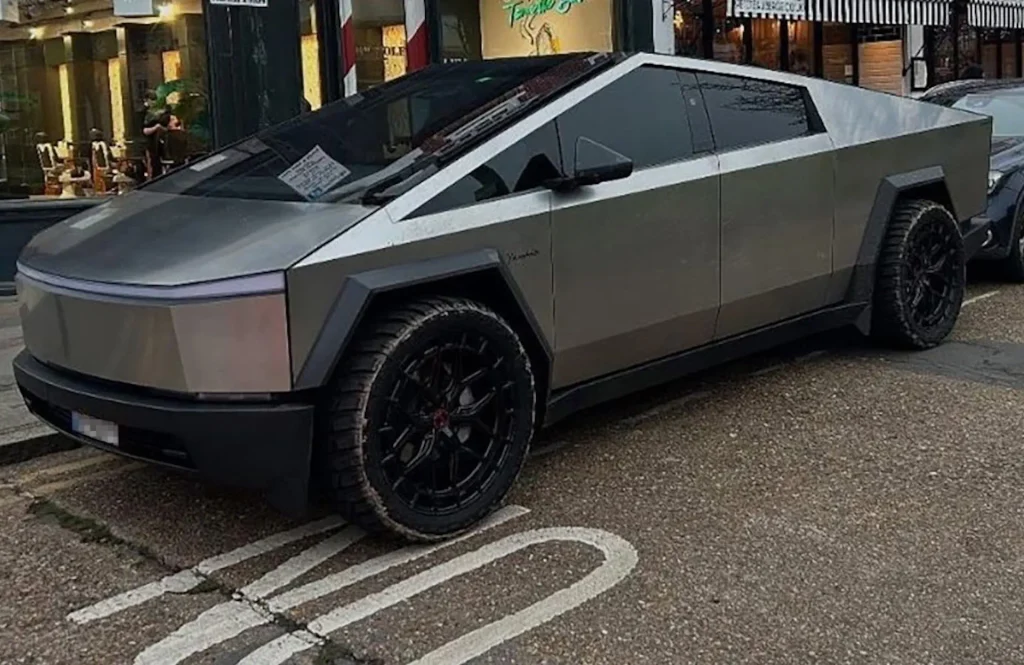
Tesla Cybertruck electric car on display Photo Credit: Tesla
The decision also reflects broader challenges in the electric pickup segment. Sales of competing models such as the Ford F-150 Lightning have likewise softened, underscoring that consumer demand for full-size electric trucks has not matched early industry optimism. Factors including range under load (especially towing), charging infrastructure, price, and the unique styling of the Cybertruck all played roles.
For Tesla, the move is consistent with Musk’s repeated emphasis on autonomy, robotaxis, and AI as the next major value drivers. Conventional vehicle manufacturing remains important, but factory capacity is being directed toward products the company views as higher-growth. Whether Cybertruck production continues at reduced volume elsewhere, or the nameplate effectively ends after the Texas wind-down, remains unconfirmed.
In short, the Cybertruck’s production chapter at Gigafactory Texas is entering its final phase. The vehicle that once symbolized Tesla’s willingness to challenge conventional design is making way for the next bet: scalable, purpose-built robotaxis. Owners can take comfort that the trucks already built will stay on the road for a long time; the company, meanwhile, is betting its future manufacturing capacity on a different kind of vehicle.